Meta’s £749 AI Glasses Look Ordinary – But They Can See What You See
Meta's £749 AI glasses can answer questions about what you see, translate conversations and show messages inside the lens. Discover the features, privacy concerns and watch the official video.

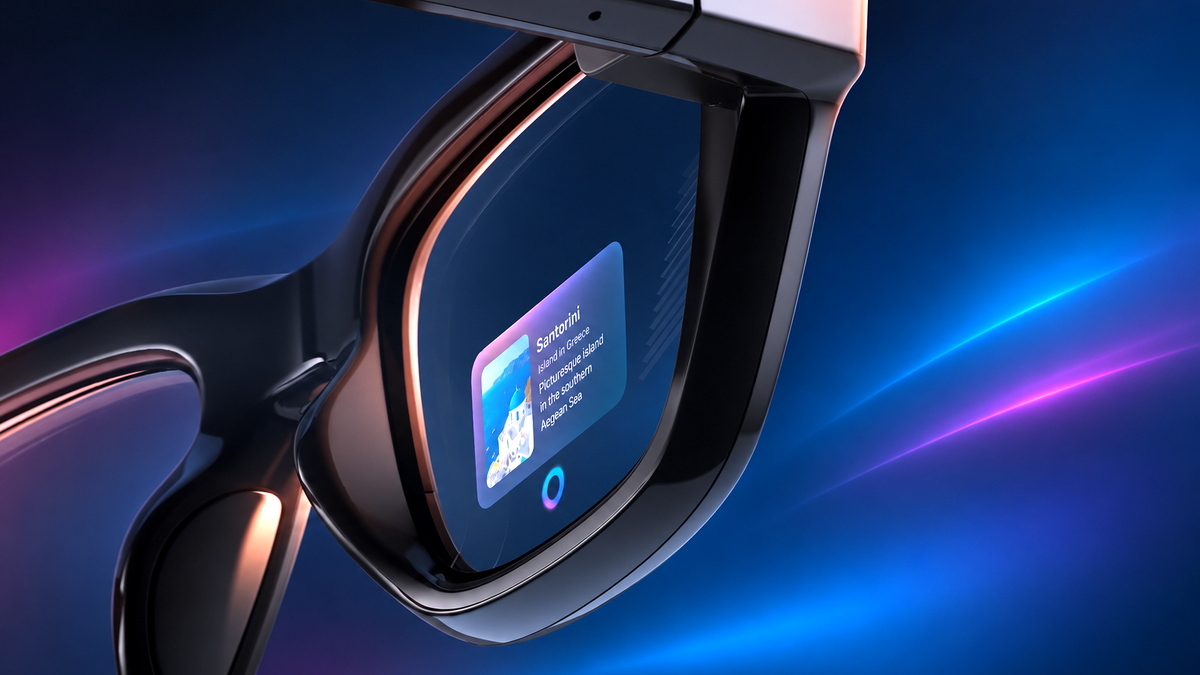
Imagine looking at a sign in another language and having it translated before your eyes, or asking your glasses a question about something you’re looking at and seeing the answer appear inside the lens. That’s what Meta is offering with its latest Ray-Ban Display AI glasses, which combine artificial intelligence, a hidden colour screen and hand gesture controls.
Now available in the UK for £749, the glasses connect to Meta AI, allowing wearers to ask questions about their surroundings, read messages, follow directions and translate conversations without constantly reaching for their phones. Meta has also announced new features, including an AI-generated digital version of the wearer for video calls.
Your Glasses Can Now Answer Questions About What You’re Looking At
The biggest development is how the glasses combine Meta’s artificial intelligence assistant with a built-in camera and a private visual display.
Wearers can ask Meta AI questions about objects, signs and places around them. By using the camera to interpret what it is being shown, the assistant can provide information and display answers directly inside the right lens.
For example, someone travelling abroad could look at a sign and ask for an English translation. A person looking at a plant could ask Meta AI to identify it or suggest how to care for it, while someone exploring an unfamiliar area could request information about nearby places.
The AI can also answer general questions, provide recommendations and display maps or other useful information.
These functions do not mean the glasses are continuously analysing the wearer’s surroundings. Camera-based AI interactions are initiated through supported commands and features, with the information processed through Meta’s AI services.
As with other AI assistants, answers may occasionally be inaccurate, so important information should still be checked.
The Hidden Screen Lets You Read Messages Without Your Phone
Unlike earlier Ray-Ban Meta glasses, which relied mainly on cameras, microphones and spoken responses, the Display model includes a 600 × 600-pixel colour screen built into the right lens.
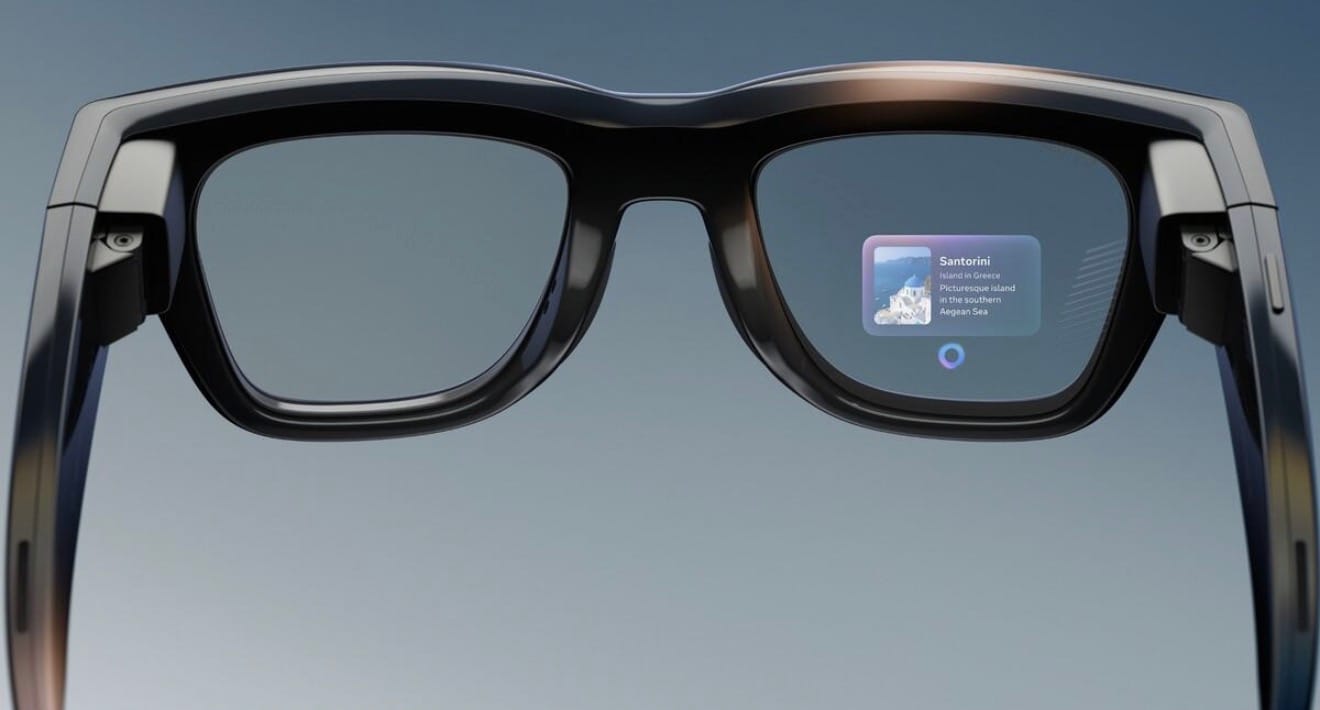
The screen is designed to be visible only to the wearer, allowing information to appear without being easily seen by somebody standing nearby.
Users can read and respond to WhatsApp, Messenger and Instagram messages, preview photographs, view notifications and receive visual answers from Meta AI.
Live translation is another major feature, displaying translated speech as captions during conversations. This could be particularly useful when travelling or speaking with somebody who uses a different language.
The glasses also support music and podcasts through open-ear speakers, with album artwork and other information appearing on the display.
Photographs and short videos can be previewed through the lens, although this is not a replacement for watching television or films on a conventional screen. The display is designed primarily for brief interactions and everyday information.
No Touchscreen Needed – Your Fingers Control the Glasses
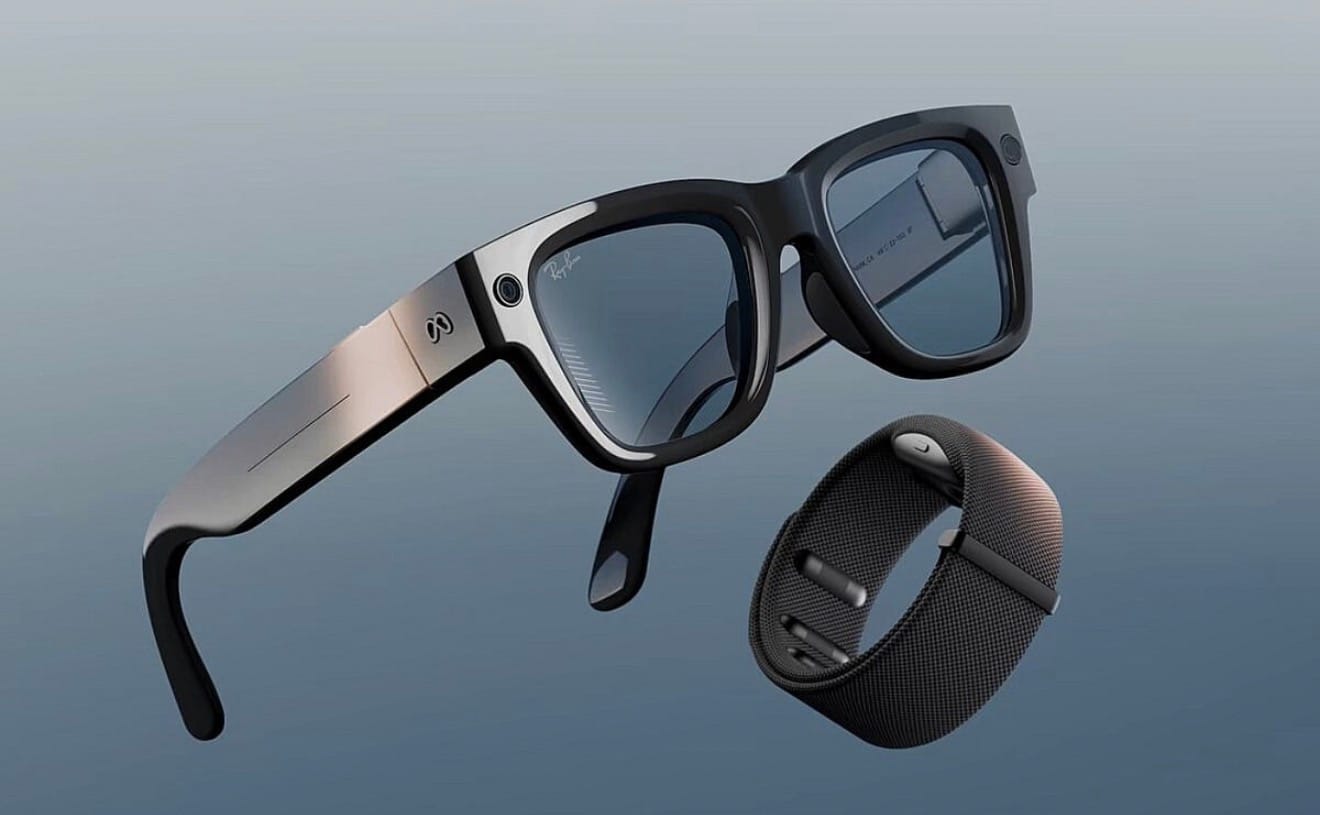
One of the most unusual features is the Meta Neural Band, a wrist-worn controller included in the £749 price.
Rather than using a conventional touchscreen, the band detects electrical signals produced by muscle activity through technology known as electromyography, or EMG.

Small finger movements can be interpreted as commands, allowing wearers to navigate menus, respond to messages and control supported functions without speaking or touching the frames.
The Neural Band also provides vibration feedback, giving users confirmation that certain actions have been recognised.
The glasses themselves include a 12-megapixel ultra-wide camera, six microphones and open-ear speakers. The screen can also function as a camera viewfinder, allowing wearers to preview photographs before taking them.
Together, the AI assistant, camera, display and gesture controls provide a different experience from earlier smart glasses that primarily offered hands-free photography and audio.
Could AI Replace Your Face During a Video Call?
Meta has announced another unusual feature called Hologram, designed to create a photorealistic digital representation of the wearer for video calls.
Rather than holding a phone in front of their face, users can complete a short facial capture through the Meta AI application to create a personalised digital version of themselves.
During a supported video call, the digital face responds to the person’s voice, with AI generating facial expressions based on what they are saying and how they speak.

This means somebody could appear visually present during a call while wearing the glasses and carrying out another activity.
Despite its name, Hologram does not project a three-dimensional person into the room. The AI-generated representation appears on the recipient’s screen.
Meta announced the feature at Meta Connect on 23 September 2026, with early access planned for WhatsApp users in the United States during autumn 2026. A UK release date has not been confirmed.
Other announced improvements include cycling directions, public transport information and walking instructions that refer to recognisable landmarks rather than relying entirely on street names.
Meta is also developing an Explore application for additional experiences, alongside expanded notifications and other features. Some are being introduced first in North America and may not yet be available to UK customers.
Can Other People Tell When You’re Recording?
The ability to combine a camera and artificial intelligence inside ordinary-looking glasses raises questions about privacy, particularly for people standing nearby.
Meta includes a white recording indicator on its AI glasses, designed to alert others when photographs or videos are being captured.
The light flashes briefly when taking photographs and continues flashing during video recording. Meta says covering or tampering with the indicator disables normal camera capture.

However, the presence of a recording light does not guarantee that everybody nearby will notice it, especially in crowded or busy environments.
The glasses do not automatically record continuous video simply because somebody is wearing them. Reading a private message on the display is also separate from taking photographs or recording.
There are wider questions about how AI services process information captured through cameras and microphones, particularly when other people are present.
Meta provides privacy controls through its companion application, but wearers should still consider consent and avoid recording people in situations where privacy is reasonably expected.
The technology also raises broader questions about wearable AI becoming more common in everyday settings, including workplaces, public transport and entertainment venues.
Are AI Glasses Comfortable Enough to Wear Every Day?
Although Meta’s Display glasses look similar to conventional Ray-Bans, the additional technology makes them heavier than ordinary spectacles.
They weigh approximately 68–70 grams, depending on frame size, with the camera, display, speakers and other electronics built into the frames.
The screen also appears in only one lens, rather than presenting information across both eyes. Its 20-degree field of view is designed for relatively small amounts of information, not prolonged viewing.
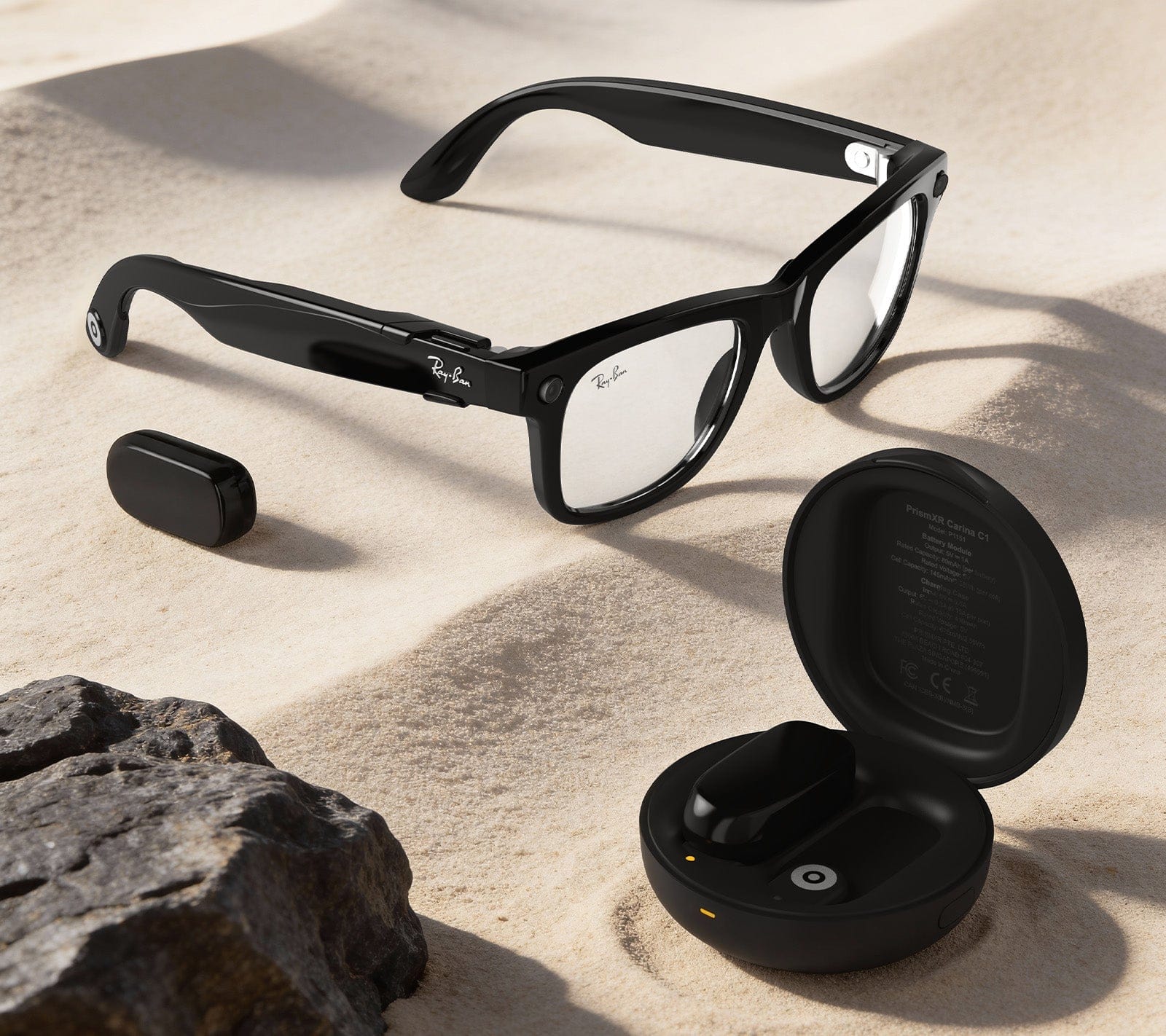
Battery life is another consideration. Ray-Ban’s detailed UK specifications advertise up to six hours of use per charge, with additional charging available through the supplied case. Another official product page quotes up to seven hours, reflecting differences in advertised usage conditions.
The Neural Band is rated for up to 18 hours of battery life. The glasses also require a compatible smartphone for setup and connected functions, so they are not intended to replace a phone entirely.
For someone who mainly wants to listen to music or take photographs, a less expensive pair of smart glasses may offer many of the functions they actually need.
Would You Really Pay £749 for AI Glasses?
The Meta Ray-Ban Display glasses became available in the UK on 23 September 2026, following their original American launch in September 2025.
They cost £749, including the Neural Band, and are available in polished black and sand-coloured frames with Transitions lenses that adapt to different lighting conditions.
The glasses work with compatible iPhones running iOS 15.2 or later and Android devices running Android 10 or later, although individual features can have additional requirements.
Ray-Ban also offers demonstrations at participating retailers, allowing potential customers to try the display and wrist controls before purchasing.
More affordable Ray-Ban Meta models are available without the screen, providing features such as hands-free photographs, calls, music and AI assistance.
The main difference is that the Display model combines those capabilities with visual AI responses and an interface that can be controlled through finger movements.
For some people, having AI translate a conversation, answer questions about their surroundings or display directions without taking out a phone could be useful. Others may find that the extra weight, limited display size and substantial price make a smartphone more practical.
Meta’s latest developments show how artificial intelligence is moving beyond phones and computers into devices designed to be worn throughout the day.
Whether that becomes an everyday necessity or remains an expensive convenience will depend on how useful the technology proves beyond the demonstrations, particularly as more AI features become available in the UK.