Is AI Making Handmade Christmas Adverts More Valuable? Alan Cumming Joins Stop-Motion Revival
Levi’s and e.l.f. use handmade stop-motion for Christmas 2026. Explore Alan Cumming’s advert, the production techniques and what it means for AI advertising.


As artificial intelligence becomes increasingly common in advertising, two major brands have chosen a very different approach for Christmas 2026, creating festive campaigns using handmade characters, miniature sets and traditional stop-motion animation.
Levi’s has introduced a Christmas story featuring a friendly yeti, while e.l.f. Beauty has recruited actor Alan Cumming to narrate a film about friendship and individuality
Both productions celebrate physical craftsmanship at a point when AI-generated video is becoming easier to produce, raising questions about whether the work involved in traditional animation could become part of its commercial appeal.
What Is the New Levi’s Christmas Advert About?
Levi’s has introduced Let’s Get Fuzzy, a festive campaign featuring Gus, a yeti who initially appears frightening but gradually discovers the warmth of friendship and acceptance.

The character, known as Fuzzyeti, encounters people celebrating Christmas and becomes part of their gathering, with clothing playing an important role in the story.

The campaign draws attention to winter fashion while developing an animated character designed to be memorable beyond the individual products being advertised.
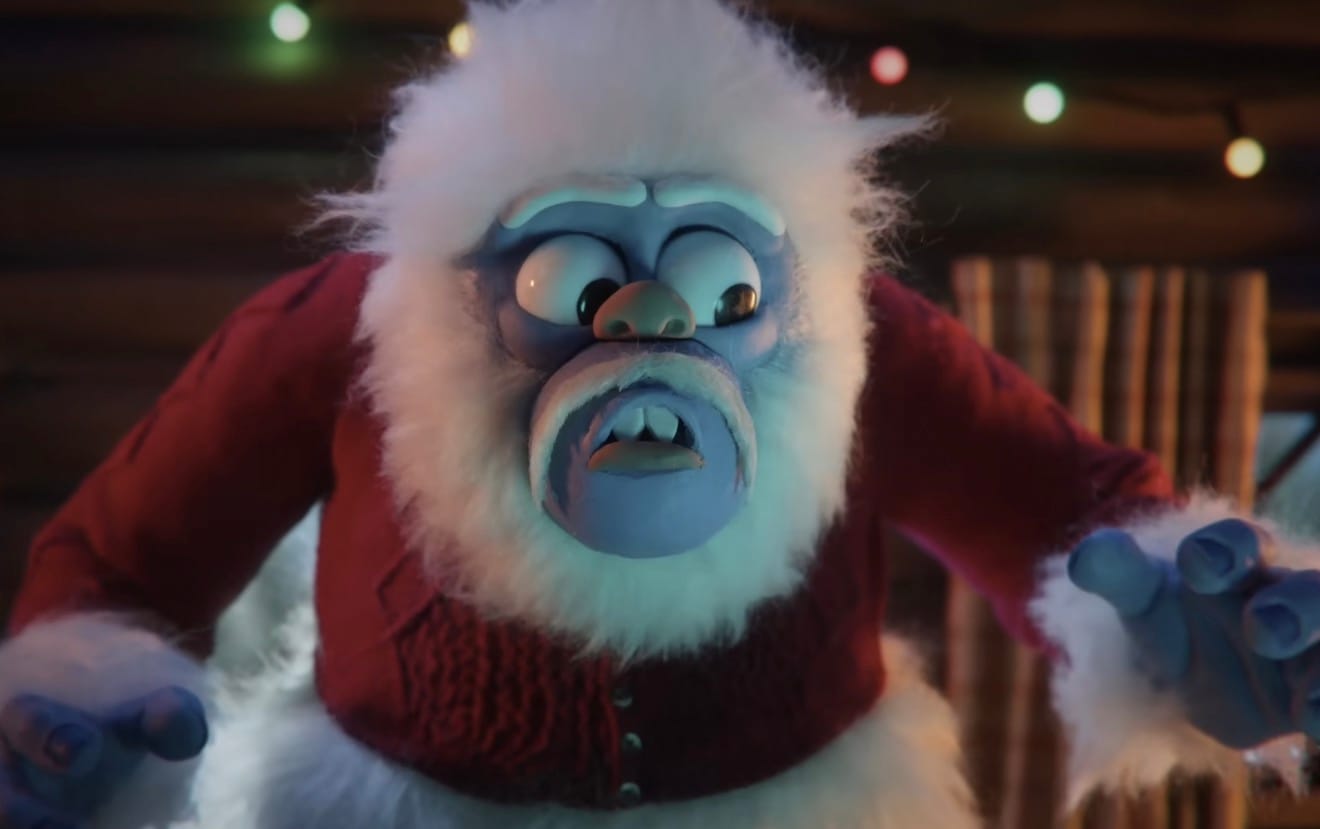
What makes the production particularly distinctive is the work involved in creating it.
Levi’s confirms that the characters and sets were constructed by hand, with individual outfits recreated for the miniature figures.
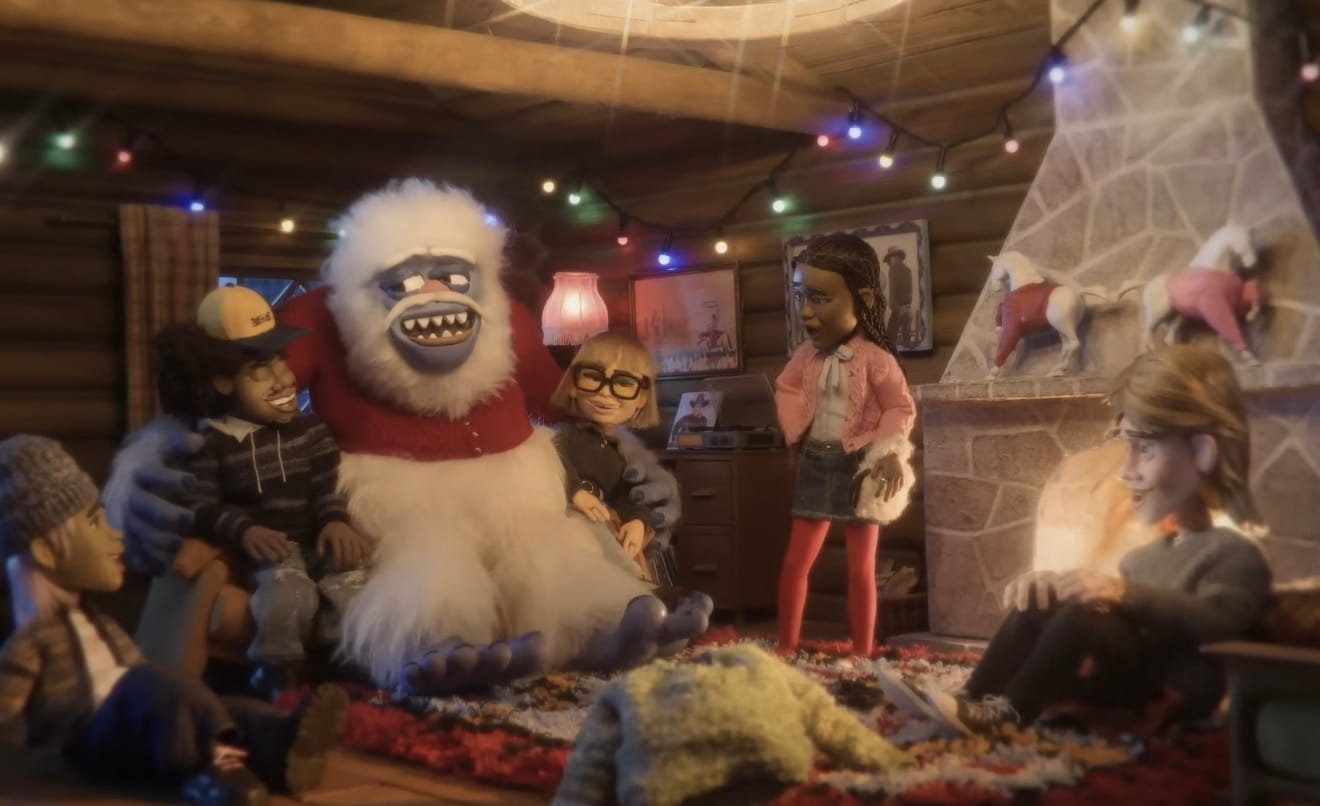
The company says each second of completed animation required approximately four hours of filming, meaning a 60-second production at that rate represents around 240 hours of filming work.
That figure does not include all the preparation involved in designing characters, building sets, producing costumes or completing post-production.
The campaign also references Levi’s 1995 Clayman commercial, connecting the new production with the brand’s earlier use of physical animation.
How Is Alan Cumming Involved in e.l.f.’s Christmas Campaign?
Alan Cumming provides the narration for e.l.f. Made to Stand Out, the cosmetics company’s first festive campaign.
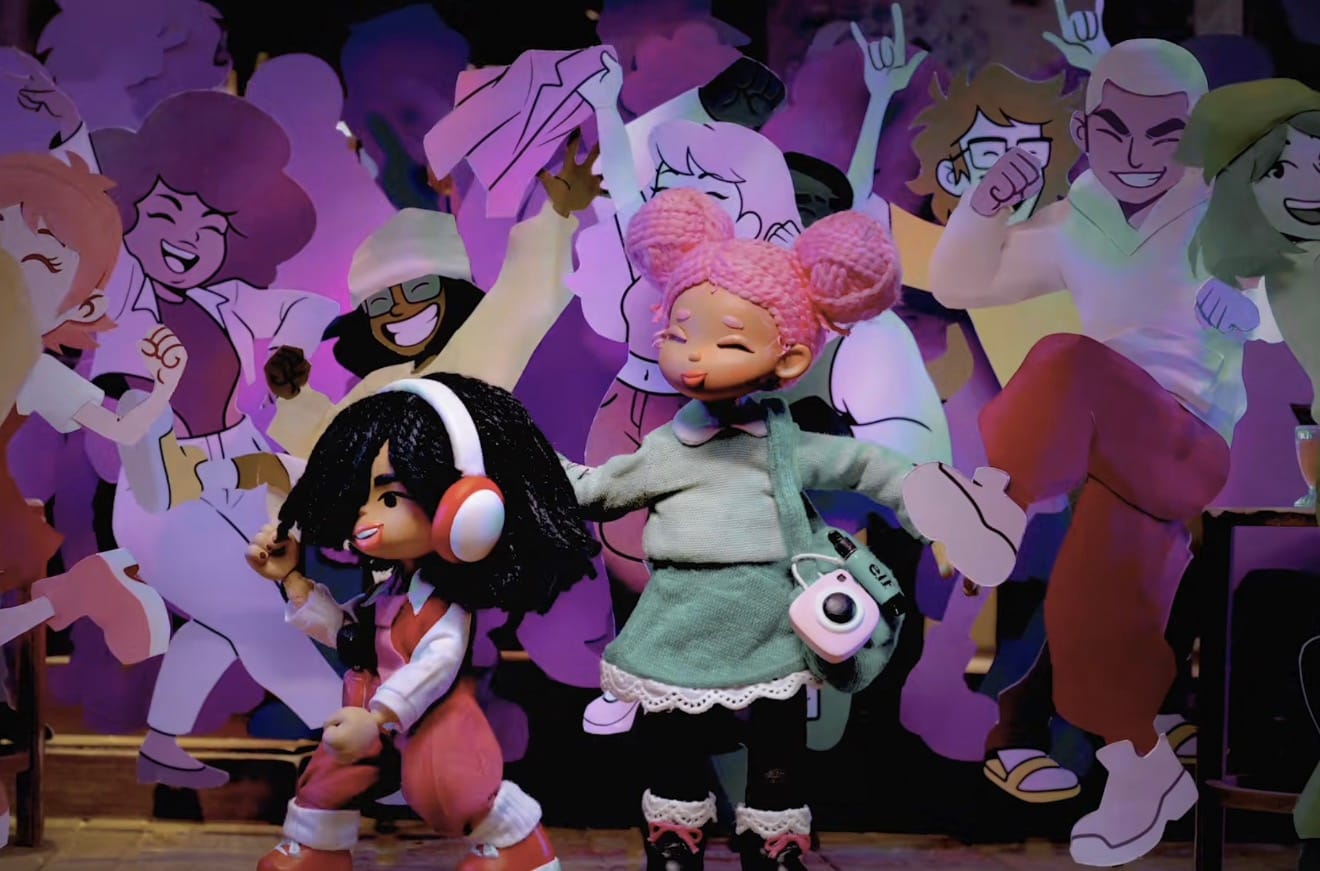
The 60-second film follows three college friends, Kit, Echo and Cleo, as they return to their hometown for Christmas and prepare for a night out.
Each character has qualities they have previously questioned, but their reunion helps them recognise that those differences are part of their individuality.

The production was directed by Cami Kwan of Apartment D Films and created through traditional stop-motion techniques, using individually made puppets and detailed miniature environments.
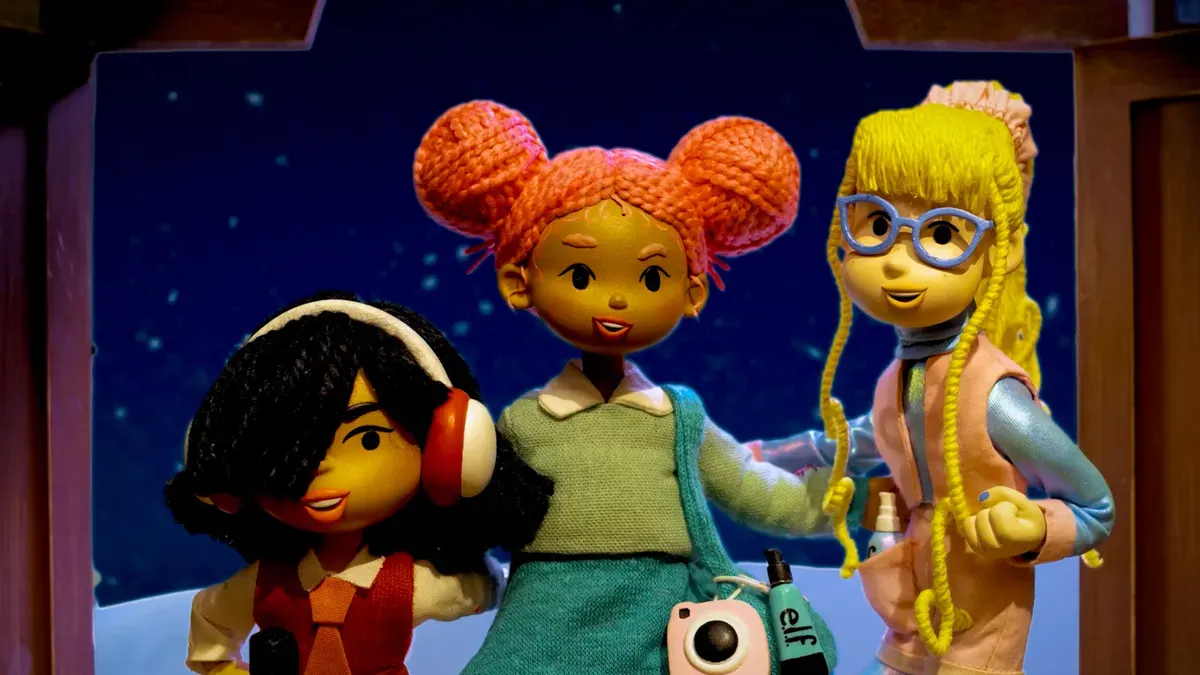
The company has also disclosed figures about the people involved in producing the animation.
Women made up 90% of the puppet team and 100% of the animation team, reflecting the production’s emphasis on handmade creative work and opportunities for female artists.

Cumming’s involvement brings a recognisable television and theatre personality to the campaign, while the film’s message about self-expression connects with e.l.f.’s wider approach to inclusive advertising.
Are Audiences Becoming Less Comfortable With AI Advertising?
The choice to use handmade animation comes as research suggests some consumers are increasingly cautious about advertising created with generative AI.
A 2026 consumer study involving more than 1,500 US respondents found that 50% preferred to give their business to brands that avoided generative AI in customer-facing advertising and other content.
Separate research published in August found that 49% of Americans surveyed viewed businesses using AI to create advertising negatively, compared with 19% who viewed it positively.
The same research found that 79% had recently seen advertising they believed had been created using AI.
These figures suggest that the increasing visibility of AI-generated material does not automatically mean audiences welcome its use.
Is Stop-Motion Animation Better Than AI-Generated Video?
Traditional stop-motion involves physically adjusting characters and photographing them frame by frame, creating movement through a sequence of individual images.
The process requires specialist skills in model-making, animation, lighting, cinematography and set construction.
Generative AI offers a different production method, allowing filmmakers to create moving images without physically building every object or environment.
However, achieving consistent characters and controlled movement can require repeated generation, editing and correction, particularly when producing longer sequences.
Could Handmade Animation Become More Popular?
Stop-motion has remained part of film and television for generations, with productions such as Wallace & Gromit demonstrating the appeal of physical characters and carefully constructed environments.
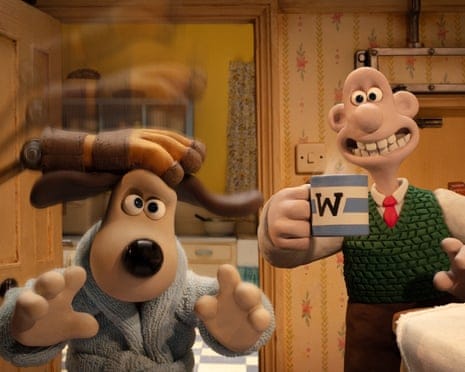
Its imperfections and visible textures can contribute to a recognisable visual identity, particularly when audiences have become accustomed to polished digital imagery.
Levi’s and e.l.f. are using those qualities to support Christmas stories centred on friendship, belonging and individuality.
The campaigns also offer an opportunity to recognise the artists responsible for physically creating their characters and sets, something that can be less visible in conventional advertising.
However, two campaigns do not establish an industry-wide movement away from AI, and many advertising companies continue to use generative technology alongside traditional creative methods.
What they demonstrate is that handmade animation remains commercially relevant, even as increasingly sophisticated AI tools provide alternative ways to produce visual content.
For independent animators, production studios and filmmakers, that continued interest suggests there is still value in developing a distinctive artistic style rather than relying on the same technologies used by competing creators.
The success of the two campaigns will depend on how audiences respond, but their production processes show why human craftsmanship can remain an important part of modern advertising.