Harvey Milk: The LGBTQ+ Pioneer Who Turned Visibility Into Political Power
Harvey Milk became one of the most important figures in LGBTQ+ history, proving the power of visibility, representation and living openly.


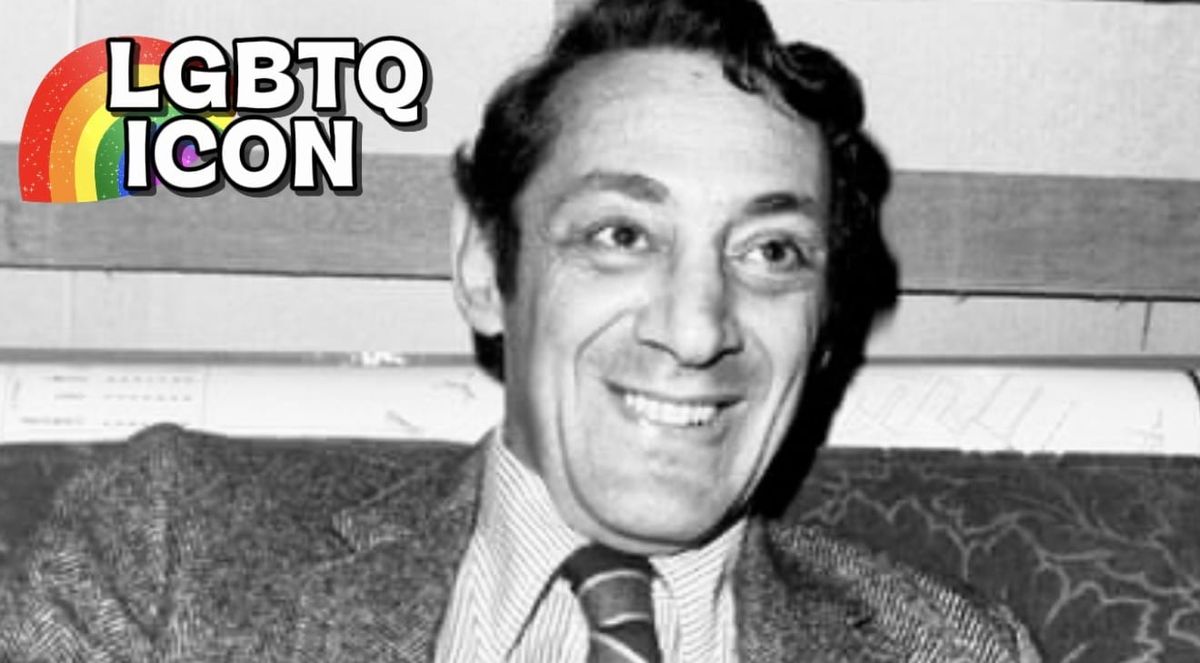
Harvey Milk remains one of the most important figures in modern LGBTQ+ history.
His time in elected office lasted less than a year, but his influence has lasted for generations. He became a symbol of courage, visibility and political possibility at a time when many LGBTQ+ people were still being told to stay silent, stay hidden and accept discrimination as part of everyday life.
When Milk was elected to the San Francisco Board of Supervisors in 1977, his victory carried meaning far beyond one city. He became the first openly gay man elected to public office in California and one of the most visible LGBTQ+ politicians in the world.
For LGBTQ+ people across the United States and beyond, that mattered deeply. It was not only a political result. It was proof that an openly gay candidate could stand before voters, speak honestly about who he was and win.
Milk understood the power of being seen. He believed prejudice survived when LGBTQ+ people were forced into invisibility. His message was direct, urgent and deeply personal. LGBTQ+ people had to be known by their families, neighbours, colleagues and communities. Visibility, he believed, could change public attitudes because it made equality personal.
His political career was cut short when he was assassinated in 1978, but the ideas he championed continue to shape LGBTQ+ activism today. Representation, legal protection, community organising, coalition building and the right to live openly were at the centre of his work.
Nearly half a century after his death, Harvey Milk remains a powerful reminder that political change often begins when ordinary people refuse to disappear.
Early Life And Family Background
Harvey Bernard Milk was born on 22 May 1930 in Woodmere, New York, on Long Island.
He was raised in a Jewish family during a period when American society placed strict expectations on gender, sexuality, religion and family life. His parents, William and Minerva Milk, valued education, work and community, and Harvey grew up with a strong awareness of public life around him.
As a teenager, he attended Bay Shore High School, where he was involved in school activities and became known for his humour, energy and outgoing personality. He was interested in sport, music and performance, showing early signs of the charisma that would later become central to his political appeal.
After leaving school, Milk studied mathematics at New York State College for Teachers, now known as the University at Albany. He graduated in 1951 and soon entered the United States Navy, serving during the Korean War era from 1951 to 1955.
Like many gay men of his generation, Milk lived for years in a society where openness carried serious risk. Homosexuality was heavily stigmatised. People could lose jobs, homes, families and reputations if their sexuality became known. Public figures almost never discussed being gay openly, and legal protections were extremely limited.
This was the world Harvey Milk grew up in. It was a world that often demanded silence from LGBTQ+ people. His later insistence on visibility would become even more powerful because he understood what that silence had cost.
Life Before Politics
Before Harvey Milk became a politician, his life moved through several different phases. He worked as a teacher, a researcher and a stock market analyst. These jobs gave him experience in different worlds, from education to business, but none of them fully captured the public role he would later find.
During the 1950s and 1960s, Milk lived for periods in New York City. These decades were marked by major social change. Movements for civil rights, women’s rights, free speech and social justice were challenging old assumptions across the United States.
Milk’s own politics evolved during this period. He was not always the public activist people later remembered. In his early adult life, he could be cautious and conventional in some ways. Over time, however, he became increasingly drawn towards community organising, protest and political change.
The 1969 Stonewall uprising in New York became a turning point in LGBTQ+ history, helping energise a more visible gay liberation movement. Milk was not one of Stonewall’s central figures, but the wider atmosphere of the period helped shape the world he would later enter.
The demand for visibility and equality was growing louder.
By the early 1970s, Harvey Milk was ready for a different life. That decision led him west.
Moving To San Francisco
In 1972, Harvey Milk moved to San Francisco with his partner, Scott Smith.
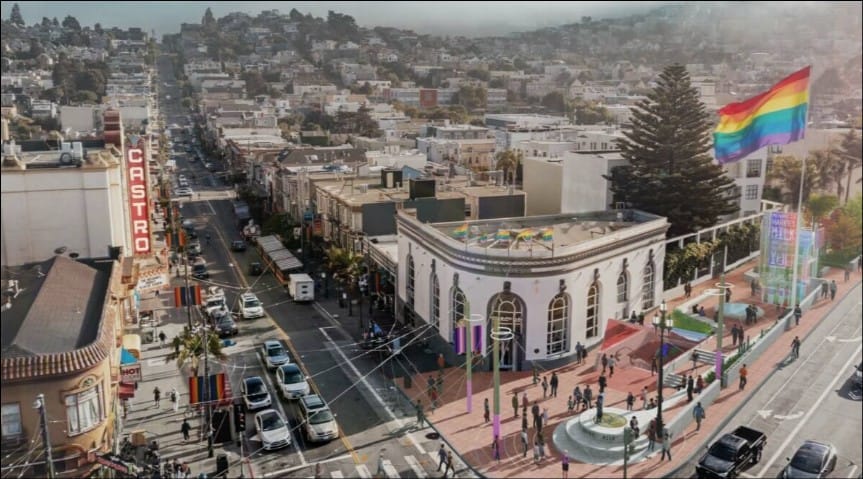
The move changed the course of his life. San Francisco was already becoming one of the most important LGBTQ+ centres in the United States. The Castro District in particular was attracting gay men and lesbians who were looking for a place where they could live more openly. The neighbourhood was changing quickly, becoming a vibrant centre of LGBTQ+ life, culture and political activity.
Milk and Smith opened a camera shop called Castro Camera. At first, it was a small business serving the local community. Over time, it became far more than that.
Castro Camera became a meeting place, campaign office, community hub and informal headquarters for local activism. People came in to buy film or develop photographs, but they also came to talk about politics, housing, policing, business, discrimination and neighbourhood life.
Milk had a natural ability to connect with people. He listened, joked, argued and encouraged. He was not polished in the traditional political sense, but that was part of his appeal. He sounded like someone from the community rather than someone speaking down to it.
That connection became the foundation of his political life.
The Castro District And Community Power
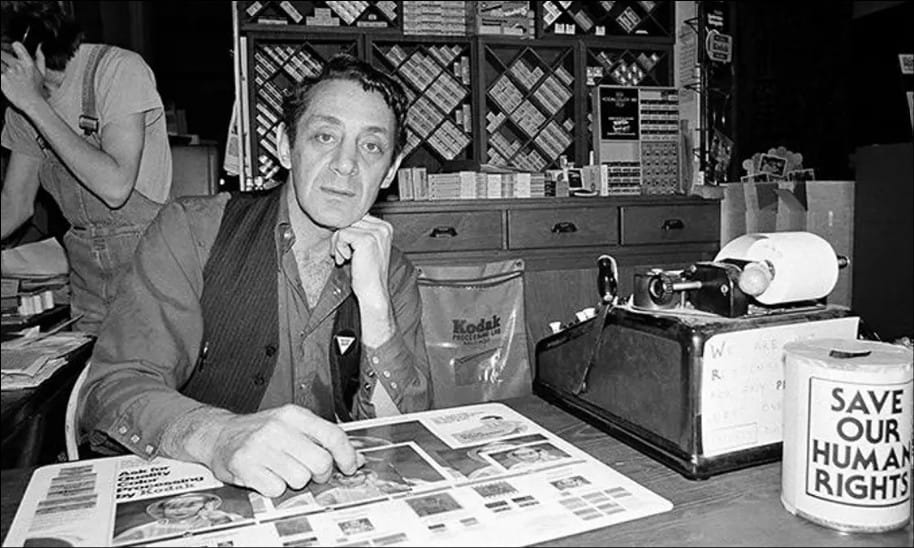
The Castro District was not only a place where LGBTQ+ people lived. It became a symbol of what community could look like when people who had been pushed aside began building power together.
In the 1970s, LGBTQ+ people still faced discrimination in housing, employment, policing and public life. Many had been rejected by families or forced out of other towns and cities. In the Castro, they found visibility, friendship and political strength.
Milk recognised that numbers alone were not enough. A community also needed organisation. It needed businesses, campaigners, voters and leaders willing to speak publicly.
He began building connections with local shop owners, workers, unions and residents. He understood that LGBTQ+ politics could not exist in isolation. If he wanted to win elections and change laws, he needed to build coalitions.
That approach became central to his political identity. Milk did not only speak about gay rights. He also spoke about affordable housing, public transport, small businesses, workers’ rights and neighbourhood services. He wanted to represent the whole community while making sure LGBTQ+ people were no longer ignored.
That made him more than a single issue candidate. It made him a community organiser with a wider vision of justice.
Entering Politics
Harvey Milk first ran for public office in the early 1970s. He did not win at first. In fact, he lost several campaigns before finally being elected. Those defeats mattered because they taught him how to campaign, how to speak to voters and how to turn community support into political organisation.
He became known as the “Mayor of Castro Street”, a nickname that reflected his growing local influence. Even before he held office, people came to him for help, advice and support.
Milk’s campaigns were energetic and personal. He did not hide who he was. He made his sexuality part of his public identity at a time when that was still extremely unusual and politically risky.
His message was simple. LGBTQ+ people deserved representation. Working people deserved support. Neighbourhoods deserved politicians who understood them. Government should listen to communities that had been ignored.
Milk was not trying to fit into politics as usual. He was trying to change who politics was for.
Election Victory In 1977
In November 1977, Harvey Milk was elected to the San Francisco Board of Supervisors. His victory was historic. He became the first openly gay man elected to public office in California and one of the most visible LGBTQ+ politicians in the world.
Milk’s win came after San Francisco moved to district based supervisor elections, giving neighbourhood candidates a stronger route to office. For a candidate rooted in the Castro and connected to local organising, that change helped create the conditions for victory.
For many people, the significance of the result was emotional as well as political. LGBTQ+ people who had grown up seeing themselves mocked, criminalised or excluded could now see an openly gay man elected by voters in a major American city.
Milk understood that his victory belonged to more than one candidate. It belonged to a movement. It belonged to people who had campaigned, donated, voted, marched and come out. It belonged to a community that had decided it would no longer accept invisibility.
His election gave LGBTQ+ people proof that politics could change.
Fighting For Equality In Office
Harvey Milk served in office for less than a year, but he used that time with purpose. One of his major achievements was sponsoring San Francisco’s gay rights ordinance, which banned discrimination based on sexual orientation in employment, housing and public accommodations.
The ordinance passed 11 to 1, with Dan White casting the only vote against it, before Mayor George Moscone signed it into law.
This was a major victory. At the time, many LGBTQ+ people had little legal protection if they were fired, denied housing or mistreated because of their sexuality. The ordinance made San Francisco one of the most important cities in the fight for local LGBTQ+ rights.
Milk also worked on broader community issues. He supported affordable housing, public transport, childcare, workers’ rights and stronger neighbourhood services. He believed LGBTQ+ rights were part of a wider struggle for fairness and dignity.
His politics were rooted in the idea that communities should not have to beg for basic respect. They should organise, vote and demand it.
The Briggs Initiative
One of the most important political battles of Harvey Milk’s career was the fight against Proposition 6, known as the Briggs Initiative.
The proposal aimed to ban gay and lesbian people from working in California’s public schools. It also threatened teachers and school staff who supported gay rights. Supporters claimed the measure was about protecting children. Milk argued that it was about discrimination.
He became one of the most visible opponents of the initiative. He travelled, spoke at rallies and urged voters to reject fear based politics. He challenged the idea that gay teachers were a threat and insisted that LGBTQ+ people deserved fairness under the law.
The campaign against Proposition 6 brought together activists, unions, politicians and community groups. When voters rejected the measure in 1978, it was a major victory for LGBTQ+ rights.
For Milk, the defeat of the Briggs Initiative proved that prejudice could be challenged successfully when people organised and spoke clearly.
It also showed that LGBTQ+ politics could win beyond one neighbourhood, one city or one community.
Why Visibility Mattered
Harvey Milk’s most famous message was about visibility. He believed LGBTQ+ people needed to come out when it was safe to do so. This was not a casual slogan. It was a political strategy.
Milk argued that many people supported anti gay laws because they believed they did not know any gay people. If LGBTQ+ people came out to families, friends, neighbours and colleagues, prejudice would become harder to maintain.
This message was radical for its time. Coming out could lead to rejection, unemployment, violence or social isolation. Milk knew that risk existed, but he also believed silence carried a cost. His words “Hope will never be silent” became one of the phrases most closely associated with his legacy.
Milk’s call for visibility helped shape the future of LGBTQ+ activism. It turned personal truth into political action. For many people, his message offered courage. He made people feel that their lives mattered, their voices mattered and their presence could help change the world.
Harvey Milk’s Speaking Style
Part of Harvey Milk’s power came from the way he spoke. He was direct, emotional and urgent. He did not sound like a distant politician reading from a script. He sounded like someone fighting for his community in real time.
He spoke about hope, but not in a vague way. For Milk, hope meant action. It meant registering to vote, running for office, coming out, joining campaigns and refusing to let others define your life.
His speeches often connected personal freedom with political power. He understood that laws mattered, but he also understood that people needed to believe change was possible before they could fight for it.
That is one reason his legacy has lasted. His words still feel alive because they were rooted in real fear, real courage and real community struggle.
The Political Will
Harvey Milk understood the risks of being a visible gay politician. He knew that public life carried danger, especially for someone challenging prejudice so directly. Because of that, he recorded a message to be played in the event of his assassination.
The existence of that recording has become one of the most haunting parts of his story. Milk did not want his death to end the movement. He wanted it to continue. He wanted LGBTQ+ people to keep organising, keep coming out and keep fighting for representation.
That recording showed both his courage and his awareness of the world he was living in. He knew hatred could be violent. He also knew fear could not be allowed to decide the future.
Assassination At San Francisco City Hall
On 27 November 1978, Harvey Milk was assassinated at San Francisco City Hall. Former supervisor Dan White entered the building and shot Mayor George Moscone. He then went to Harvey Milk’s office and killed him. Milk was 48 years old.
The murders shocked San Francisco and drew national attention. Two public officials had been killed inside City Hall, and one of them was the most visible openly gay politician in America.
That evening, thousands of people gathered in the streets. A candlelit march moved through San Francisco in grief and disbelief. The images of mourners carrying candles became some of the most powerful in LGBTQ+ history. They showed a community devastated by loss but unwilling to be silent.
Milk’s political career had lasted less than a year. His impact had already become permanent.
The White Night Riots
The grief surrounding Harvey Milk’s death deepened when Dan White was convicted of voluntary manslaughter rather than murder.
Many people believed the sentence was far too lenient. Anger erupted in San Francisco in May 1979 in protests that became known as the White Night Riots.
The events were controversial and painful, but they reflected the depth of frustration felt by many LGBTQ+ people. For years, they had experienced discrimination, violence and institutional neglect. Milk’s killing and the outcome of the trial became a symbol of a much larger injustice.
The White Night Riots remain an important part of the story because they reveal how much Harvey Milk meant to the community and how raw the struggle for equality remained. They also showed that grief could not be separated from politics.
Recognition After Death
Harvey Milk’s reputation continued to grow after his death. His life became the subject of books, documentaries, films, plays and public memorials. The 1984 documentary The Times of Harvey Milk won the Academy Award for Best Documentary Feature, helping bring his story to a wider audience.
In 2008, the film Milk, starring Sean Penn, introduced Harvey’s life to another generation. The film received major awards attention and renewed public interest in his activism.
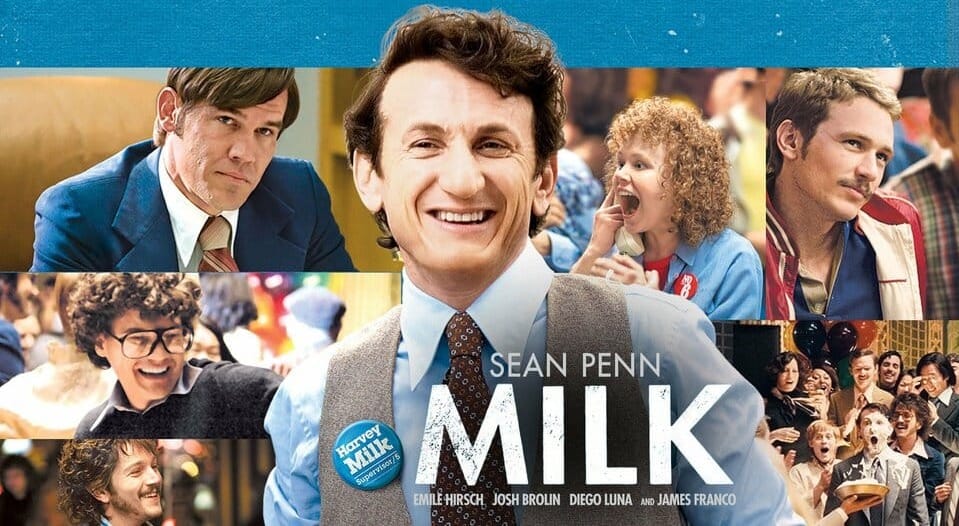
In 2009, Milk was posthumously awarded the Presidential Medal of Freedom, one of the highest civilian honours in the United States. That same year, California established Harvey Milk Day, marked each year on 22 May, his birthday.
Schools, streets, public buildings and community centres have been named after him. These honours reflect the scale of his influence, but they also show something deeper. Milk’s story has become part of how LGBTQ+ history is remembered, taught and carried forward.
Harvey Milk’s Legacy In 2026
Harvey Milk’s legacy remains powerful, but it also remains politically contested.
In 2021, the U.S. Navy christened a ship named USNS Harvey Milk, recognising his military service and civil rights legacy. In 2025, that ship was renamed USNS Oscar V. Peterson, a decision that drew criticism from LGBTQ+ advocates and renewed debate about how America remembers civil rights figures.
The controversy showed that Milk is not only a figure from history. His name still carries political meaning. Nearly half a century after his assassination, arguments over how he should be remembered continue to reflect wider debates about LGBTQ+ visibility, equality and public recognition.
That makes his story feel sharply current. Milk’s life is not only a chapter in the past. It remains part of the present conversation about who gets honoured, whose history is protected and whose names are allowed to remain in public view.
Harvey Milk And Modern LGBTQ+ Politics
Today, openly LGBTQ+ politicians serve in parliaments, councils, congresses and governments around the world. That progress did not happen by accident.
Harvey Milk helped show that LGBTQ+ candidates could win elections without hiding who they were. He proved that identity did not have to be a political weakness. It could be a source of connection, honesty and strength.
Modern LGBTQ+ politicians stand on the shoulders of many campaigners, but Milk remains one of the most important figures in that history.
His election helped change what people believed was possible. That is why his story still matters to new generations of LGBTQ+ leaders. He showed that representation is not symbolic decoration. It can affect law, safety, confidence and public imagination.
When someone from a marginalised community wins office openly, it changes what others can imagine for themselves.
Where To Learn More About Harvey Milk
There are several powerful ways to learn more about Harvey Milk’s life and legacy.
The Times of Harvey Milk, released in 1984, remains one of the most important documentaries about his life. It won the Academy Award for Best Documentary Feature and includes footage and testimony that help place his story in its historical context.
The 2008 film Milk, starring Sean Penn, brought his story to a wider modern audience and helped renew interest in his activism and assassination.
For those visiting San Francisco, the Castro District remains central to understanding Milk’s world. Castro Camera no longer operates as it did during his lifetime, but the neighbourhood remains closely tied to LGBTQ+ history.
Harvey Milk Plaza, located at Castro Street Station in San Francisco, is one of the most visible public places connected to his legacy. The plaza sits in the heart of the Castro, close to the neighbourhood where Milk built his political base, organised campaigns and helped turn LGBTQ+ visibility into community power.
The GLBT Historical Society Museum in San Francisco is also a key place for anyone wanting to explore wider LGBTQ+ history, including the era in which Milk lived and campaigned.
Harvey Milk Day, marked in California each year on 22 May, continues to provide an opportunity to remember his life, teach his legacy and reflect on the ongoing fight for equality. Together, these films, places and commemorations help keep Milk’s story alive.
Why Harvey Milk Still Matters Today
Harvey Milk still matters because the questions he raised have not disappeared.
Who gets represented?
Who gets protected by law?
Who feels safe enough to live openly?
Who is encouraged to lead?
Who gets remembered when history is written?
These questions remain important in many countries and communities across the world, even today.
Milk’s answer was visibility, action and hope. He believed people had to take part in politics because decisions would be made with or without them.
His life reminds us that progress is not automatic. It is built by people who organise, vote, speak up and refuse to accept being treated as less than equal.
Milk did not live long enough to see the full impact of his work. He did not see the later growth of LGBTQ+ political representation. He did not see marriage equality. He did not see generations of openly LGBTQ+ elected officials take office across the world. But his work helped make those futures easier to imagine.
Harvey Milk Timeline
1930: Harvey Bernard Milk is born in Woodmere, New York.
1951: He graduates from New York State College for Teachers.
1951 to 1955: He serves in the United States Navy.
1972: Milk moves to San Francisco with Scott Smith.
1973: Castro Camera opens in the Castro District.
1977: Milk is elected to the San Francisco Board of Supervisors.
1978: He sponsors San Francisco’s gay rights ordinance.
1978: He helps campaign against the Briggs Initiative.
27 November 1978: Harvey Milk and Mayor George Moscone are assassinated.
1979: The White Night Riots take place following Dan White’s sentencing.
1984: The Times of Harvey Milk documentary is released.
2008: Milk brings his story to a new generation of film audiences.
2009: Milk is posthumously awarded the Presidential Medal of Freedom.
2009: California establishes Harvey Milk Day, marked each year on 22 May.
2021: The U.S. Navy christens USNS Harvey Milk.
2025: The ship is renamed USNS Oscar V. Peterson, prompting renewed debate about Milk’s public legacy.
Quick Facts
Born: 22 May 1930
Birthplace: Woodmere, New York
Died: 27 November 1978
Age at death: 48
Occupation: Politician, activist, business owner and community organiser
Known for: Becoming the first openly gay man elected to public office in California
Partner: Scott Smith during his early San Francisco years
Political role: San Francisco Board of Supervisors
Key campaign: Opposition to the Briggs Initiative
Major achievement: Sponsoring San Francisco’s gay rights ordinance
Legacy: Pioneer of LGBTQ+ political visibility and representation
Legacy Of An LGBTQ+ Icon
Harvey Milk’s political career was short, but his legacy is vast.
He showed LGBTQ+ people that they did not have to remain invisible. He showed politicians that gay voters, workers, families and communities could not be ignored. He showed the world that representation could change lives.
His message was not simply about one election or one city. It was about dignity. It was about the right to live openly. It was about the belief that hope could become political power. That belief still matters, even today.
Every openly LGBTQ+ candidate who runs for office, every young person who sees themselves reflected in public life and every community that refuses to be pushed back into silence carries part of the world Milk helped imagine.
Nearly half a century after his death, Harvey Milk remains one of the most important LGBTQ+ icons in modern history. His life continues to inspire people who believe visibility matters, equality matters and every community deserves a voice.
Hope, as Harvey Milk understood it, was never passive.
It was something people had to build together.