Freddie Mercury: The Queen Frontman Who Became One Of Music’s Greatest LGBTQ+ Icons
Freddie Mercury became one of music’s greatest icons, leaving an extraordinary legacy across Queen, popular culture and LGBTQ+ history that continues today.


In this series, we look at some of the most iconic and influential figures in LGBTQ+ history and culture. Some are celebrated, while others have controversial or complex legacies. Inclusion does not mean endorsement, but recognition of the impact they have had on LGBTQ+ visibility, representation and history.
Few performers have left a mark on popular culture quite like Freddie Mercury. More than three decades after his death, his voice remains instantly recognisable, his songs continue to fill stadiums and his influence can be seen everywhere from music and fashion to film and LGBTQ+ culture.
As the frontman of Queen, Freddie helped create some of the most successful and enduring songs ever recorded. His extraordinary vocal ability, fearless creativity and unforgettable stage presence transformed him into one of the greatest entertainers in music history.
Yet Freddie Mercury’s story is about much more than record sales and sold out concerts. It is also the story of a young man born thousands of miles from Britain who reinvented himself, followed his dreams and became a global superstar.
It is the story of a performer who guarded his private life fiercely while living through a period when LGBTQ+ people faced widespread prejudice. It is also the story of a man whose death brought global attention to the AIDS crisis and whose legacy continues to inspire millions.
Today, Freddie Mercury remains one of the most celebrated musicians of all time and one of the most significant LGBTQ+ icons in modern history.
From Zanzibar To India
Freddie Mercury was born Farrokh Bulsara on 5 September 1946 in Stone Town, Zanzibar, then under British protection.
His parents, Bomi and Jer Bulsara, were members of the Parsi community. Their ancestors had originally come from Persia, now Iran, and followed the Zoroastrian faith. Freddie spent much of his childhood in India, attending St Peter’s School, a British style boarding school near Bombay, now Mumbai.
Teachers quickly noticed his musical ability. He showed a natural talent for piano and enjoyed performing in front of audiences. At school, he joined his first band, The Hectics, where he began playing popular rock and roll songs.
It was also during this period that friends and teachers began calling him Freddie, a nickname that stayed with him for the rest of his life.
Even as a child, he demonstrated many of the qualities that would later define him. He was ambitious, imaginative and determined to stand out.
A New Life In Britain
The Zanzibar Revolution of 1964 changed Freddie’s life forever. Political unrest forced the Bulsara family to leave Zanzibar and move to England. They settled in Middlesex, where Freddie continued his education and adjusted to life in a new country.
Like many families starting again in a new country, the transition was not always easy. Freddie was a young man trying to find his place in a rapidly changing Britain while carrying the experience of a childhood split across cultures, continents and expectations.
After school, he enrolled at Ealing Art College in London, where he studied graphic design. The course proved influential. Freddie developed an eye for style, branding and visual presentation. His artistic background would later help shape Queen’s image, including the famous Queen crest that combined the zodiac signs of the band’s members.
London in the late 1960s was alive with creativity. Music, fashion and youth culture were evolving rapidly, and Freddie was determined to become part of that world.
The Birth Of Queen
Before Queen, Freddie performed with several local bands and spent years pursuing his dream of becoming a professional musician.
A turning point came when he met guitarist Brian May and drummer Roger Taylor, who were playing in a group called Smile. Freddie believed they had the potential to become something much bigger. When Smile came to an end, he joined May and Taylor and suggested a new name for the band.
Queen.
The choice reflected his love of theatre, glamour and boldness. It was short, memorable and impossible to ignore, much like Freddie himself.
Bassist John Deacon later joined the group, completing the classic line up. Together, the four musicians created one of the most successful partnerships in music history.
Breaking The Rules
Queen quickly developed a reputation for doing things differently. While many bands focused on a single style, Queen blended rock, opera, pop, hard rock, ballads and theatrical performance. Their music could be dramatic, playful, heavy, emotional and extravagant, sometimes all within the same song.
At the centre of it all was Freddie Mercury. His voice possessed remarkable power, range and versatility. He could move between delicate melodies and thunderous rock vocals with ease. He understood drama, but he also understood control. Behind the flamboyance was a serious musician with a clear sense of how to hold an audience.
The breakthrough arrived in 1975 with Bohemian Rhapsody. The song broke almost every rule of commercial music. It contained no traditional chorus, lasted nearly six minutes and combined opera, ballad and rock sections in a way that seemed completely outside the usual pop format.
Many industry experts believed it would fail. Instead, it became one of the most famous songs ever recorded. Almost fifty years later, Bohemian Rhapsody remains one of the defining songs of popular music and one of the clearest examples of Queen’s refusal to play by anyone else’s rules.
A Global Superstar
Throughout the 1970s and 1980s, Queen became one of the biggest bands in the world. Their catalogue included classic songs such as Killer Queen, Somebody to Love, We Will Rock You, We Are the Champions, Crazy Little Thing Called Love, Under Pressure, Radio Ga Ga and Don’t Stop Me Now.
The band’s success took them across the globe. They performed in Europe, North America, South America, Asia and Australia, attracting huge audiences wherever they went.
Freddie thrived on the attention. He once famously declared: “I won’t be a rock star. I will be a legend.”
It was a bold statement, but history proved him right.
The Greatest Showman
What truly separated Freddie Mercury from many other singers was his ability to command an audience.
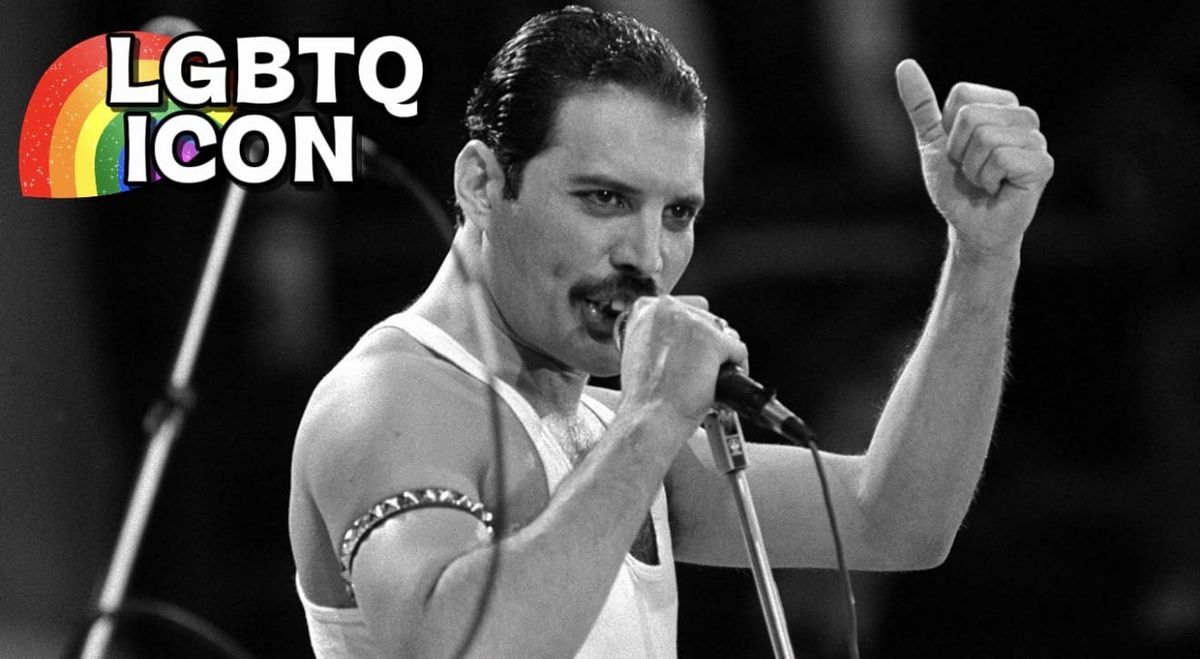
He was not simply a vocalist. He was an entertainer. Armed with a microphone stand and limitless confidence, Freddie could captivate tens of thousands of people within seconds. His concerts combined music, humour, energy and theatre.
Whether dressed in elaborate costumes, military jackets or his famous white vest and jeans, he always seemed completely at home on stage.
That stage presence was not accidental. Freddie understood performance as a form of storytelling. He knew how to build tension, how to tease a crowd, how to make a stadium feel intimate and how to turn a song into an event.
Many critics and music historians consider him one of the greatest live performers who ever lived.
Live Aid
If one performance defines Freddie Mercury’s career, it is Live Aid.
Held on 13 July 1985, the charity concert attracted a global television audience estimated at around 1.5 billion people. Queen’s set lasted just over twenty minutes.
It became legendary. Performing at Wembley Stadium, Freddie and Queen delivered Bohemian Rhapsody, Radio Ga Ga, Hammer to Fall, Crazy Little Thing Called Love, We Will Rock You and We Are the Champions.
His control of the audience was extraordinary. The famous vocal call and response sequence remains one of the most iconic moments in live music history.
What made the performance so remarkable was not only the strength of the songs. It was the way Freddie seemed to take possession of Wembley Stadium. He turned a massive global charity event into a Queen concert within seconds, drawing the audience into the palm of his hand.
Many people who watched Live Aid believed they had witnessed one of the greatest concert performances ever delivered.
Even decades later, it continues to top polls, rankings and discussions about the most powerful live music moments of all time.
Mary Austin
One of the most important people in Freddie’s life was Mary Austin. The pair met in the early 1970s and quickly formed a close relationship. They lived together and became engaged, although they never married.
As Freddie came to terms with his sexuality, their romantic relationship changed, but their friendship remained extraordinarily strong. Freddie later described Mary as his closest friend. He once said that all his lovers had asked why they could not replace her, but that it was impossible.
Their bond lasted for the rest of his life. Freddie left Mary the majority of his estate, including Garden Lodge, his beloved London home. She remained one of the most important people in his world until the very end.
Mary Austin’s place in Freddie’s life is important because it shows how deeply he valued loyalty, emotional safety and chosen family. Their relationship changed shape, but it did not lose its significance.
Freddie Mercury And His Relationships With Men
As Freddie’s career developed, he entered relationships with men and became part of London’s gay nightlife scene.
This period coincided with changing attitudes towards sexuality, but prejudice remained widespread. Many public figures feared discussing their sexuality openly because of potential damage to their careers, press intrusion and public judgement.
Freddie rarely spoke publicly about labels. He preferred to keep his private life separate from his public image. Nevertheless, he formed several important relationships with men throughout his life.
Today, Freddie is generally regarded as a gay man, although some biographers have suggested bisexuality may also describe aspects of his life, particularly because of his long relationship with Mary Austin.
What remains clear is that Freddie valued privacy and resisted attempts by the media to define him on their terms.
That privacy should not be mistaken for shame. Freddie lived loudly on stage, but he chose carefully what he gave to the public. At a time when LGBTQ+ people were often mocked, criminalised in many parts of the world or treated as scandal by the press, that choice was part of how he protected himself.
Jim Hutton
One of the most significant male relationships in Freddie’s life was with Jim Hutton. An Irish hairdresser, Hutton met Freddie in the mid 1980s. Their relationship developed into a long term partnership that lasted until Freddie’s death.
Hutton moved into Garden Lodge and became a central figure in Freddie’s personal life. When Freddie’s health began to decline, Hutton remained by his side.
The couple exchanged rings as a sign of commitment, although they could not legally marry during that era. After Freddie’s death, Hutton spoke publicly about their relationship and later wrote a memoir describing their years together.
For many LGBTQ+ historians and listeners, recognising Jim Hutton’s place in Freddie’s life is important because it provides a fuller picture of the man behind the public image.
Freddie was surrounded by fame, wealth and global attention, but at home he still wanted affection, companionship and loyalty. Jim Hutton’s role in his final years remains an important part of that story.
The AIDS Crisis
The 1980s saw the emergence of HIV and AIDS, one of the most significant public health crises of modern times. The disease particularly affected gay and bisexual men, although it impacted people from every background.
Fear and misinformation were widespread. Many people living with HIV faced stigma, discrimination and isolation. LGBTQ+ communities suffered not only the loss of loved ones, but also the cruelty of public ignorance and political neglect.
During Freddie’s final years, speculation about his health intensified. He largely refused to comment publicly.
Friends and colleagues later spoke about his determination to continue working despite his declining condition. Even as he became increasingly unwell, he continued recording music.
Songs such as These Are the Days of Our Lives now carry additional emotional significance because they were among the final recordings of his life.
The video for the song is particularly moving in hindsight. Freddie appears visibly unwell, but still charismatic, still expressive and still committed to performing.
His Final Days
On 23 November 1991, Freddie Mercury released a public statement confirming that he had AIDS.
The announcement ended years of speculation. Less than twenty four hours later, on 24 November 1991, Freddie died at his home in Kensington, London, aged 45.
The news shocked the world. Tributes poured in from fellow musicians, public figures and listeners. For many people, Freddie’s death transformed public awareness of HIV and AIDS.
His passing helped generate conversations about a disease that had often been ignored, misunderstood or surrounded by fear.
Freddie was not the only public figure whose death changed the conversation around AIDS, but his global fame meant the impact was enormous. Millions of people who had grown up with Queen’s music were forced to confront the reality of the crisis in a deeply personal way.
The Freddie Mercury Tribute Concert
In April 1992, Wembley Stadium hosted the Freddie Mercury Tribute Concert.
The event brought together some of the biggest names in music. Artists including George Michael, Elton John, David Bowie, Annie Lennox, Lisa Stansfield and many others performed in honour of Freddie.
The concert attracted a huge global audience and raised awareness of HIV and AIDS. Many of the performances remain highly regarded today, particularly George Michael’s rendition of Somebody to Love.
The event demonstrated the enormous respect Freddie commanded throughout the music industry. It also showed how his death had become part of a wider movement to challenge stigma, raise funds and increase public understanding.
The Mercury Phoenix Trust
Following Freddie’s death, Brian May, Roger Taylor and Jim Beach established the Mercury Phoenix Trust. The organisation was created to support the global fight against HIV and AIDS.
Over the years, it has funded projects around the world and helped raise millions for education, prevention and support initiatives.
The charity ensures that Freddie’s legacy continues to make a positive difference long after his death.
That matters because Freddie’s story is often remembered through music, performance and fame, but his legacy also has a public health impact. The Mercury Phoenix Trust turned grief into practical action, helping to support work that continues to matter across the world.
Freddie Mercury’s Lasting Legacy
Few performers remain as relevant decades after their death as Freddie Mercury.
Queen’s music continues to attract new audiences. Songs written and performed by Freddie are streamed billions of times every year. The 2018 film Bohemian Rhapsody introduced his story to a new generation and became one of the most successful music biopics ever made.
For LGBTQ+ people, Freddie represents courage, individuality and artistic freedom. He achieved global success during a period when many LGBTQ+ people felt unable to live openly. Although he never presented himself as a political activist, his visibility helped challenge stereotypes and expand understanding.
For music lovers, he remains one of the greatest singers and performers in history.
For millions of people, he remains both.
Why Freddie Mercury Still Matters
Freddie Mercury matters because he refused to be ordinary. He built himself into something unforgettable, not by fitting in, but by leaning into everything that made him different. His voice was extraordinary, but so was his imagination. He understood the power of spectacle, the thrill of reinvention and the emotional force of music that could make strangers sing together.
His life also carries a deeper significance for LGBTQ+ history. Freddie lived through a period when fame did not protect people from prejudice. If anything, fame made private life more exposed and more vulnerable. He did not owe the public every detail of his identity, relationships or health, yet his story still became part of a much larger LGBTQ+ legacy.
There is power in remembering him fully. Not only as the man in the yellow jacket at Wembley. Not only as the voice behind Bohemian Rhapsody. Not only as the performer who could make an entire stadium clap above its head.
Freddie Mercury was also Farrokh Bulsara. A Parsi artist. A man shaped by Zanzibar, India and Britain. A man who loved fiercely and privately. A performer who created glamour from difference and turned vulnerability into sound.
That is why his legacy has lasted.
Timeline
1946: Born Farrokh Bulsara in Zanzibar.
1954: Begins attending boarding school in India.
1964: Moves to Britain with his family following the Zanzibar Revolution.
1970: Queen is formed.
1975: Bohemian Rhapsody is released.
1985: Queen performs at Live Aid.
1985: Freddie’s relationship with Jim Hutton begins.
1991: Freddie publicly confirms he has AIDS.
1991: Freddie dies aged 45.
1992: The Freddie Mercury Tribute Concert is held at Wembley Stadium.
1992: The Mercury Phoenix Trust is established.
2018: Bohemian Rhapsody is released in cinemas.
Quick Facts
Born: 5 September 1946
Birth name: Farrokh Bulsara
Birthplace: Stone Town, Zanzibar
Died: 24 November 1991
Place of death: Kensington, London
Occupation: Singer, songwriter, musician and performer
Band: Queen
Long term partner: Jim Hutton
Close lifelong friend: Mary Austin
Known for: One of the greatest singers and performers in music history
Legacy Of A LGBTQ+ Icon
Freddie Mercury changed music forever. His voice, creativity and stage presence helped redefine what a rock frontman could be.
From Zanzibar to Wembley Stadium, his journey was unlike any other. More than thirty years after his death, his songs continue to inspire, entertain and unite people around the world. His story is one of talent, ambition, resilience, privacy and self creation.
For some, Freddie will always be the voice of Queen. For others, he is a groundbreaking performer whose music changed their lives.
For LGBTQ+ audiences, he remains a complicated, powerful and deeply human icon from a time when visibility came at a cost. The truth is that Freddie Mercury does not fit into only one version of history. He was too big for that.
He was Farrokh Bulsara from Zanzibar. He was Freddie Mercury of Queen. He was the man who held Wembley Stadium in his hands. He was the artist who made the impossible sound effortless.
And more than three decades after his death, he remains exactly what he once promised he would become.
A legend.
This article is part of our LGBTQ+ Icons series. Discover more of the people who have shaped LGBTQ+ history, culture and representation on further articles.