Elton John: The Music Legend, LGBTQ+ Icon And AIDS Campaigner Still Creating History
Elton John: The Music Legend, LGBTQ+ Icon And AIDS Campaigner Still Creating History


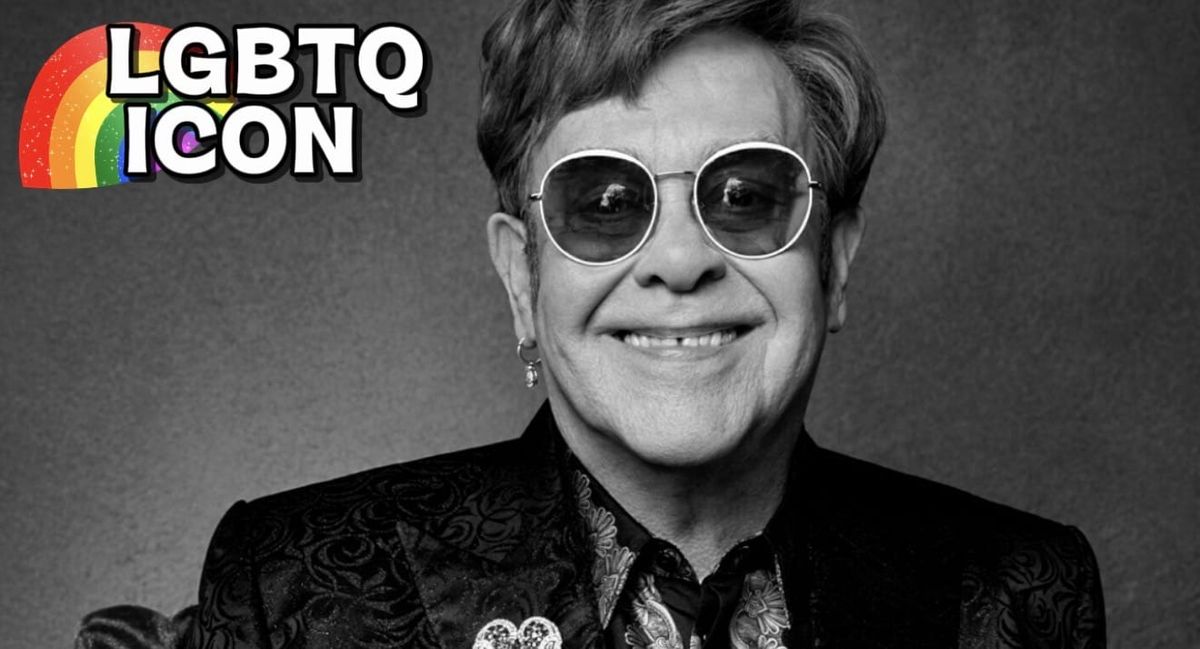
Few performers have shaped modern music quite like Elton John.
Across more than five decades, he has sold hundreds of millions of records, written some of the most recognisable songs in popular music history and built a career that has crossed generations. His music has soundtracked weddings, funerals, celebrations, heartbreaks and personal milestones for millions of people around the world.
Yet Elton John’s story is about far more than chart success. It is the story of a shy boy from suburban London who found freedom at the piano. It is the story of a performer who became one of the biggest stars on the planet while struggling privately with identity, addiction and self acceptance. It is also the story of a man who turned survival into service, using his fame and wealth to become one of the most influential advocates in the global fight against HIV and AIDS.
Today, Elton John stands as one of the most successful musicians in history and one of the most important LGBTQ+ figures of the modern era. His influence reaches beyond music into philanthropy, visibility, family, recovery and public life.
Even after retiring from full scale touring, Elton has not disappeared from culture. His final tour became a global farewell event, his Glastonbury performance became a landmark British television moment, his Emmy win made him an EGOT winner, and his 2025 album with Brandi Carlile proved that stepping away from the road did not mean stepping away from creativity.
Elton John is not simply a legacy artist. He is still part of the present.
Growing Up As Reginald Dwight
Elton John was born Reginald Kenneth Dwight on 25 March 1947 in Pinner, Middlesex, now part of Greater London.
His father, Stanley Dwight, served in the Royal Air Force. His mother, Sheila, encouraged his early interest in music, while his wider family recognised very quickly that Reginald had an unusual gift.
From a remarkably young age, he could hear a tune and reproduce it on the piano. Music seemed to come naturally to him. Before fame, before the costumes, before the glasses and global tours, there was a boy sitting at a piano in Pinner, finding a language that made sense to him.
Home life was not always easy. Elton has spoken openly over the years about a difficult relationship with his father and the emotional distance he felt as a child. The piano became more than an instrument. It became a refuge, a place where feeling could become melody.
By the age of eleven, he had won a junior scholarship to the Royal Academy of Music in London. The achievement showed the scale of his talent, but classical music was only part of the story.
As he grew older, he became increasingly drawn to rock and roll, rhythm and blues, soul and pop. Elvis Presley, Little Richard and Jerry Lee Lewis opened up a different world. Their music was loud, expressive, physical and thrilling.
For Reginald Dwight, it suggested possibility.
Discovering A New Identity
During his teenage years, Elton began performing in local bands. One of the most important was Bluesology, a group that backed visiting American soul artists and helped him understand the demands of professional performance. Those years gave him experience, discipline and exposure to life beyond suburban routine.
By the late 1960s, he knew he needed a new identity. Reginald Dwight did not feel like the name of the performer he wanted to become. He adopted the name Elton John, drawing inspiration from Bluesology saxophonist Elton Dean and singer Long John Baldry.
It was not only a stage name. It was an act of reinvention. The shy young man from Pinner was beginning to build the figure the world would later recognise instantly: bold, musical, emotional, theatrical and impossible to ignore.
Meeting Bernie Taupin
One of the greatest partnerships in music history began in 1967. Elton answered an advertisement seeking songwriters. The opportunity did not work out in the usual way, but he was given lyrics written by a young poet named Bernie Taupin.
The connection changed both their lives. Bernie supplied words, images and stories. Elton transformed them into melodies. Their working method was unusual, but it became one of the most successful creative partnerships popular music has ever seen.
Elton could take Bernie’s lyrics and find the song inside them with remarkable speed. Bernie’s writing gave Elton characters, landscapes, heartbreak, longing and drama. Elton’s melodies gave those words emotional force.
Together they created songs that became part of popular culture itself. Their partnership is one of the reasons Elton’s career has lasted so long. Behind the spectacle and celebrity was a songwriting relationship built on trust, instinct and a shared understanding of what a song could do.
Becoming A Global Star
Elton’s breakthrough came at the beginning of the 1970s. The 1970 album Elton John introduced him to a wider audience, with Your Song becoming one of his defining early hits. The song’s directness and emotional simplicity showed that Elton did not need excess to move people. He could sit at a piano and make a love song feel completely personal.
More success followed quickly. Albums such as Tumbleweed Connection, Madman Across the Water, Honky Château and Goodbye Yellow Brick Road helped establish him as one of the defining artists of the decade.
Songs including Tiny Dancer, Rocket Man, Daniel, Goodbye Yellow Brick Road, Bennie and the Jets, Candle in the Wind and Saturday Night’s Alright for Fighting showed his range. He could be tender, strange, theatrical, playful, mournful and explosive.
Audiences were captivated not only by the songs, but by Elton himself. He embraced flamboyant costumes, towering platform shoes, oversized glasses and stage outfits that turned concerts into events. In an era filled with major performers, Elton found a way to look and sound like nobody else.
His image was outrageous, but the musicianship underneath was serious.
The Height Of Fame
During the 1970s, Elton John became one of the biggest stars in the world. The speed of his success was extraordinary. He recorded constantly, toured relentlessly and became a regular presence in the charts. His albums sold in huge numbers and his concerts attracted vast audiences.
But fame brought a heavy cost. Behind the public image, Elton was struggling. The pressure of performance, the demands of celebrity, unresolved questions about sexuality and the loneliness of life at the centre of global attention all took their toll.
To the public, he looked unstoppable. Privately, he was often far less secure. That contrast would become one of the central threads of his life: the dazzling performer who could command arenas, and the man behind the glasses who was still trying to understand himself.
Understanding His Sexuality
Elton John grew up during a period when open discussion of sexuality was difficult, especially for public figures.
For much of his early career, he struggled to reconcile his public success with his private identity. In 1976, he described himself as bisexual during an interview with Rolling Stone, a statement that attracted significant attention at a time when very few major music stars spoke openly about same sex attraction.
Years later, Elton acknowledged that he was gay.His journey towards self acceptance was not simple, and that is part of why it still matters. Like many LGBTQ+ people of his generation, he lived through uncertainty, fear and public pressure. He had to work out who he was while being watched by the world.
That visibility carried risk. At the same time, it would later become one of the reasons Elton meant so much to LGBTQ+ audiences. He was not presented as a perfect symbol. He was a real person trying to survive fame, shame, love, confusion and finally acceptance.
Marriage To Renate Blauel
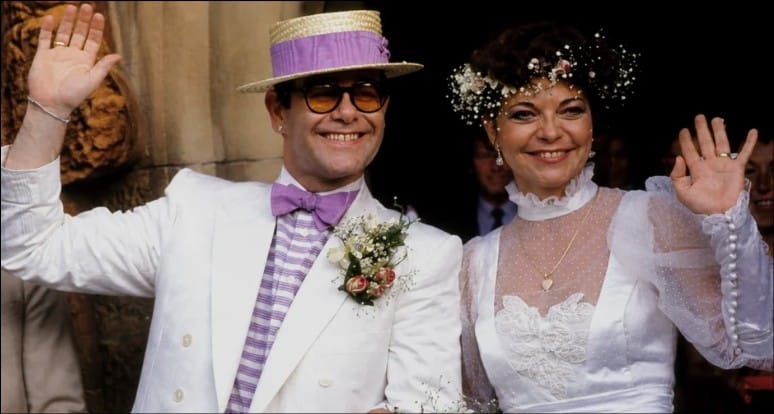
One of the most discussed chapters of Elton’s personal life was his marriage to German recording engineer Renate Blauel.
The couple married in Australia in 1984. At the time, many people hoped it represented lasting happiness for him. But the marriage could not resolve the deeper questions Elton was facing about his identity.
The couple divorced in 1988. In later years, Elton spoke about Renate with warmth and regret. He acknowledged her kindness and expressed sorrow for the pain caused by a relationship that could never truly give either of them the life they deserved.
The marriage remains an important part of his story because it reflects the pressure many LGBTQ+ people experienced in earlier generations. Public expectation, private fear and the desire to fit into a conventional life could lead people into situations that caused real pain.
Elton has not hidden from that part of his past. That honesty gives the story its weight.
Addiction And Personal Struggles
Despite extraordinary success, Elton’s personal life became increasingly difficult during the 1980s. He developed serious problems with alcohol and drugs. Fame gave him access to almost anything, but it did not give him peace. The public saw the glamour. Behind it, addiction was taking control.
Elton has since spoken with striking honesty about that period. He has described the damage caused by substance misuse, the emotional pain beneath it and the self destructive patterns that shaped his life before recovery.
In 1990, he entered rehabilitation. Sobriety became one of the most important achievements of his life. It gave him a future. It allowed him to rebuild relationships, understand himself more clearly and create the conditions for the family life and activism that would later define him.
For all the awards and record sales, Elton has often spoken about recovery as the foundation of the life he has today.
Recovery And A New Chapter
Recovery allowed Elton John to rebuild not only his health, but his purpose.
He remained a global star, but his life began to shift. He became more reflective, more grounded and more focused on what he could do for others.
This is one of the reasons Elton’s later life carries such emotional force. His story did not stop at survival. He used recovery as a starting point for service.
Many people who have followed his career see two Elton Johns: the wild, brilliant, excessive star of the 1970s and 1980s, and the sober, focused, outspoken campaigner who emerged afterwards.
Both are part of the same story. The difference is that recovery allowed him to live long enough to understand the cost of the first chapter and build something lasting from the second.
The AIDS Crisis
The HIV and AIDS crisis had a profound impact on Elton John’s life. During the 1980s and early 1990s, he lost friends, colleagues and members of the wider LGBTQ+ community. The scale of loss was immense. At a time when misinformation and prejudice were widespread, people living with HIV often faced stigma alongside illness.
For LGBTQ+ communities, the crisis was not only medical. It was emotional, political and social. People were grieving while also fighting ignorance, fear and indifference.
Elton became determined to help. His friendship with Ryan White, the American teenager who became a public face of the AIDS crisis after contracting HIV through contaminated blood treatment, had a major impact on him. Ryan’s courage and the discrimination he faced affected Elton deeply.
After Ryan’s death in 1990, Elton became more committed than ever to using his platform in the fight against HIV and AIDS.
The Elton John AIDS Foundation
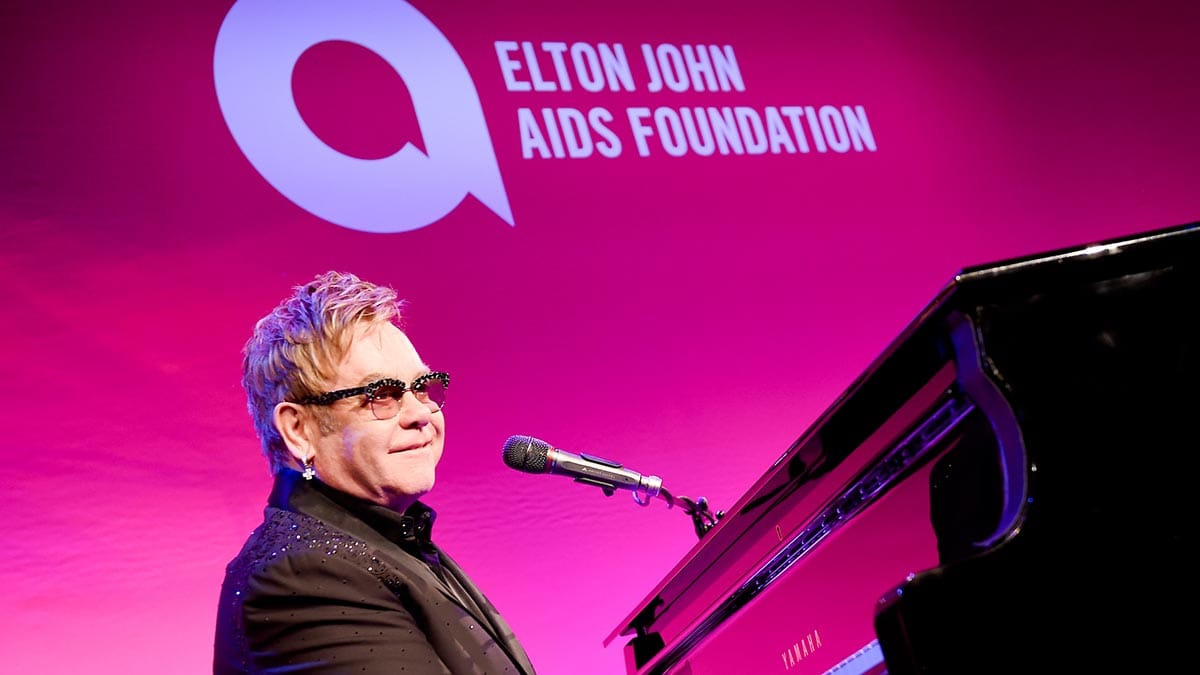
In 1992, Elton established the Elton John AIDS Foundation. The organisation was created to support HIV prevention, education, treatment, care and advocacy. Over time, it became one of the most significant charitable foundations established by any entertainer.
Since 1992, the Elton John AIDS Foundation has raised more than $650 million, supporting over 3,100 projects in 102 countries. Its work has helped increase access to healthcare, tackle LGBTQ+ stigma and support efforts to end AIDS.
That record matters because Elton’s activism has never been only symbolic. It has raised money, funded services and supported people directly affected by HIV.
For many, his foundation work is as important as his music. It turned fame into practical action.
David Furnish And Lasting Love
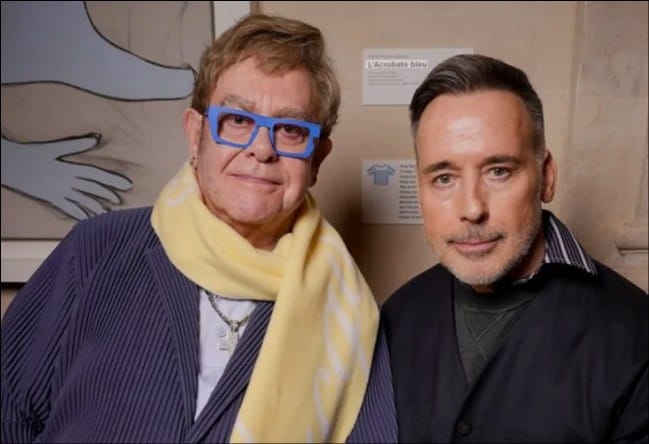
One of the happiest chapters of Elton’s life began when he met David Furnish in 1993. David, a Canadian filmmaker, became an important source of stability and love in Elton’s life. Their relationship developed during a period when Elton was rebuilding himself after addiction and learning how to live more honestly.
In 2005, the couple entered into a civil partnership. When same sex marriage became legal in England and Wales, they married in 2014.
Their marriage symbolised the enormous social change Elton had lived through. The young man who once struggled to speak openly about his sexuality was now able to marry the person he loved publicly and legally.
That change was personal, but it was also historical. Elton’s life spans a period in which LGBTQ+ people went from criminalisation and silence to greater visibility, legal recognition and family life. His marriage to David became part of that wider story.
Becoming A Father
Elton and David became parents to two sons, Zachary and Elijah. Fatherhood changed Elton’s priorities. After decades of touring, recording and living under constant public attention, family life brought a different kind of fulfilment.
He has often spoken about how becoming a parent gave him a new sense of purpose. It also became a major reason behind his decision to stop full scale touring.
Elton did not retire from music because he stopped loving it. He stepped back from the road because he wanted to be present for his family. That decision adds depth to his later career. The farewell tour was not just a commercial event. It was the public closing of one chapter so that a more private one could take priority.
Later Career Success
Many artists struggle to remain relevant as they grow older. Elton John achieved something different. He continued reaching new audiences through films, streaming, collaborations and live events. His catalogue remained central to popular culture, while younger listeners discovered his music through projects such as Rocketman and high profile collaborations.
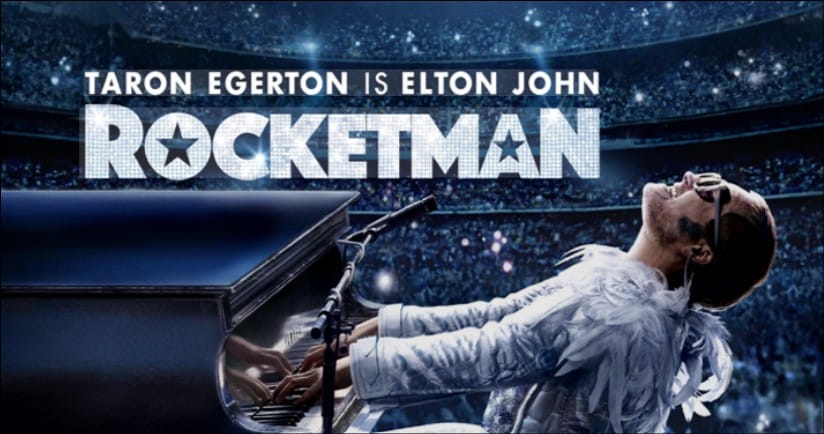
The 2019 film Rocketman brought his life story to a new generation. Unlike a simple music biography, the film leaned into fantasy, memory and emotion, reflecting the theatrical quality that has always shaped Elton’s public image.
His collaborations with contemporary artists also showed that he was not content to become a purely nostalgic figure. He remained curious, engaged and interested in the present.
That curiosity is one of the reasons his career has lasted.
Farewell Yellow Brick Road And Glastonbury
In 2018, Elton announced the Farewell Yellow Brick Road tour. The tour became one of the most successful concert tours in history and served as a global celebration of his career. Across several years, audiences around the world gathered to hear the songs that had shaped their lives.
The tour concluded in Stockholm on 8 July 2023, marking Elton’s final scheduled tour performance after more than fifty years on the road.
Before that final show, Britain gave him another landmark farewell. In June 2023, Elton headlined Glastonbury Festival in what was billed as his final UK performance. His Pyramid Stage set became one of the defining live television moments of his later career, drawing a huge audience and turning the field into a national celebration.
For many viewers, Glastonbury was not simply a concert. It felt like a public thank you. Elton had spent decades giving people songs for the most important moments of their lives. That night, the country seemed to give some of that affection back.
EGOT Status And Never Too Late
Elton’s later career continued to create history after the farewell tour. In January 2024, he joined the rare EGOT group after winning an Emmy for Elton John Live: Farewell from Dodger Stadium. That award added to his Grammy, Oscar and Tony wins, placing him among the select group of entertainers who have won all four major American entertainment awards.
The achievement underlined the range of his career. Elton was not only a recording artist. He had conquered music, film, theatre and television.
The 2024 documentary Elton John: Never Too Late, directed by R.J. Cutler and David Furnish, revisited his life, early career, addiction, recovery, family and farewell to touring. It allowed viewers to see the older Elton looking back at the younger man he had once been.
Never Too Late was not just another career retrospective. It was a portrait of an artist taking stock of what fame had cost him, what recovery had given him and what family now meant.
Who Believes In Angels? And New Music
Retiring from full scale touring did not mean Elton John stopped creating. In 2025, he released Who Believes In Angels?, a collaborative album with Brandi Carlile. The project showed that Elton remained creatively active, working with one of modern music’s most respected singer songwriters while continuing his long partnership with Bernie Taupin.
The album was important because it challenged the idea that Elton’s farewell tour marked an ending to his artistry. It was an ending to life on the road, not an ending to music.
That distinction matters. Elton’s later career is not only about looking back. It is also about choosing what kind of future he wants as an artist, husband, father and campaigner.
Health Challenges In Later Life
Elton has also spoken publicly about serious eyesight difficulties following an eye infection in 2024. The issue affected his ability to see clearly and made parts of his public and professional life more difficult. It should be discussed with care, but it belongs in any current account of his later years because it shows that this chapter has included challenge as well as celebration.
What stands out is that Elton has continued to appear publicly, support causes and remain creatively present despite health difficulties. That resilience has been a recurring part of his life.
From addiction and recovery to grief, family, activism and ageing, Elton’s story has never been one of uninterrupted triumph. It has been a story of falling, rebuilding and finding new purpose.
Why Elton John Matters Today
Elton John’s significance extends beyond record sales, awards and chart positions. He helped redefine what a pop star could be. He brought flamboyance into the mainstream, made vulnerability part of performance and showed that theatricality could sit alongside serious musicianship.
For LGBTQ+ people, his visibility has mattered enormously. He did not live a perfect or simple public journey. That is part of why his story feels human. He struggled, made mistakes, hurt people, recovered, apologised, grew and used the rest of his life to help others.
For people affected by HIV and AIDS, his activism has made a tangible difference. The Elton John AIDS Foundation has funded work across the world and continues to fight stigma, inequality and barriers to treatment.
For music lovers, his catalogue remains one of the most beloved in popular music. For families, his later life with David Furnish and their children shows another side of LGBTQ+ history: not only survival, but love, marriage and parenthood.
That is why Elton John still matters. He is not only a star from the past. He is a figure whose life connects music, recovery, LGBTQ+ visibility, activism and family in a way few public figures ever have.
Where To Watch And Listen To Elton John
For those discovering Elton John’s career, there are several essential places to start. Goodbye Yellow Brick Road remains one of his defining albums, capturing the scale of his 1970s creativity. Songs such as Your Song, Rocket Man, Tiny Dancer, Daniel and Candle in the Wind remain key listening for anyone wanting to understand his emotional range.
The film Rocketman offers a stylised version of his life and career, using music to explore memory, addiction, fame and self acceptance.
Elton John Live: Farewell from Dodger Stadium captures the scale of his final North American concert and later helped secure his EGOT status. Elton John: Never Too Late gives a more reflective look at his life, especially the contrast between the highs of fame and the personal struggles behind them.
For newer work, Who Believes In Angels? with Brandi Carlile shows Elton still creating beyond the farewell tour.
Together, these works show the full range of Elton John’s story: the songwriter, the performer, the survivor, the campaigner and the artist still moving forward.
Elton John Timeline
1947: Born Reginald Kenneth Dwight in Pinner, Middlesex.
1958: Wins a junior scholarship to the Royal Academy of Music.
1967: Meets Bernie Taupin, beginning one of music’s most successful songwriting partnerships.
1970: Releases Elton John, featuring Your Song.
1972: Rocket Man becomes a major hit.
1973: Goodbye Yellow Brick Road is released.
1976: Publicly discusses his sexuality in Rolling Stone.
1984: Marries Renate Blauel.
1988: Divorce from Renate Blauel is finalised.
1990: Enters rehabilitation.
1992: Establishes the Elton John AIDS Foundation.
1993: Meets David Furnish.
2005: Enters a civil partnership with David Furnish.
2010: Becomes a father with the birth of Zachary.
2013: Becomes a father again with the birth of Elijah.
2014: Marries David Furnish after same sex marriage becomes legal in England and Wales.
2018: Announces the Farewell Yellow Brick Road tour.
2019: Rocketman is released in cinemas.
2023: Headlines Glastonbury in what was billed as his final UK performance.
2023: Completes the Farewell Yellow Brick Road tour in Stockholm.
2024: Achieves EGOT status after winning an Emmy for Elton John Live: Farewell from Dodger Stadium.
2024: Elton John: Never Too Late is released.
2025: Releases Who Believes In Angels? with Brandi Carlile.
Quick Facts
Born: 25 March 1947
Birth name: Reginald Kenneth Dwight
Birthplace: Pinner, Middlesex, England
Occupation: Singer, songwriter, pianist, composer and activist
Spouse: David Furnish
Children: Two sons, Zachary and Elijah
Known for: Your Song, Rocket Man, Tiny Dancer, Goodbye Yellow Brick Road, Candle in the Wind and decades of activism
Foundation: Elton John AIDS Foundation
Major achievement: EGOT winner
Legacy: One of the most successful musicians in history and one of the most important LGBTQ+ icons of the modern era
Legacy Of An LGBTQ+ Icon
Elton John’s story is one of talent, survival, reinvention and generosity. He began life as Reginald Dwight, a gifted child from Pinner who found safety at the piano. He became Elton John, a global superstar whose songs changed popular music and whose image helped expand what a pop performer could look like.
But the most powerful part of his story may be what happened after the excess. He got sober. He accepted himself. He built a family. He turned grief from the AIDS crisis into action. He used fame not only to be seen, but to help others be seen, treated and protected.
That is why Elton John’s legacy reaches beyond music. His songs continue to move people, but his life also tells a wider story about LGBTQ+ visibility, recovery, activism and love.
More than fifty years after his rise to fame, Elton remains a music legend, a campaigner and a public figure still shaping culture. The farewell tour may be over. The work is not.
Elton John remains proof that a life can be rewritten, that survival can become service and that even after the final encore, an artist’s impact can keep growing.