Alan Turing: The Codebreaker, Computer Pioneer and LGBTQ+ Icon Who Helped Change the World
Alan Turing helped Britain fight the Second World War, shaped modern computing and AI, then faced prosecution because he was gay.

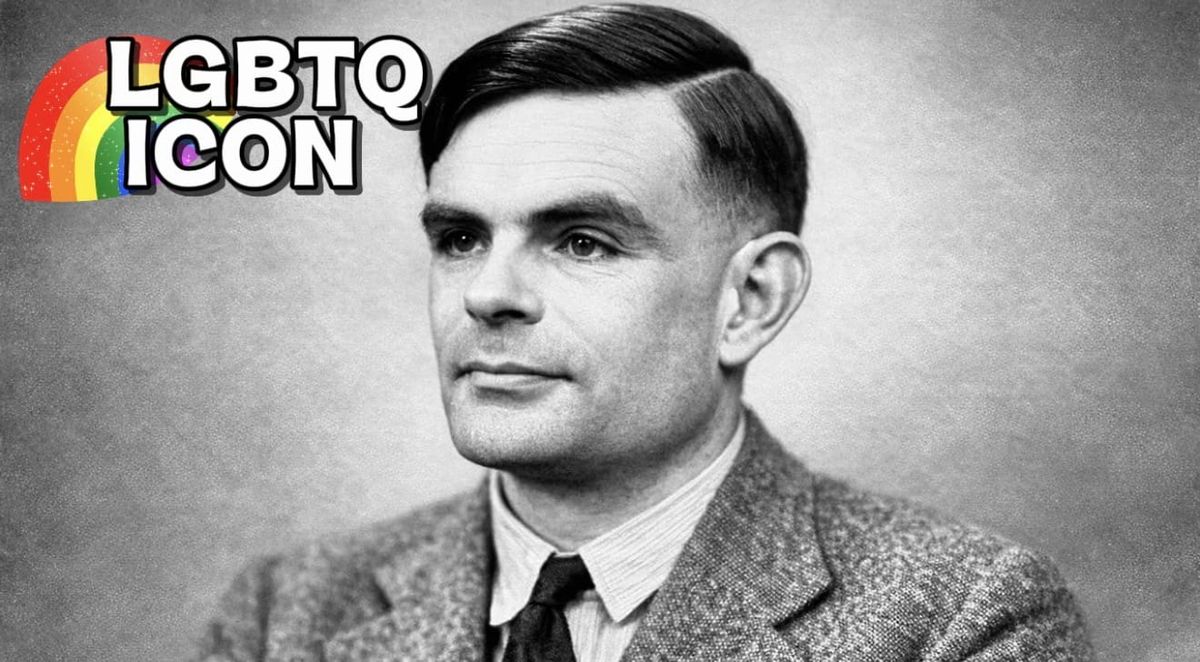
In this series, we look at some of the most iconic and influential figures in LGBTQ+ history and culture. Some are celebrated, while others have controversial or complex legacies. Inclusion does not mean endorsement, but recognition of the impact they have had on LGBTQ+ visibility, representation and history.
Alan Turing helped Britain fight a war in secret, then was punished by the same country for being gay. Few lives capture the brilliance and injustice of twentieth century Britain as powerfully as his. Turing’s work helped shape the outcome of the Second World War, laid vital foundations for modern computing and framed questions about artificial intelligence that are still being debated today.
Yet despite those extraordinary achievements, his final years were marked by criminal prosecution, forced medical treatment and public disgrace because of his sexuality.
Today, Alan Turing is recognised as one of the most important scientific minds of the twentieth century and one of the most significant LGBTQ+ figures in British history. His story is not only about mathematics, machines and wartime intelligence. It is also about what happens when a society benefits from someone’s genius, then fails to protect their humanity.
For decades, much of Turing’s most important work remained secret. The public knew little about his role at Bletchley Park or the scale of his contribution to Allied codebreaking. Only later did Britain begin to understand how much it owed him.
Now celebrated as a founding figure of modern computer science, Turing’s influence can be seen across the digital world. Modern computing, from laptops and smartphones to search engines and artificial intelligence systems, rests partly on foundations that he helped establish.
His legacy reaches far beyond technology. It stands as a powerful reminder of the human cost of prejudice and the importance of equality.
Alan Turing’s Early Life In London
Alan Mathison Turing was born on 23 June 1912 in London. His parents, Julius and Ethel Turing, had strong links to British colonial administration in India. Although Alan was born in Britain, his childhood involved long periods apart from his parents while they spent time overseas.
From an early age, Turing showed an exceptional curiosity about the world. He was fascinated by numbers, patterns, chemistry, biology and the way things worked. He was not always the kind of pupil who fitted neatly into school expectations, but his intelligence was impossible to miss.
Teachers recognised that he possessed unusual ability, even when his interests did not follow the traditional curriculum. He preferred independent thought, problem solving and scientific questions over simply learning what he was told.
That habit of thinking differently would define much of his life. Turing was drawn to questions that others found difficult or abstract. How does the mind work? What does it mean to calculate? Could a machine follow logic? Could intelligence itself be understood through rules and patterns?
Those questions would eventually lead him towards some of the most important scientific ideas of the modern age.
Alan Turing And Christopher Morcom
One of the most significant relationships in Alan Turing’s early life began at Sherborne School in Dorset. There he met Christopher Morcom, a fellow student who shared his interest in science, mathematics and intellectual discussion. The connection had a profound impact on Turing.
Many biographers believe Turing’s feelings for Christopher went beyond friendship, although the social attitudes of the time made open expression impossible. What is clear is that Christopher became one of the most important people in Alan’s young life.
They shared ideas, encouraged each other and created a bond that helped Turing feel understood. In 1930, Christopher died from complications linked to bovine tuberculosis. He was only 18. The loss devastated Turing.
He remained in contact with Christopher’s family and continued to think deeply about his friend for years afterwards. Christopher’s death appears to have shaped Turing’s emotional life and deepened his interest in questions about consciousness, memory and existence.
For Turing, science was never only a cold or mechanical subject. It was connected to life, thought, loss and the mystery of the human mind.
Cambridge And Academic Success
After leaving Sherborne, Turing studied mathematics at King’s College, Cambridge. His ability quickly became clear. In 1935, he was elected a Fellow of King’s College, an impressive achievement for someone still in his early twenties.
Cambridge gave Turing the space to explore difficult mathematical questions at a high level. He was part of a world where logic, proof and abstract thought mattered deeply.
One question in particular fascinated mathematicians at the time. Could there be a universal method capable of solving every mathematical problem?
Turing’s answer would change the future.
How Alan Turing Changed Computer Science
In 1936, Turing published a groundbreaking paper that introduced the concept now known as the Turing Machine.
The Turing Machine was not a physical machine sitting in a room. It was a theoretical model. Its purpose was to show how a machine could follow a set of instructions to process information and solve problems.
That idea may sound ordinary today because computers now surround us. At the time, it was revolutionary. Turing showed that computation could be understood in a formal, logical way. He helped define what it meant for a problem to be computable and what a machine could, in principle, be asked to do.
The idea of a machine following instructions became central to the development of modern computing. Nearly a century later, Turing’s insights still sit beneath the technology people use every day. The devices in our hands and homes are far more advanced than anything Turing could have built in the 1930s, but the underlying logic owes much to the world he helped imagine.
Princeton And International Recognition
Turing’s growing reputation took him to Princeton University in the United States, where he studied from 1936 to 1938.
His time at Princeton allowed him to work alongside leading mathematical thinkers and develop his ideas further. By the late 1930s, he had already established himself as one of the most promising minds of his generation.
Then history intervened. The Second World War redirected Turing’s talents from pure mathematics towards one of the most urgent problems facing Britain and the Allies.
Bletchley Park
When the Second World War began in 1939, German military communications posed a serious threat. The German armed forces used encryption systems to protect messages sent across Europe and the Atlantic. The most famous of these was Enigma.
If Allied forces could not read those messages, they would struggle to understand German plans, naval movements and military operations. The challenge was enormous.
Bletchley Park in Buckinghamshire became the secret centre of Britain’s codebreaking effort. It brought together mathematicians, linguists, engineers, classicists, clerks, translators, military staff and many others. Their work was hidden from public view and remained classified for decades.
Turing joined the Government Code and Cypher School at Bletchley Park and quickly became one of its key figures.
He did not work alone, and the story of Enigma should never be reduced to one person. Earlier Polish codebreakers had already made crucial breakthroughs before the war. At Bletchley, Turing worked as part of a much wider intelligence operation involving thousands of people. But his contribution was central.
What Was The Bombe Machine?
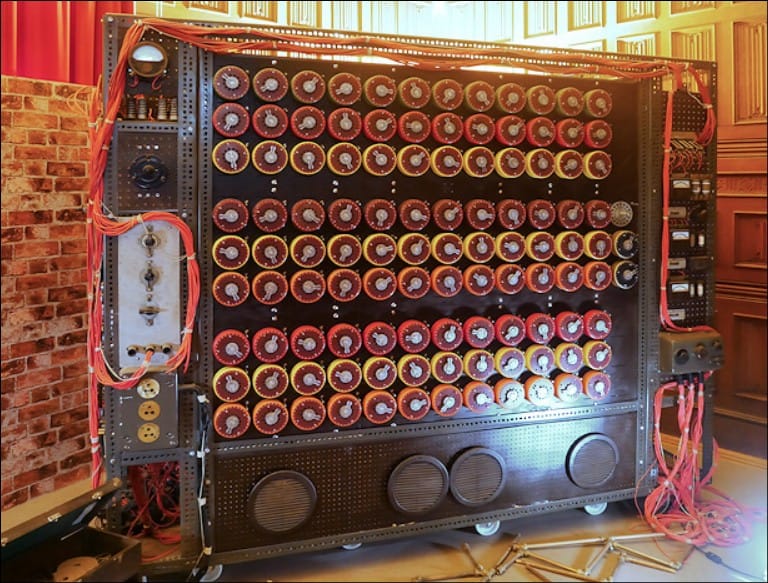
One of Turing’s most important wartime contributions was his work on the British Bombe. The Bombe was a machine designed to help codebreakers test possible Enigma settings far more quickly than humans could do by hand.
This mattered because Enigma was not a single fixed code. Its settings changed constantly. Codebreakers faced an enormous number of possible combinations, and time was critical. A message was only useful if it could be read quickly enough to affect military decisions.
The British Bombe built on earlier Polish codebreaking work. Turing’s design was later improved by Gordon Welchman, with engineering led by Harold Keen and the British Tabulating Machine Company.
The machine helped reduce an almost impossible task into something Bletchley Park codebreakers could work with.
The Bombe dramatically improved the speed at which Enigma encrypted messages could be tested and analysed, with Turing’s work forming part of a much wider Bletchley Park effort.
Alan Turing, Enigma And The Second World War
The intelligence gathered from decrypted German communications became known as Ultra. Ultra gave Allied commanders valuable information about German military activity, including naval operations in the Atlantic, where U boats threatened supply routes vital to Britain’s survival.
Some historians and commentators have argued that Allied codebreaking may have shortened the war by years and saved many lives, although the exact impact remains impossible to measure.
What is beyond doubt is that the work carried out at Bletchley Park was of enormous importance. Turing’s contribution to that work was critical. His mathematical insight, creativity and persistence helped solve problems that had direct consequences for the war.
Yet when victory came in 1945, the public did not know what he had done. The secrecy surrounding Bletchley Park meant Turing could not receive full public recognition during his lifetime. Much of the country he had served had no idea how much it owed him.
Building The Future Of Computing
After the war, Turing returned to the world of computing. He worked on early computer projects and contributed to efforts to develop machines capable of carrying out complex calculations. At the time, computers were enormous, experimental and limited compared with modern devices. They occupied whole rooms and were understood by only a small number of specialists.
Turing saw much further ahead. He understood that machines could become more than calculators. He believed they could process information, follow instructions and eventually perform tasks associated with intelligence.
His imagination was not limited by the technology of his own time. He was thinking about a future that had not yet arrived.
Alan Turing And The Birth Of Artificial Intelligence
In 1950, Turing published one of his most famous papers, Computing Machinery and Intelligence. It opened with a question that remains powerful today.
Can machines think?
Rather than becoming trapped in definitions, Turing proposed a practical way of approaching the question. This idea later became known as the Turing Test.
The test considers whether a machine can imitate human responses convincingly enough that a human judge cannot reliably tell whether they are communicating with a person or a machine.
Modern debates about artificial intelligence, chatbots, machine learning and whether computers can truly think still return to questions Turing helped frame more than seventy years ago. That is why Turing remains so relevant in the modern world.
Every time people discuss whether a machine can understand language, copy human conversation or display intelligence, they are stepping into a debate Turing helped begin.
Alan Turing And Being Gay In Post War Britain
Despite his professional achievements, Turing lived in a society where homosexuality was criminalised. Throughout much of the twentieth century, gay men in Britain faced prosecution under laws that treated same sex relationships as criminal offences. The risks were severe. A man could lose his career, his reputation, his privacy and his freedom.
Male homosexuality would not be partially decriminalised in England and Wales until 1967, thirteen years after Turing’s death. That legal context matters.
What happened to Turing was not simply one cruel mistake by individual officials. It was part of a wider system that criminalised gay men and treated their private lives as matters for police investigation and punishment.
Turing was not known as a political activist. He did not build a public campaign around his sexuality. But he also did not appear willing to deny the truth of who he was when confronted by the authorities. That honesty came at a devastating cost.
Alan Turing’s Conviction And Chemical Castration
In 1952, Turing reported a burglary to the police. During the investigation, officers discovered that he had been in a relationship with another man, Arnold Murray. Instead of focusing only on the burglary, the authorities turned their attention to Turing’s private life.
He was charged with gross indecency, the same offence that had been used against Oscar Wilde in the nineteenth century.
Turing did not deny the relationship. He was convicted. Rather than going to prison, he was given hormonal treatment, commonly described as chemical castration, as an alternative to imprisonment.
The treatment was intended to reduce sexual desire. It caused physical and emotional side effects and represented a brutal violation of his personal autonomy.
Turing also lost his security clearance, limiting his ability to continue certain forms of government work. For a man whose intellect had helped protect Britain during the war, the treatment was a profound injustice.
Only a few years after contributing to wartime work of national importance, Turing was punished by the state because he was gay. That is the painful contradiction at the centre of his story.
Alan Turing’s Death
On 7 June 1954, Alan Turing died at his home in Wilmslow, Cheshire.
He was 41 years old. An inquest concluded that he died from cyanide poisoning and recorded a verdict of suicide. The circumstances surrounding his death have been discussed and debated for decades. Some have questioned whether the full picture can ever be known with certainty.
Whatever the exact details, his death marked the loss of one of Britain’s greatest scientific minds. At the time, public understanding of his achievements remained limited. The country had lost a man whose full importance it had not yet recognised.
The Alan Turing Apology, Pardon And Turing Law
As the secrets of Bletchley Park became public in later decades, appreciation for Turing’s work grew. Scientists, historians, LGBTQ+ campaigners and members of the public increasingly argued that his treatment had been a grave injustice.
In 2009, Prime Minister Gordon Brown issued an official apology on behalf of the British government. In 2013, Queen Elizabeth II granted Turing a posthumous royal pardon.
Turing’s case also helped shape wider conversations about historical convictions under anti gay laws. The term “Turing Law” later became associated with pardons for men who had been convicted or cautioned under old laws criminalising same sex relationships that would no longer be offences today.
Those later acts of recognition could not undo what was done to Turing. They did, however, force Britain to confront part of its own history.
They also gave his story a wider meaning for LGBTQ+ people whose lives had been damaged by discriminatory laws.
Alan Turing’s Lasting Legacy
Today, Alan Turing’s influence is everywhere. He is celebrated as a wartime codebreaker, a pioneer of computer science and a visionary thinker whose ideas helped shape the modern world.
His image appears on the Bank of England £50 note. Schools, university buildings, awards and institutions carry his name. Books, films and documentaries have introduced his story to new generations.
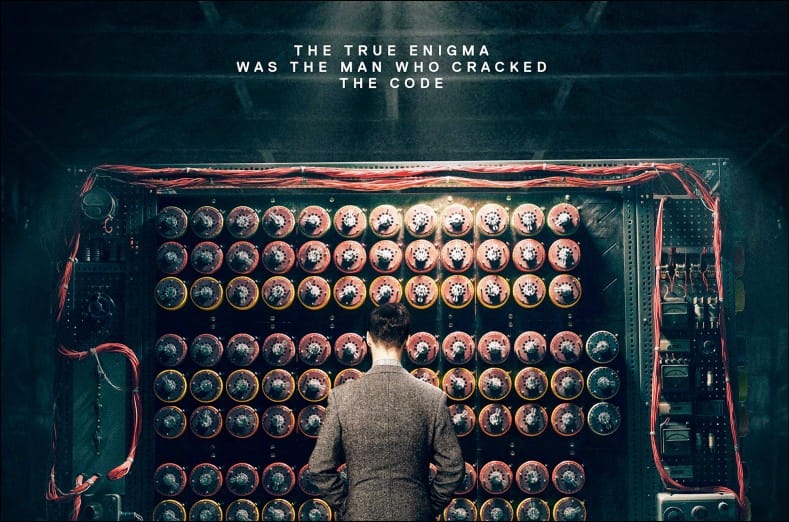
The 2014 film The Imitation Game, starring Benedict Cumberbatch as Turing, brought his story to an even wider audience, although like many biographical dramas it simplified and altered parts of the real history for screen storytelling.
His legacy has become both scientific and moral. Scientifically, he helped establish ideas that transformed computing and artificial intelligence. Morally, his life exposes the damage caused when prejudice is allowed to override humanity.
Turing’s story asks an uncomfortable question. How many brilliant people were silenced, limited or destroyed because society refused to accept them? That question is part of why his legacy still matters.
Where To Visit Alan Turing Sites In The UK
For those who want to understand Alan Turing’s life more deeply, several places in the UK remain closely connected to his story.
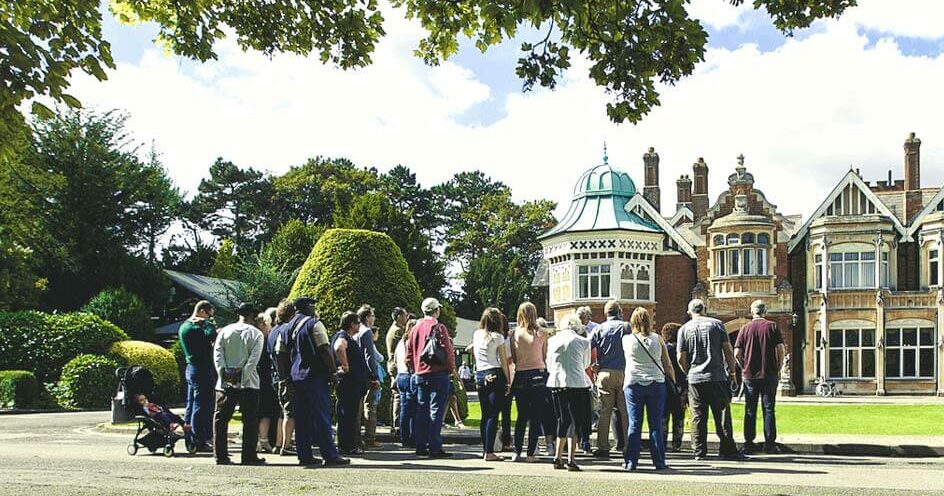
Bletchley Park in Milton Keynes is one of the most important. The former secret codebreaking centre is now a museum, allowing visitors to explore the wartime site where Turing and many others worked on breaking encrypted German messages. It remains one of the key places to understand Britain’s intelligence work during the Second World War.
King’s College, Cambridge, is another major location in Turing’s life. He studied there, became a Fellow and developed some of the mathematical thinking that would shape his future work.
Sherborne School in Dorset is significant because it was where Turing studied as a teenager and where he met Christopher Morcom, whose death had such a lasting emotional impact on him.
Wilmslow in Cheshire is linked to Turing’s final years. He lived and died there, and the town remains an important part of the later chapter of his story.
Manchester also holds a powerful place in Turing’s legacy. He worked at the University of Manchester after the war and contributed to early computing research there. The Alan Turing Memorial in Sackville Gardens shows him seated on a bench holding an apple and has become an important public tribute.
Together, these places help turn Turing’s story from something distant into something tangible. Bletchley Park shows the secret wartime world he helped shape. Cambridge reflects his mathematical brilliance. Manchester connects him to the future of computing. Wilmslow reminds visitors of the injustice and sadness of his final years.

Why Alan Turing Still Matters Today
Alan Turing matters because his life sits at the intersection of science, war, technology and human rights.
His work helped the Allies during the Second World War. His ideas helped create modern computing. His thinking helped shape the foundations of artificial intelligence.
Yet despite those achievements, he was prosecuted because he was gay. That contradiction is what makes his story so powerful and so painful.
Turing’s life reminds us that LGBTQ+ people have always contributed to society, often in ways that changed history. It also reminds us that talent does not protect people from prejudice when the law itself is unjust.
More than seventy years after his death, Turing’s questions are still with us. Can machines think? What can computers do? How far can human intelligence be translated into logic and code?
But another question remains just as important. What kind of world do we create when we fail to protect the people whose minds, courage and difference help move society forward?
Alan Turing Timeline
1912: Alan Mathison Turing is born in London.
1930: Christopher Morcom dies, leaving a lasting impact on Turing.
1935: Turing is elected Fellow of King’s College, Cambridge.
1936: He publishes the paper that introduces the concept now known as the Turing Machine.
1936 to 1938: Turing studies at Princeton University.
1939: He joins the Government Code and Cypher School at Bletchley Park.
1940: Turing’s work contributes to the development of the British Bombe.
1945: He is awarded the OBE for his wartime service.
1950: He publishes Computing Machinery and Intelligence, which helps shape the future of artificial intelligence.
1952: Turing is convicted of gross indecency.
1954: He dies aged 41.
1967: Male homosexuality is partially decriminalised in England and Wales.
2009: The British government issues an official apology.
2013: Turing receives a posthumous royal pardon.
2021: Alan Turing appears on the Bank of England £50 note.
Quick Facts
Born: 23 June 1912
Birthplace: London
Died: 7 June 1954
Place of death: Wilmslow, Cheshire
Occupation: Mathematician, codebreaker, computer scientist and philosopher
Known for: His wartime codebreaking, the Turing Machine and the Turing Test
Award: OBE
Legacy: Widely regarded as a founding figure of modern computer science
Legacy Of An LGBTQ+ Icon
What makes Alan Turing’s story so painful is not only what was done to him, but what was almost lost with him.
A country that benefited from his brilliance failed to protect him when he needed protection himself. The same state that relied on minds like his during wartime later treated his private life as a crime.
That injustice cannot be softened by later apologies, pardons or memorials. Those recognitions matter, but they came too late for the man himself.
Still, Turing’s story did not disappear. His work survived secrecy. His name survived disgrace. His legacy survived the prejudice that tried to diminish him.
Today, Alan Turing is remembered not only as one of Britain’s greatest scientific minds, but as a powerful symbol of resilience, achievement and the ongoing pursuit of equality. His influence is felt every time a computer starts up, every time artificial intelligence is debated and every time history remembers the LGBTQ+ people whose contributions were ignored, hidden or punished for too long.
Alan Turing helped shape the modern world.
Britain failed him in life. History has made sure he will never be forgotten.
This article is part of our LGBTQ+ Icons series. Discover more of the people who have shaped LGBTQ+ history, culture and representation in further articles.