How AI Is Helping Promoters Sell Concert Tickets: Inside the Data Behind Live Music Marketing
AI is helping concert promoters analyse audiences, optimise advertising and sell tickets. Here’s how data is changing live music marketing.

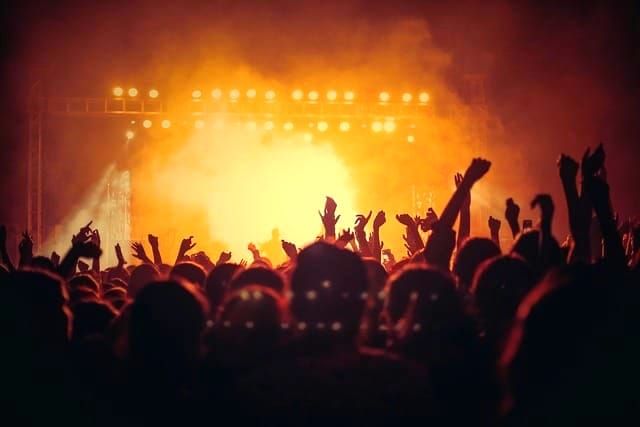
Long before fans arrive at a concert, artificial intelligence may already have played a part in getting them there. Behind live entertainment campaigns, AI and audience data are increasingly being used to decide which adverts people see, which creative ideas perform best and where marketing budgets should be spent.
One company working heavily in this area is Frankfurt-based NYBA, led by founder and chief executive Markus Hetzenegger. The company says its systems have been informed by data connected to more than 75 million tickets sold, while its current website says more than 1,200 events a year use its services.
It started with a small university event
The scale is very different from where Markus started. He has described beginning in marketing while still in his late teens, promoting university events before building what eventually became NYBA.
In another account of the company's beginnings, Markus said he moved to Frankfurt at 18 and helped a friend promote a small university event. Rather than relying on traditional flyers, they promoted the event online and it sold out, providing an early demonstration of how digital marketing could be used to generate demand for live entertainment.
That early idea remains at the centre of what NYBA now does, although the technology has become considerably more sophisticated.
How does AI help sell concert tickets?
The principle is fairly straightforward. Instead of promoting a concert to a very broad audience and hoping the right people notice, marketers can use data to identify patterns suggesting which groups may be more interested.
Markus explained in an April 2026 interview that campaigns can draw on previous sales, streaming activity, social engagement and other demand signals before grouping audiences according to behaviour. Those groups might include regular concert buyers, people who typically purchase close to the event or fans who are more likely to choose premium tickets.
As Markus puts it: “At its core, it’s about removing guesswork.”
The AI can then help analyse campaign performance and make adjustments far more quickly than a team manually checking every advert and audience group.
Different fans can see different campaigns
A promoter might launch several videos, images and messages for the same concert. If one performs particularly well with a certain group, automated systems can increase the budget behind it while reducing spending on versions producing weaker results.
Location is another factor. Someone promoting a concert in Manchester may discover that significant numbers of buyers regularly travel from Leeds, Liverpool or further away, allowing campaigns to reach beyond the immediate city rather than assuming everyone attending lives nearby.
NYBA says its internal AI-driven processes can also adjust budgets, refine audiences and optimise campaigns across platforms as performance data changes. Markus says the company's system draws on more than a decade of campaign information to improve those decisions over time.
The 75 million ticket figure needs some context
NYBA says that since its beginnings, campaigns connected to its work have sold more than 75 million tickets. The figure is useful for understanding the amount of data the company says its systems can learn from, but it should not be interpreted as AI personally convincing 75 million people to buy tickets.
Adele, Coldplay and other major acts already have enormous audiences. Ticket price, venue, location, publicity, timing and the artist's popularity all influence whether a show sells.
AI can help marketers understand demand and spend advertising budgets more efficiently, but it cannot guarantee that an event people do not want to attend will suddenly sell out.
Blue Man Group shows what targeted marketing can achieve
A campaign involving Live Nation and Blue Man Group provides a more concrete example.
Official campaign figures show that the advertising generated more than 20 million impressions and achieved a return on advertising spend of around 130 times the amount invested. The campaign used different creative formats, conversion tracking and audience optimisation to encourage ticket purchases.
That 130-times result should not be treated as something every promoter can reproduce. It relates to one particularly successful campaign, but it helps explain why entertainment companies are investing heavily in increasingly sophisticated digital marketing systems.
Human creativity still matters
One of the more interesting parts of Markus's argument is that greater automation does not necessarily mean removing people from the process.
Data can reveal which advert performs best, but somebody still has to understand the artist, the audience and what makes the event appealing. Even NYBA's successful Blue Man Group campaign combined detailed audience information with a creative idea designed specifically around the act and the platform being used.
Markus has also argued that exceptional campaigns can still involve instinct alongside data. AI may be able to optimise what happens after a campaign launches, but live entertainment marketing still needs something worth responding to in the first place.
AI behind the show audiences never see
This is one of the less obvious ways artificial intelligence is changing entertainment. The concert itself remains a human experience, but increasingly sophisticated technology may be working for months beforehand to help fill the seats.
For promoters, the attraction is being able to measure campaigns more closely and react faster when something works. For audiences, it can mean being shown events that better match their interests, although it also raises familiar questions about how online behaviour is analysed for advertising.
Markus described the future as a meeting point between AI-driven demand and real-world experiences. That may ultimately be the most interesting part of this technology: the more automated the work behind selling a concert becomes, the product being sold remains thousands of people gathering together to experience something very human.
For more on the technology changing music, film, television and live entertainment, visit the AI & Entertainment hub on SoapLandTV.co.uk.
Sources: Hypebot’s April 2026 interview with NYBA CEO Markus Hetzenegger, OMR Reviews’ 2025 interview on NYBA’s beginnings, NYBA’s official company information, and TikTok for Business’ Live Nation x NYBA case study.