Emmerdale's Charity Dingle Story Shows Why Recovery Is Not A Straight Line

Content warning: This article discusses themes of sexual assault and trauma which some readers may find upsetting.
Soap storylines often focus on dramatic moments, but some of the most powerful scenes come afterwards.
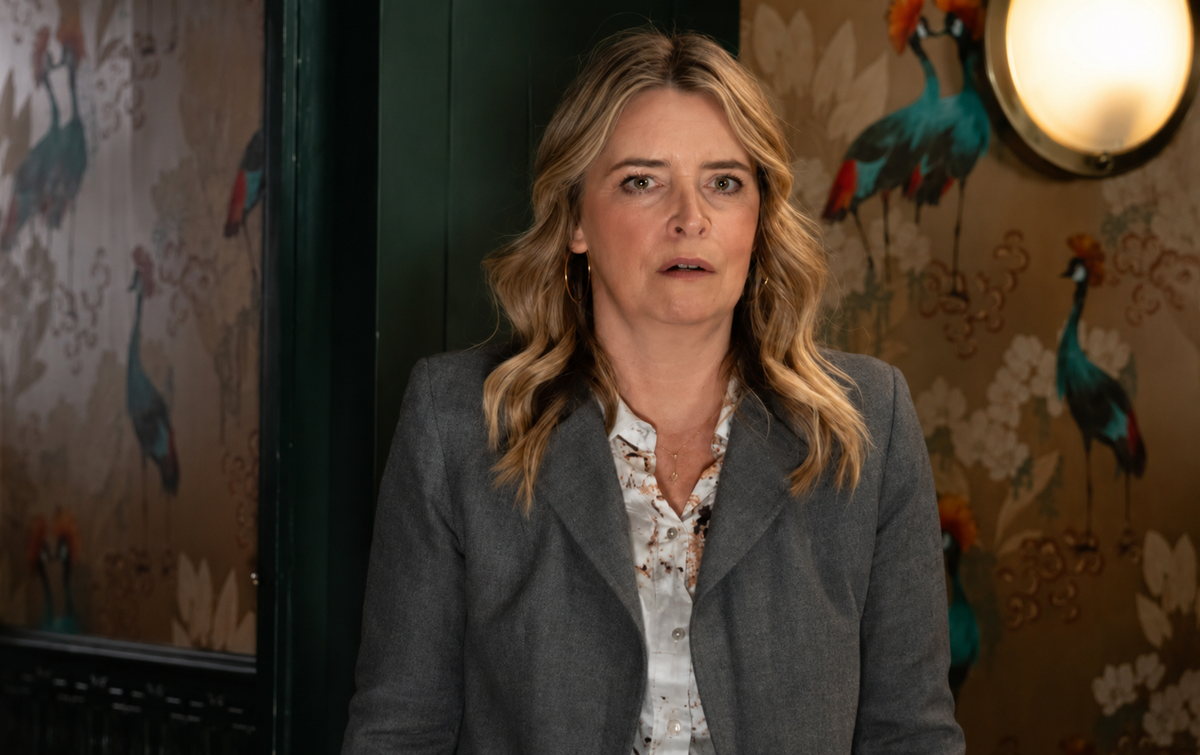
For Charity Dingle, the decision to report Dr Caitlin Todd for sexually assaulting her was a significant moment. It took courage, determination and strength. However, as new Emmerdale scenes demonstrate, reporting what happened was not the end of Charity's ordeal.
In many ways, it was the beginning of a different battle. As the emotional impact of the assault continues to affect her daily life, Charity finds herself struggling to cope with feelings she can no longer keep under control. The storyline offers an important reminder that recovery from trauma is rarely simple and almost never follows a predictable path.
There is often a misconception that once someone reports a crime, justice and healing automatically follow. The reality is often far more complicated.
For Charity, the decision to come forward did not immediately erase the fear, anxiety and emotional distress she had been carrying. Instead, viewers have watched her attempt to continue with everyday life while privately dealing with the lasting effects of what happened.
Despite trying to remain strong, Charity finds herself becoming more isolated. She avoids discussing her feelings, keeps those closest to her at a distance and continues carrying a burden that is becoming harder to hide.
One of the most telling moments comes during a conversation with Cain Dingle. Cain is facing a devastating challenge of his own after learning that his cancer has spread. During their heart to heart, Charity encourages him to talk openly to Moira and Liam about what he is going through.
Yet when it comes to discussing her own pain, Charity remains reluctant to open up. It is a contradiction many people will recognise.
Sometimes it is easier to encourage somebody else to seek help than it is to admit we need help ourselves.
The scenes highlight how trauma can affect people in different ways and at different times. There is no timetable for recovery and no universal way of coping.
Some days may feel manageable. Others may feel overwhelming. That unpredictability is something Emmerdale appears keen to explore through Charity's story.
Meanwhile, Mackenzie is becoming increasingly concerned about Charity. He confides in Chas that he feels completely lost when it comes to supporting Charity. He knows she is struggling but does not know how to reach her.
His frustration is understandable. Watching somebody you love suffer can be incredibly difficult, particularly when there is no obvious solution.
Yet Mack's experience also reflects another important truth. Recovery is not something that can be forced by family members, no matter how much they care.
Support matters. Patience matters. Understanding matters. But ultimately, healing happens at its own pace.
As pressure continues to build, Charity reaches a point where everything becomes too much.
When Mack tries to talk to her, she rejects the conversation and pulls away. Rather than finding comfort in the people around her, she feels overwhelmed by their concern.
The result is a heartbreaking decision to leave. Charity drives away alone, leaving her loved ones increasingly worried about her wellbeing.
The scenes that follow demonstrate how trauma can sometimes create distance between people who desperately want to help and those who desperately need help.
Neither side is acting out of malice. Both are struggling in different ways. As her family search for her, Mack's concern grows to the point where he contacts the police and reports Charity missing.
For viewers, the storyline serves as a powerful illustration of how emotional distress can affect not only the survivor but everyone around them.
Eventually, Charity's journey leads her to a lakeside where she finds herself alone with her thoughts. It is here that one of the most significant moments of the storyline unfolds. A stranger notices that Charity is clearly upset and attempts to offer comfort. However, when the woman reaches out and touches her, Charity instinctively reacts.
Her response is immediate and emotional. Afterwards, the stranger gently suggests that perhaps the reaction came because the touch happened without consent. It is a brief exchange, but an important one.
Without judgement or pressure, the stranger helps acknowledge something Charity has been struggling to process. The moment also demonstrates how trauma can influence reactions long after an incident has occurred.
What makes these scenes particularly effective is that they avoid easy solutions. The stranger does not magically solve Charity's problems. One conversation does not suddenly heal months of emotional pain.
Instead, the interaction represents something much more realistic: a small step. Recovery is often built from small steps rather than dramatic breakthroughs.
A conversation. A moment of understanding. A willingness to trust somebody. A decision to speak honestly.
As Charity begins considering whether to open up about her experiences, viewers are seeing a character who is still very much in the middle of her journey.
There is no finish line in sight. No instant resolution. Just the difficult process of learning how to live with what happened and finding a way forward.
Charity's storyline also reflects an issue that affects thousands of people across the UK every year.
According to the Office for National Statistics, hundreds of thousands of women in England and Wales experience sexual assault each year, while research has consistently shown that LGBTQ+ people can face an increased risk of sexual violence and abuse. Studies by Stonewall have highlighted the disproportionate impact such experiences can have on lesbian and bisexual women, many of whom continue to face barriers when seeking support.
While Charity's experience is fictional, the emotional impact being portrayed on screen reflects challenges faced by many survivors across different communities. Trauma does not disappear overnight, and recovery can involve setbacks, difficult days and moments when even the strongest people feel overwhelmed.
That is why this storyline feels so important. Rather than presenting recovery as straightforward, it acknowledges the reality that healing is rarely a straight line. There are setbacks, moments of doubt and times when support feels difficult to accept.
But there can also be understanding, compassion and hope.
For Charity, that hope may begin with allowing herself to share the burden she was carrying alone.
If you have been affected by any of the issues discussed in this article, support is available. Readers in the UK can contact Rape Crisis England & Wales on 0808 500 2222 or visit the Rape Crisis website for confidential support and information.
Sources: ONS, Stonewall, NHS, MindUK