EastEnders Craig and Amy relationship against police rules?
Craig and Amy's relationship raises serious police conduct questions. We explain the rules, barred list and what happens after an officer leaves.



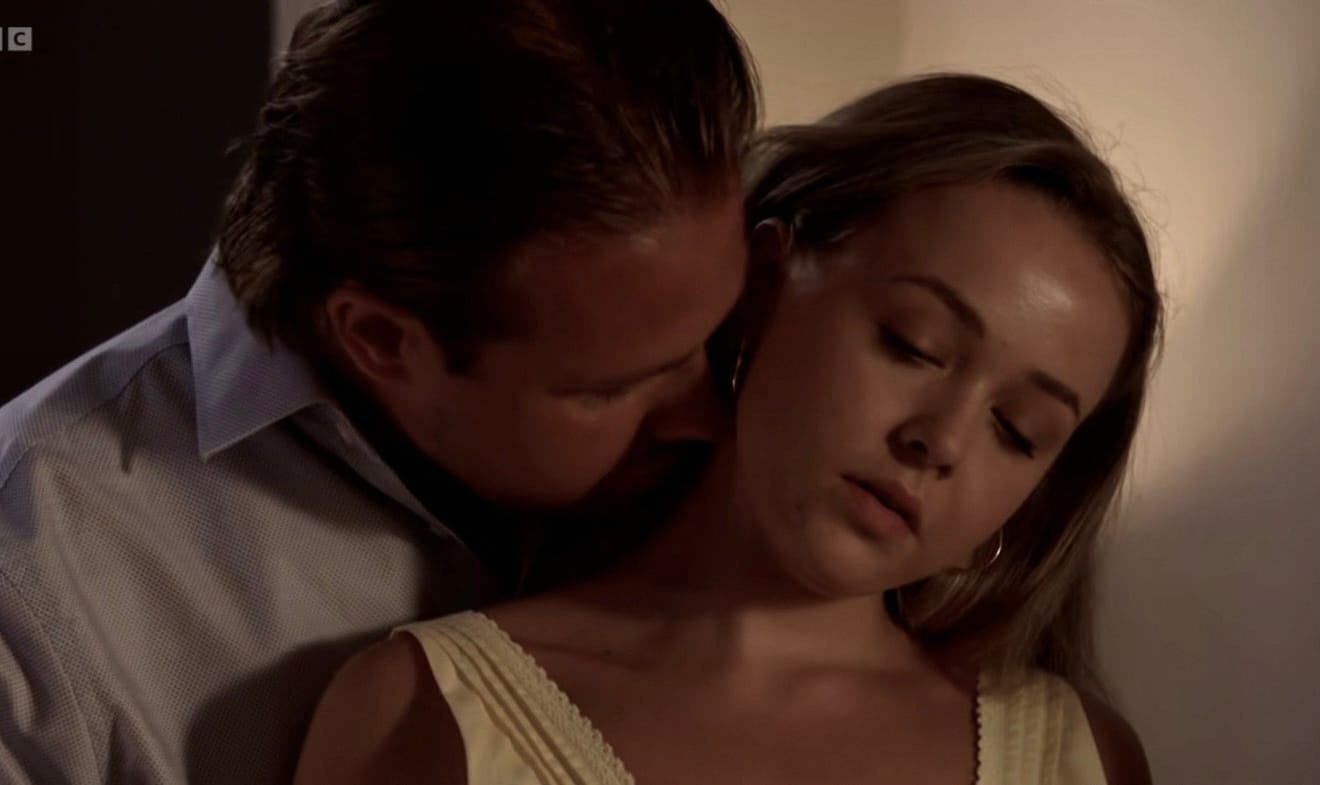
Craig and Amy’s relationship took another disturbing step in Tuesday’s EastEnders as 17-year-old Amy spent time with the former police officer at his flat. The pair shared a drink before kissing and walking towards the bedroom, with Craig telling Amy they would take things slowly.
The episode then cut away, meaning viewers were not explicitly shown or told that they had slept together. However, because Craig first came into Amy’s life through his work as a police officer, the scene also raises serious real-world questions about professional boundaries, police misconduct and abuse of position.

Craig first encountered Amy through an investigation
Craig did not meet Amy through an ordinary social encounter. He was the detective investigating the attack on Joel and came into contact with Amy because she was among the teenagers connected to the investigation.
Amy later admitted to Craig that she had attacked Joel, and he agreed to keep her confession from the police. That decision strengthened the trust she had placed in him before their relationship became increasingly personal.
EastEnders has officially confirmed that the storyline is exploring Amy being groomed by Craig, with the soap working alongside Barnardo’s, End Violence Against Women and experts in the field. Craig’s use of his position of power to exert control over Amy is therefore central to the storyline rather than simply something viewers have inferred.
Amy’s age makes that particularly significant when the storyline is compared with real police professional-boundary guidance. The question is not simply whether Craig and Amy are now in a relationship, but how that relationship developed after he first came into her life through his policing duties.
What do police rules actually say?

Current College of Policing ethical guidance for England and Wales says officers must not use their professional position to pursue a sexual or improper emotional relationship with a member of the public. In practical terms, an officer should not use access gained through policing to build or pursue that kind of relationship.
More detailed professional-boundary guidance places responsibility on the officer to recognise the imbalance of power and maintain appropriate boundaries. Young people are specifically identified among those who can be particularly vulnerable.
The origin of the relationship is therefore crucial. Where an officer first encounters somebody through an investigation, safeguarding role or other police duty, that professional connection can remain relevant even if the contact later becomes personal.
That does not mean every relationship involving a police officer and a younger adult automatically amounts to misconduct. The central questions are how the people met, what professional access the officer had and whether that position was used to pursue the relationship.
What if the original police contact has ended?
The rules do not simply disappear once an investigation or other professional involvement comes to an end. College guidance says that developing a sexual or improper emotional relationship with somebody an officer previously had professional contact with may still amount to an abuse of position.
Factors can include the extent of the original professional involvement, how long it lasted, the person’s vulnerability and the amount of time that passed before the personal relationship developed. The guidance also warns officers against ending a professional relationship simply so they can then pursue a personal one.
In Craig and Amy’s case, their personal relationship developed directly from the contact created through the Joel investigation. This is therefore very different from two people unexpectedly reconnecting years after a brief and unrelated professional encounter.
Police Federation says behaviour has no place in policing

The Police Federation of England and Wales has previously spoken strongly about officers abusing their position for sexual purposes. Responding to an HMICFRS report in September 2019, then conduct and performance lead Phill Matthews stressed that such cases involved a small minority of officers and that colleagues were often instrumental in exposing inappropriate behaviour.
Matthews described the behaviour as inexcusable and said it had “no place in policing”. The Independent Office for Police Conduct takes a similarly serious position and categorises abuse of a police position for a sexual purpose, or to pursue an improper emotional relationship, as serious corruption.
Those comments and definitions relate to real-world policing rather than EastEnders specifically. They do, however, show how seriously professional-boundary breaches and potential abuse of position are treated when an officer uses their role to establish or pursue a relationship.
Recent case involved a teenage girl
A very recent Cambridgeshire case provides a striking real-world comparison. Former PC Neil Woodley met a teenage girl through his policing duties after attending incidents involving her as a response officer.
He obtained her contact details for a policing purpose before using them to communicate with her personally, with the messages becoming increasingly personal shortly before her 18th birthday. A disciplinary panel found in September 2026 that Woodley had formed and maintained an inappropriate personal relationship with a child in a vulnerable position and had also failed to take appropriate safeguarding action.
The case has another detail that is particularly relevant to Craig’s situation. Woodley was already no longer serving by the time the hearing concerning the relationship took place.
He had pleaded guilty to a data protection offence in April 2025 and was dismissed with immediate effect at an accelerated misconduct hearing in July 2025 because of that conviction. Despite already having been dismissed, separate disciplinary proceedings concerning his relationship with the teenage girl still went ahead in September 2026.
The panel concluded that the relationship allegations amounted to gross misconduct and that Woodley would have been dismissed without notice had he still been serving. The IOPC said the policing barred list is to be updated to reflect that outcome.
That makes the comparison particularly relevant to Craig. Woodley’s previous dismissal did not prevent a later misconduct process over separate conduct, while Craig has also now lost his police job before the full consequences of his relationship with Amy are known.
Losing a police job does not necessarily end proceedings
An officer already leaving or losing their job does not necessarily prevent separate disciplinary proceedings concerning earlier conduct. Former officers in England and Wales can still face proceedings over alleged police misconduct committed while they were serving.
Where gross misconduct is proved and a panel concludes that the former officer would have been dismissed had they remained in policing, the outcome can lead to inclusion on the policing barred list. That can prevent somebody from simply returning to policing in another role covered by the system.
This matters because Craig has now lost his police job while his relationship with Amy continues. However, simply continuing to see Amy after leaving policing would not automatically become fresh misconduct, because the key issue would be what happened while Craig was still serving and whether his position, authority or access was used to establish or pursue the relationship.
Why Craig's behaviour raises real-world misconduct questions
The key facts now sit together clearly. Craig first encountered Amy through his policing duties, his professional role gave him access to her during the Joel investigation and their personal relationship developed from that contact.
Amy is 17, while current policing guidance specifically recognises the importance of vulnerability and professional boundaries. Real-world misconduct cases also show that losing a police job does not necessarily prevent later proceedings over conduct that happened while an officer was serving.
That does not establish what would happen to Craig under real police disciplinary procedures. It does explain why the way his relationship with Amy began could matter just as much as what happens between them now.
Viewers react to Tuesday's disturbing ending
Tuesday’s final scene prompted immediate discussion among viewers because of the implication created when Craig and Amy moved towards the bedroom. The episode stopped before explicitly confirming what happened next, so it would be wrong to state that they definitely slept together.
Another question raised in fan discussion is how Craig and Amy have managed to spend so much time together without somebody close to Amy discovering who she is really seeing. Some viewers have suggested Denzel could eventually realise what is happening, although that remains fan theory rather than confirmed storyline information.
With Amy still unaware of the full truth surrounding Craig’s professional conduct, upcoming episodes will continue to explore his manipulation and the growing distance between Amy and the people who could potentially help her.
EastEnders airs Monday to Thursday on BBC One, with episodes available from 6am on BBC iPlayer. Image credit: BBC.