Why Could AI Affect Office Jobs More Than Dangerous Work?
New research examining 754 occupations explores why office jobs may be more exposed to AI than physically dangerous work.

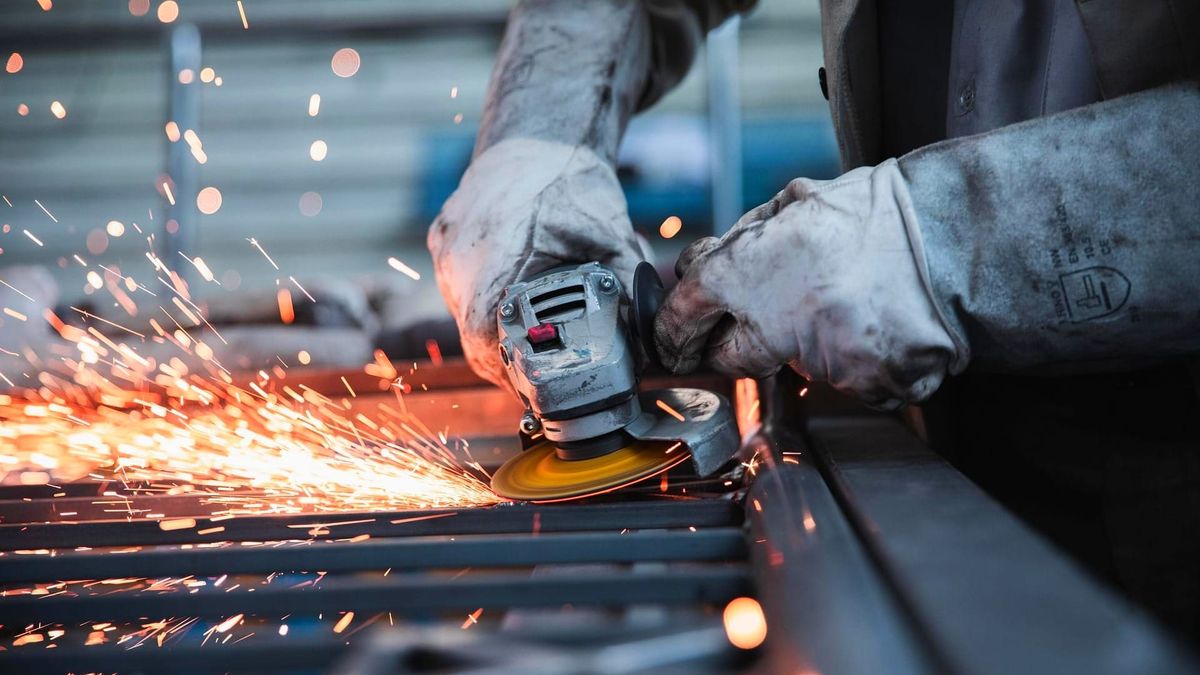
Construction labourers face hazardous equipment, demanding physical conditions and unpredictable working environments, yet new research suggests occupations like theirs are less exposed to artificial intelligence than many jobs carried out behind a desk.
A study by Siyi Yu of Purdue University examined 754 occupations in the United States and identified 286 with relatively demanding working conditions but lower exposure to AI. Together, those occupations account for approximately 41 million American jobs, raising questions about whether the technology is reaching the workers who could benefit most from relief from physically demanding tasks.
Which dangerous jobs did the research identify?
Construction labourers were among the occupations highlighted by the researcher, alongside heavy goods vehicle drivers, nursing assistants, restaurant cooks, landscaping workers and housekeeping cleaners. All six appeared in the group with higher scores for demanding working conditions and lower exposure to both AI measures used in the analysis.
Construction labourers provide a particularly revealing example. Their score for adverse environmental conditions was 2.07 standard deviations above the study's occupational average, while their hazardous-conditions score was 0.91 above average.
Those figures do not establish that construction labouring is America's most dangerous occupation, as the study did not produce such a ranking. They do, however, illustrate why physically demanding work presents challenges that current AI software cannot easily address.
The comparison with housekeeping cleaners is also revealing. Although cleaners appeared in the same broad group, their highest score related to repetitive work and restricted control over tasks rather than physical hazards.
The findings demonstrate why describing occupations simply as dangerous, dirty or dull can conceal important differences in what workers actually experience.
Why is AI better suited to office work?
Modern AI systems are particularly capable of processing information, drafting documents, analysing data and assisting with digital tasks. These activities are common in administration, marketing, design and media production, where much of the work already takes place on computers.
In television and film, AI can assist with transcription, subtitles and some editing processes. A construction labourer, however, may need to handle materials, work around machinery and respond to changing conditions on a building site, activities that require physical capabilities beyond those of a conventional AI chatbot.
Robotics and other forms of automation can assist with hazardous work, but the study's AI exposure measures do not capture every form of robotic technology or mechanisation. Lower exposure therefore does not mean an occupation is immune to technological development.
What did the study actually find?
Yu examined 21 measures of working conditions drawn from the American O*NET occupational database, covering physical hazards, environmental conditions, repetitive activities and workers' control over their responsibilities.
The analysis initially found that occupations with greater potential AI exposure tended to have fewer of the demanding conditions measured by the study. However, that relationship weakened after accounting for physical demands, wages, education and training requirements.
Under one AI exposure measure, the adjusted findings were statistically compatible with no association, while a negative relationship remained under the other. This means the results support a broad occupational pattern but do not establish a simple rule that AI always affects easier or safer jobs first.
The 41 million jobs figure also requires context. It is based on historical US employment data and represents occupations meeting the researcher's classification criteria, not 41 million workers who have been individually assessed or surveyed.
Does this mean office workers are more likely to lose their jobs?
The study did not examine redundancies or predict which occupations will disappear. It measured potential exposure to AI capabilities, which is different from establishing whether employers will replace workers.
An editor might use AI to prepare a transcript while retaining responsibility for creative decisions, just as an office employee might use it to organise information without surrendering responsibility for the final result. Technology can alter individual tasks without eliminating the occupation itself.
The research also challenges the assumption that workers automatically want repetitive or physically demanding responsibilities removed. Some activities provide professional satisfaction, while others may expose employees to risks they would welcome assistance in reducing.
For British employers, the findings raise a practical question about the purpose of automation. Introducing AI may improve productivity, but that does not necessarily mean it improves safety, reduces physical strain or gives workers greater control over their working day.
Yu's research suggests that evaluating new technology requires more than measuring what a computer can perform. Employers and developers also need to establish which working conditions are being improved and whether employees themselves consider those improvements worthwhile.
Research and sources
Siyi Yu, Purdue University, Dull, Dirty, Dangerous? Working Conditions and the Limits of Occupational AI Exposure, 4 November 2026. Read the original research preprint.