UK Airports Introduce Contactless eGates That Could Make Arrivals 25% Faster
UK airports are rolling out contactless eGates that could make arrivals up to 25% faster, with all airport gates expected to be upgraded by early 2027.

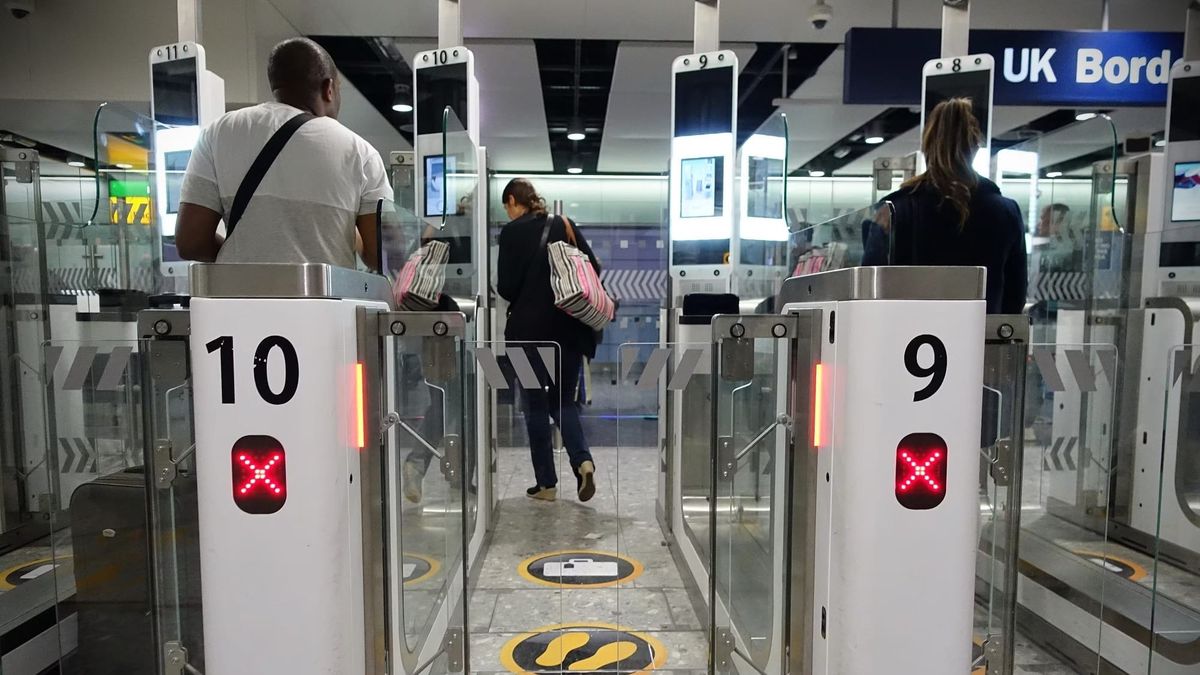
UK airports are beginning to introduce contactless eGates designed to make arriving in the country quicker, with testing suggesting the new technology could speed up border processing by as much as 25%.
The rollout began at East Midlands Airport on 6 October 2026, making it the first UK airport to offer the new system. The government expects contactless technology to be available at all UK airport eGates by early 2027.
The change is designed to simplify passport control while maintaining existing immigration and security checks.
How do the new contactless eGates work?
Under the new system, eligible passengers approach an eGate and have their photograph taken. Facial comparison technology then checks the image against verified passport, travel and immigration information.
If the checks are completed successfully, the gate opens without the passenger needing to place their passport on the reader.
The technology is intended to reduce the steps involved in entering the UK and help eligible travellers move through border control more efficiently.
However, passengers must still carry a valid passport. Anyone who needs further checks may be asked to scan their document or speak to a Border Force officer.
Which UK airports are introducing the technology?
The phased rollout covers Birmingham, Bristol, Cardiff, East Midlands, Edinburgh, Gatwick, Glasgow, Heathrow, London City, Luton, Manchester, Newcastle and Stansted.
Initially, contactless eGates are available to British citizens, with access expected to expand to other nationalities already eligible to use eGates over the coming months.
Existing eligibility requirements for using eGates will otherwise remain unchanged.
Will airport queues become shorter?
The government says testing has shown the contactless system can be up to 25% faster than using a passport reader at a conventional eGate.
That could help improve the arrival experience, particularly at busy airports during school holidays and peak travel periods. However, the technology cannot guarantee shorter queues every time, as waiting periods will still depend on passenger numbers and whether additional checks are required.
The rollout is gradual, so travellers should not assume every gate at their arrival airport already offers the new system.
For holidaymakers returning to the UK, contactless eGates are a practical development to watch as airports modernise their border controls. Passengers should follow airport signage, listen to staff instructions and keep their passports with them throughout their journey.