The Ferry Man AI Films Hit $1.19M in First Month
The Ferry Man AI films recovered their production costs within a week and generated about $1.19 million in platform revenue-sharing in their first month.


Two feature-length AI-generated fantasy films from The Ferry Man have delivered one of the clearest commercial tests yet for long-form AI entertainment. The Ferry Man: Butterfly Dream and The Ferry Man: The Dream of the Celestial Maiden recovered their production costs within their first week before generating more than RMB 8 million, approximately $1.19 million, in platform revenue-sharing earnings during their first month.
Both films launched on August 22 and run for around an hour, making them very different from the short AI clips that have dominated social media. More importantly, they are not simply technology demonstrations. They are supernatural fantasy stories built around an established fictional world, recurring characters and connected mysteries.
Butterfly Dream begins with missing children
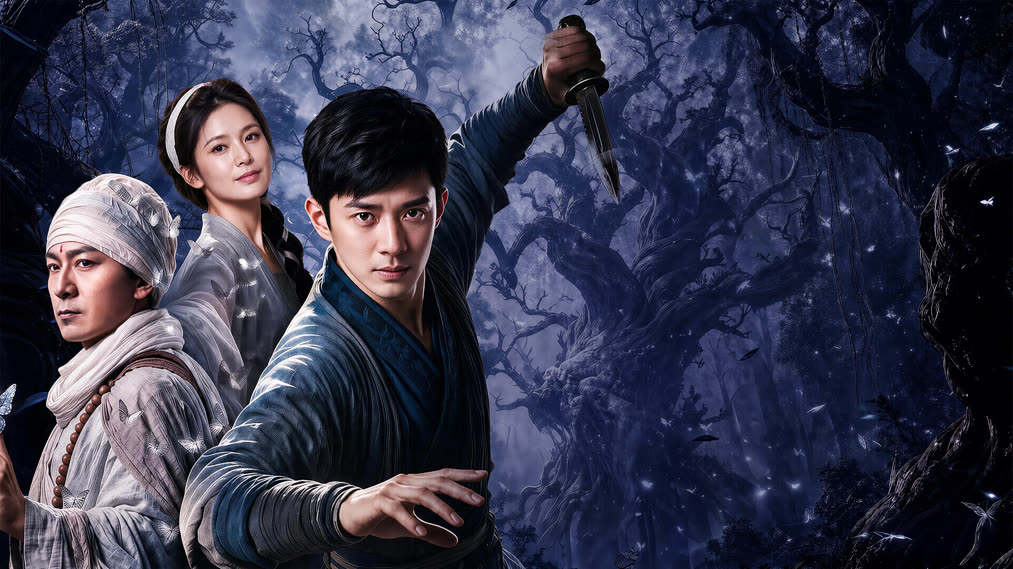
The Ferry Man: Butterfly Dream opens in a remote mountain village where children have started disappearing. Frightened villagers blame a mysterious Mountain God, but the situation becomes personal for shepherd Xia Dongqing when Gou’er, a young neighbor, also vanishes.
Dongqing’s investigation brings him together with Wuming, a wandering monk who introduces him to a supernatural world beyond everyday life. Their search eventually leads them into Butterfly Valley, a strange place where reality and illusion begin to overlap and an obsession stretching beyond life and death is being protected.
The pair set out to rescue the missing children, but discover that the truth behind their disappearance is more complicated and tragic than the villagers’ belief that a Mountain God is responsible. The story uses that mystery to move between Chinese fantasy, supernatural adventure and emotional drama rather than relying entirely on AI-generated spectacle.
The film also sets up what comes next. After Dongqing and Wuming escape Butterfly Valley, they encounter another disturbing mystery involving an entire town whose residents have fallen into an unexplained sleep.
At the center of that new mystery is Aya, a young woman who describes herself as a Medicine Maiden. That cliffhanger leads directly into the second film.
The Dream of the Celestial Maiden continues the mystery
The Ferry Man: The Dream of the Celestial Maiden picks up with Wuming and Dongqing entering the strange town where almost everyone has been trapped in an unnatural slumber. Aya initially appears to be an ordinary young woman connected to the mystery, but the story gradually reveals something much bigger surrounding her identity.
The woman Aya believes to be her grandmother is actually Hupo, a supernatural being whose resentment grew after gaining immortality. Hupo has placed the town under a sleep curse as part of a plan to take over Aya’s body.
Aya herself is revealed to be the Celestial Maiden of the Nine Heavens. Once the curse is broken, she regains her divine power, but the film immediately pushes the story into another conflict when Wuming unexpectedly steals the Kunlun Spirit Stone and escapes.
Aya then takes Dongqing hostage as she pursues him, opening up a much older story involving a 200-year conflict between gods and mortals. The mystery also begins exposing secrets connected to Kunlun, expanding the story beyond the sleeping town and linking the supernatural characters to a much larger mythology.
The films test whether AI can sustain a real story
That connected storytelling is important when considering what iQIYI is trying to achieve. Generative video systems have already shown that they can produce dramatic landscapes, fantasy creatures and cinematic-looking shots, but feature-length entertainment demands considerably more consistency.
Characters must remain recognizable across scenes, locations have to make sense and the story needs enough momentum to keep viewers interested after the novelty of AI-generated imagery has disappeared. Butterfly Dream runs for around one hour, while The Dream of the Celestial Maiden runs for approximately one hour and four minutes.
That means viewers are being asked to engage with them as films rather than as extended technology demonstrations. The two titles also form part of a continuing story, adding another layer of difficulty because events and characters need to connect across separate productions.
The Ferry Man already had an audience
The choice of The Ferry Man also gives the experiment an advantage over launching a completely unknown AI franchise. The property has existed since the original supernatural television series debuted in 2014 and has expanded through different forms of entertainment.
Its central world combines ghosts, mythology, supernatural mysteries and contemporary characters. Xia Dongqing was originally introduced as a young man capable of seeing supernatural beings, placing him at the center of stories where the human and spirit worlds repeatedly collide.
Using an established property means viewers already have characters and mythology they can recognize. It also allows AI filmmaking to be tested on a franchise with an existing audience rather than asking the technology itself to provide the only reason to watch.
The first month brought $1.19 million
The commercial numbers are what make the experiment particularly notable. The two films recovered their production costs during their first week of release, while their combined platform revenue-sharing earnings exceeded RMB 8 million during their first month.
That converts to approximately $1.19 million. It is an early result rather than proof that every AI-generated feature will succeed, but it gives the industry something more useful than views on a short viral clip.
People watched these productions within an established streaming ecosystem where their performance could be connected directly to revenue. That is the kind of evidence studios and streaming companies need when deciding whether generative filmmaking is commercially worth pursuing.
More feature-length AI films are already coming
iQIYI is not stopping with these two productions. The company is expanding its long-form AI strategy with additional feature projects covering adventure, suspense, action, romance and animation, while another Ferry Man AI film is also planned.
Nine projects have been selected from more than 100 submissions for a separate feature-length AI initiative. That means The Ferry Man is increasingly looking less like an isolated experiment and more like an early test case for a wider production model.
The unanswered question is whether its commercial performance can be repeated with stories that do not already have an established franchise behind them. Recovering costs in one week and reaching around $1.19 million in first-month revenue-sharing gives AI filmmaking a significant early benchmark, but the next generation of projects will determine whether audiences are interested in the stories themselves once the novelty of an AI-generated movie becomes more familiar.