Sugar Rush Remains One Of Channel 4’s Most Important LGBTQ+ Teen Dramas
Explore Sugar Rush, Channel 4’s Brighton-set teen drama about first love, friendship and growing up lesbian, and its lasting place in LGBTQ+ television.


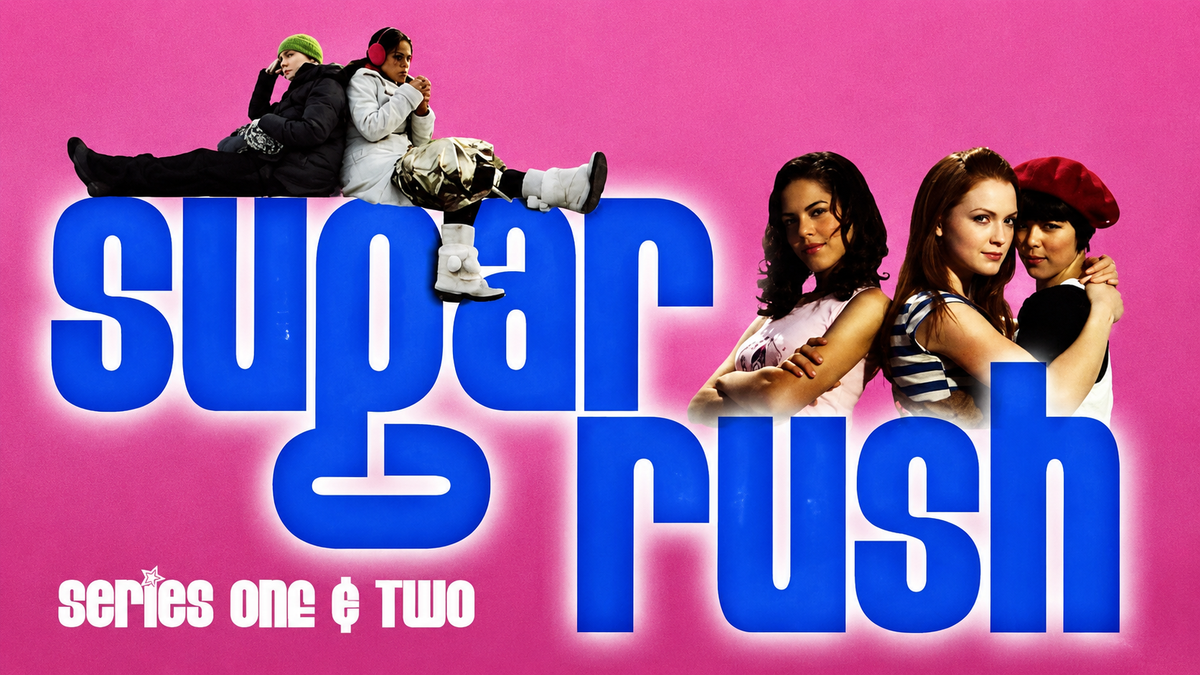
Long before LGBTQ+ teen dramas became a regular part of mainstream television, Sugar Rush gave British audiences something bold, messy and unforgettable.
First broadcast on Channel 4 in 2005, the Brighton set series followed teenager Kim Daniels as she navigated family problems, desire, friendship and her overwhelming crush on her best friend, Maria “Sugar” Sweet.
At the time, British television had very few shows placing a young lesbian character at the centre of the story. Sugar Rush did exactly that, and it did so with humour, colour, awkwardness and emotional honesty.
Nearly two decades later, the series remains an important part of LGBTQ+ television history.
What Is Sugar Rush About?

Sugar Rush follows 15 year old Kim Daniels after she moves from London to Brighton with her family. The move is supposed to offer a fresh start, but Kim quickly finds herself overwhelmed by her new life, her chaotic family and her intense feelings for her best friend, Sugar.
Sugar is confident, rebellious and unpredictable. Kim is quieter, more introspective and completely captivated by her. The heart of the series is Kim’s attempt to understand her sexuality while dealing with teenage confusion, family dysfunction and the pain of wanting someone who may never want her in the same way.
The show mixes comedy, drama and coming of age storytelling. It is bright, fast and often deliberately outrageous, but beneath the humour is a sincere story about teenage identity and first love.
Based On The Novel

Sugar Rush is loosely based on the 2004 novel of the same name by Julie Burchill.
The television adaptation was developed by Katie Baxendale for Channel 4 and produced by Shine TV. Although the series takes inspiration from the novel, the television version developed its own tone and identity. It became less about simply adapting the book and more about creating a distinctive teen drama with a strong queer perspective.
The Brighton setting became central to that identity.With its seafront, nightlife, colour and alternative culture, Brighton gave Sugar Rush a world that felt very different from many British teen dramas of the period.
Main Cast And Characters
Olivia Hallinan leads the series as Kim Daniels. Kim is the emotional centre of Sugar Rush. Viewers experience the story through her eyes as she tries to make sense of her feelings, her family and her place in the world.
Lenora Crichlow plays Maria “Sugar” Sweet, the confident and magnetic best friend who becomes the focus of Kim’s obsession. Sugar is not written as a simple love interest. She is funny, difficult, self centred and vulnerable in different ways, which is part of what makes the friendship between Kim and Sugar so complicated.
The main cast also includes Sara Stewart as Kim’s mother Stella, Richard Lumsden as her father Nathan and Kurtis O’Brien as her brother Matt. Sarah Jane Potts joins the series as Saint, another important character in Kim’s journey.
Together, the cast created a world that felt heightened but recognisable, especially for viewers who remembered the intensity and confusion of teenage life.
LGBTQ+ Representation
Sugar Rush was significant because it placed a young lesbian character at the centre of a British television drama. Kim’s sexuality is not a minor subplot. It is the foundation of the series. The show explores her attraction to Sugar, her confusion, her fantasies, her jealousy and her attempts to understand herself.
For LGBTQ+ viewers who were teenagers in the mid 2000s, this was important. Mainstream television was still limited in how often it showed young queer characters, especially young lesbians, as fully developed leads.
Sugar Rush gave viewers a central character whose sexuality was explored openly and directly. The show also captured something many LGBTQ+ people recognise from adolescence: falling hard for a straight friend, reading too much into every look and every gesture, and trying to survive feelings that feel impossible to control.
That specificity is one reason Sugar Rush still has a place in LGBTQ+ television history.
Filming Locations

Sugar Rush is strongly associated with Brighton. The series uses the city’s beaches, streets, clubs and seafront atmosphere to create its distinctive identity.
Brighton is not simply a backdrop. It reflects the show’s themes of freedom, sexuality, reinvention and escape. For Kim, the move to Brighton places her in a world that feels more open than the one she has left behind, but that openness does not mean life suddenly becomes easy.
The city’s reputation as one of the UK’s most LGBTQ+ friendly places also gives the series added meaning. By setting the show in Brighton, Sugar Rush placed Kim’s coming of age story in a location already strongly connected with queer culture and youth identity.
Seasons, Episodes And Release History
Sugar Rush premiered on Channel 4 on 7 June 2005.
The series ran for two seasons between 2005 and 2006.
As a viewer guide:
Seasons: 2
Episodes: 20
Original channel: Channel 4
Country of origin: United Kingdom
Original run: 2005 to 2006
Runtime: Around 25 minutes per episode
The first season introduced Kim, Sugar and the Daniels family, while the second season continued Kim’s journey as she tried to move forward from her fixation on Sugar and explore new relationships.
Although the series ended after two seasons, it has continued to be remembered by LGBTQ+ viewers and British television fans.
Awards, Ratings And Reviews
Sugar Rush received international recognition during its original run.
In 2006, the series won the International Emmy Award for Best Children and Young People Programme. That award remains one of the biggest achievements connected to the show and highlights how strongly it stood out at the time.
Critics and viewers praised the series for its energy, humour and willingness to centre a young lesbian character. Its tone was very much of its era, and some elements now feel tied to the mid 2000s, but the importance of the show remains clear.
It arrived before later LGBTQ+ teen dramas had the same mainstream visibility and helped prove there was an audience for queer coming of age stories.
IMDb Score And Audience Reception
Sugar Rush currently holds an IMDb rating of around 7.7 out of 10, based on several thousand user ratings. That is a strong score for a short lived British teen drama from the mid 2000s.
Audience reviews often highlight the show’s nostalgic appeal, its Brighton setting, Olivia Hallinan’s performance as Kim and the chemistry between Kim and Sugar.
Many viewers also remember the series as one of the first times they saw a young lesbian character leading a television drama rather than appearing as a side character. That emotional connection is a major part of the show’s continuing legacy. For some viewers, Sugar Rush was not just entertainment. It was a rare moment of recognition.
Where Can UK Viewers Watch Sugar Rush?
At the moment, Sugar Rush is not widely available to stream in the UK.
The series has previously been available through Channel 4 streaming, but current availability can change depending on licensing. Viewers should check Channel 4, digital purchase platforms and DVD availability if they want to watch the series.
Because older British dramas often move on and off streaming services, it is worth searching for Sugar Rush regularly to see whether it has returned.
Where to Read Sugar Rush
Julie Burchill’s original novel Sugar Rush was first published in 2004 and remains available in paperback and ebook formats. The book continues to be published by Pan Macmillan and can be purchased through major online and high street booksellers.
Why Sugar Rush Matters Today
Sugar Rush matters because it captured a specific moment in British LGBTQ+ television. It arrived before shows such as Heartstopper made queer teenage stories more visible to mainstream audiences.
It was louder, messier and more chaotic than many modern LGBTQ+ dramas, but that was part of its identity. The series showed teenage desire as confusing, funny, embarrassing and overwhelming. It did not try to make Kim perfect. It allowed her to be awkward, obsessive, emotional and flawed.
That made her feel real. Sugar Rush also deserves credit for putting a young lesbian lead on Channel 4 at a time when that was still rare. It may not have had a long run, but its influence can still be felt in the way viewers remember it.
For many LGBTQ+ audiences, especially those who grew up in the 2000s, Sugar Rush was one of the shows that made them feel seen.