Scientists Tried Teaching AI Like a Child and Discovered Why Memory Helps
Princeton scientists trained AI on children's everyday speech and discovered why replaying previous experiences transformed language learning.

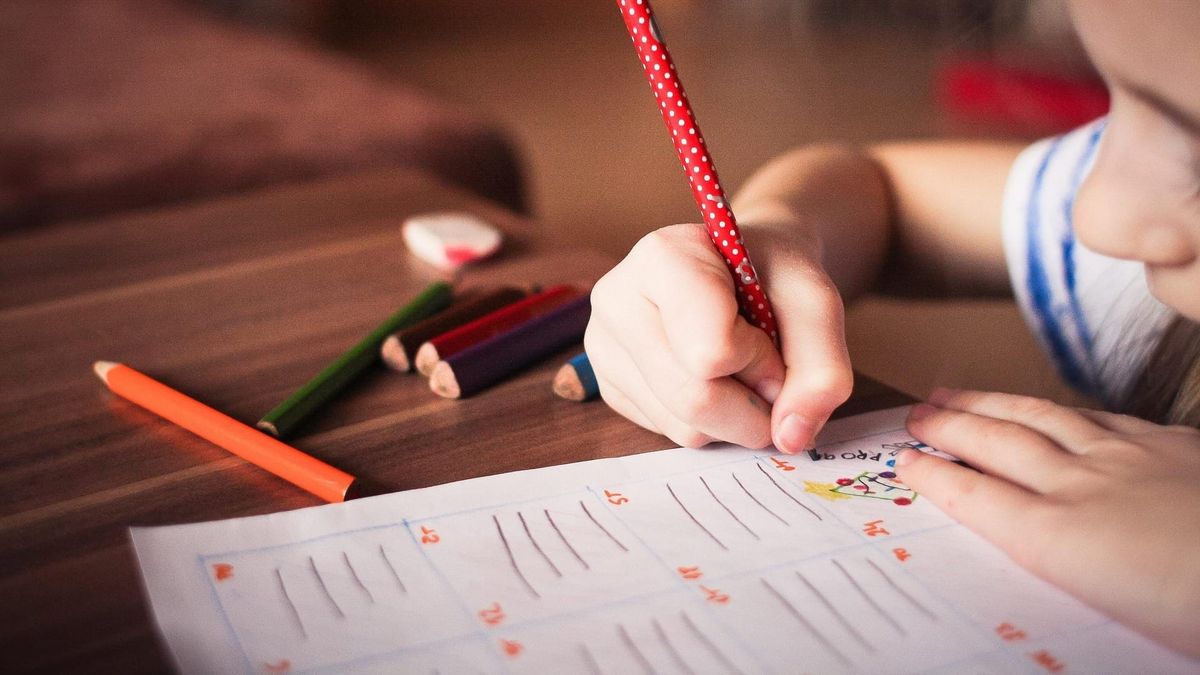
Scientists have attempted to teach artificial intelligence to recognise language using the everyday conversations heard by young children, only to discover that their first experiment failed spectacularly. Despite receiving hundreds of days of speech recordings, one AI model had learned no words by the equivalent of a child's second birthday.
Researchers at Princeton University eventually discovered that allowing the system to revisit earlier experiences made a dramatic difference. Their findings, published in Science on 5 November 2026, offer an insight into how memory may contribute to language development.
Giving artificial intelligence a childhood
The experiment formed part of Princeton's First 1000 Days Project, which involved recording children's everyday experiences in 15 family homes from birth through approximately their third birthday. Cameras and microphones captured conversations, family interactions and other aspects of daily life, creating an unusually detailed record of the environments in which children learn language.
For the new study, researchers focused on eight children and developed a separate artificial learner for each child's speech recordings. Unlike conventional language models, these systems were not given written transcripts, dictionaries or prior knowledge of English speech sounds.
Instead, the models received recordings in chronological order, following the sequence in which each child experienced language. Researchers wanted to establish whether an artificial system could begin identifying sounds and words from ordinary conversations without relying on the enormous collections of written information used to train many commercial AI models.
The experiment that initially failed
The researchers began with recordings from a child given the pseudonym Coral. Despite receiving extensive speech input, the artificial learner struggled to retain information from one day to the next.
By the equivalent of Coral's second birthday, the model had learned no words. Simply exposing the system to a continuous stream of speech had not been sufficient.
The scientists then introduced a process inspired by memory consolidation during sleep. At the end of each simulated day, the model revisited a limited selection of recent recordings, allowing it to reinforce patterns encountered previously.
The results were striking. With replay, the system began recognising English speech sounds and recurring words, eventually identifying thousands of words by the equivalent of Coral's second birthday.
Why memory made such a difference
The researchers repeated the approach using recordings from seven additional households. Although the children heard different quantities of speech and experienced different family environments, the artificial learners successfully discovered patterns in spoken English.
However, the models initially learned at similar rates, even though the children themselves developed at different speeds. Researchers then adjusted three aspects of learning, including how much information was replayed, how quickly the model learned and when word learning began.
Those adjustments allowed the artificial learners to reproduce the individual developmental trajectories more closely. The findings suggest that differences in learning processes may help explain why children acquire language at different rates.
Does this mean AI can understand language like a child?
No, because recognising recurring sounds and words is not the same as understanding their meaning. Children learn language through relationships, gestures, physical experiences and social interactions, while the experimental systems focused on patterns in speech.
The researchers are clear that their models do not possess the experiences or biological capabilities of developing children. They cannot use language to communicate needs or understand the physical world in the way a young child does.
Nevertheless, the study provides a new method for investigating human development. By building artificial learners and comparing their progress with that of real children, scientists can test theories about how language is acquired.
The research may eventually contribute to more efficient AI systems, but its immediate significance is scientific. It demonstrates how revisiting previous experiences can transform learning, even when no additional information is introduced.
Research and sources
Hadas Raviv and colleagues, Princeton University, The First 1000 Days, published in Science, 5 November 2026. Original study and Princeton research findings.