Lesbian Job Applicants Get Half as Many Interview Invitations, UK Study Finds
A UK study found interview invitation rates of 26.1% for heterosexual women and 12.8% for comparable lesbian applicants without AI qualifications.

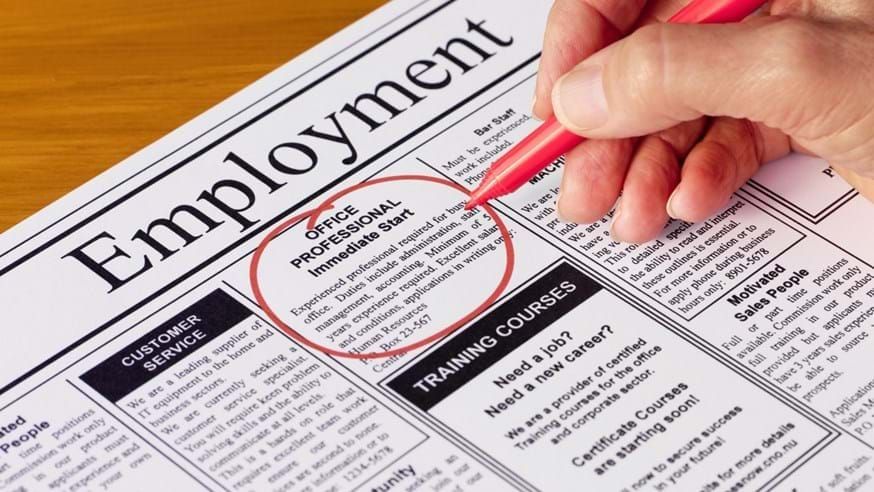
Lesbian women applying for jobs in London received approximately half as many interview invitations as comparable heterosexual women in a recruitment experiment involving genuine vacancies. The findings provide evidence of unequal treatment at the initial stage of recruitment, even when applicants have similar experience and qualifications.
The research was conducted by Professor Nick Drydakis of Anglia Ruskin University and published in Industrial Relations: A Journal of Economy and Society on 29 September 2026. It examined 3,048 applications submitted to 1,016 private-sector vacancies, investigating recruitment outcomes associated with sexual orientation, race, age and autism-spectrum disclosure.
The interview figures tell the story
In the sexual orientation experiment, researchers submitted three carefully matched applications to each of 256 vacancies. One represented a heterosexual woman without AI-related qualifications, another represented a lesbian woman without those qualifications, and the third represented a lesbian woman with additional AI skills.
Heterosexual applicants received 67 interview invitations, equivalent to 26.1% of applications. Lesbian applicants without AI credentials received 33 invitations, or 12.8%, while lesbian applicants with AI qualifications received 45 invitations, representing 17.5%.
The figures reveal a substantial difference between applicants who were otherwise closely matched. Lesbian women without AI qualifications received invitations at approximately half the rate of heterosexual women in the experiment.
The study's adjusted statistical analysis also identified a disadvantage of 13.5 percentage points for lesbian applicants without AI credentials. Among lesbian applicants with AI qualifications, the adjusted gap narrowed to 8.1 percentage points, but remained statistically significant.
How did employers know applicants were lesbian?
The research used correspondence testing, a method in which fictional but carefully matched applications are submitted to genuine job advertisements. By changing selected characteristics while keeping qualifications and experience comparable, researchers can investigate whether employers respond differently to particular applicants.
In the sexual orientation experiment, applicants' relationships were indicated through references to their partners. Heterosexual applicants mentioned male partners, while lesbian applicants mentioned female partners, with other application details carefully matched.
The experiments took place between January and June 2025 and covered full-time private-sector roles in London that did not require a university degree. The researchers also rotated application details and submission order to reduce the possibility that unrelated differences would influence the results.
This approach provides evidence of unequal employer responses during initial shortlisting. However, it does not reveal precisely why individual employers made their decisions or establish whether similar differences would occur during interviews or after employment.
Could AI qualifications improve the chances of getting an interview?
The experiment found that signalling additional AI-related skills improved outcomes for lesbian applicants. However, the improvement did not eliminate the gap between them and heterosexual applicants without those qualifications.
The additional skills were represented by a six-month AI training certificate and descriptions of practical workplace capabilities. Other applicants had comparable non-AI training, helping the researcher examine whether the AI qualification itself influenced recruitment responses.
Across all four experiments, underrepresented women without AI credentials experienced an adjusted interview invitation disadvantage of 13.7 percentage points. With AI-related qualifications, the disadvantage narrowed to 9.7 percentage points, equivalent to a reduction of approximately 29%.
The study did not include a heterosexual applicant with the same AI qualification in the sexual orientation comparison. It therefore cannot establish whether lesbian and heterosexual applicants would receive equal benefits from identical AI training.
What does this mean for British employers?
The findings suggest that improving qualifications alone may not be enough to eliminate unequal recruitment outcomes. Even with additional AI credentials, lesbian applicants continued to receive fewer interview invitations than comparable heterosexual applicants without those credentials.
For employers, the research raises questions about how candidates are assessed during shortlisting and whether recruitment procedures consistently prioritise relevant skills and experience. It also highlights the importance of examining actual outcomes rather than assuming that written equality policies automatically prevent unequal treatment.
The study was limited to selected London vacancies and should not be treated as a measurement of discrimination across every British workplace. It also examined interview invitations rather than job offers, negotiated salaries or long-term career progression.
Nevertheless, the results provide evidence that technology training and fair recruitment practices need to be considered together. Additional qualifications may improve opportunities, but the study suggests that wider recruitment inequalities can persist even when applicants demonstrate relevant skills.
Research and sources
Professor Nick Drydakis, Anglia Ruskin University, Industrial Relations: A Journal of Economy and Society, 29 September 2026. Original peer-reviewed study.