Oranges Are Not The Only Fruit Changed British LGBTQ+ Television Forever
Long before LGBTQ+ representation became a regular feature of mainstream television, Oranges Are Not The Only Fruit told a story that was both deeply personal and quietly revolutionary.

Long before LGBTQ+ representation became a regular feature of mainstream television, Oranges Are Not The Only Fruit told a story that was both deeply personal and quietly revolutionary.
First broadcast by the BBC in 1990, the drama introduced viewers to Jeanette, a young girl growing up in a strict religious community who begins to realise she is attracted to women. Based on the semi autobiographical novel by Jeanette Winterson, the series challenged television audiences to think differently about sexuality, religion, identity and belonging.
More than three decades later, Oranges Are Not The Only Fruit remains one of the most important LGBTQ+ dramas ever produced in the United Kingdom.Its influence can still be seen in many of the television series that followed.
What Is Oranges Are Not The Only Fruit About?
The story follows Jeanette, a young girl adopted by a deeply religious Pentecostal family in northern England. Raised by her strict and devoted mother, Jeanette grows up believing she is destined for missionary work and a life dedicated to faith.
As she becomes older, however, she begins to question both her future and the teachings she has always accepted.When Jeanette develops feelings for another young woman, she finds herself in direct conflict with the religious beliefs that have shaped her entire life.
The series explores the consequences of that conflict, examining family relationships, faith, identity and the search for acceptance.Although the story is deeply rooted in Jeanette’s personal experience, its themes remain universal.
The desire to be accepted for who you are continues to resonate with audiences today.
Based On Jeanette Winterson’s Acclaimed Novel
Oranges Are Not The Only Fruit is adapted from the bestselling 1985 novel by Jeanette Winterson. The novel drew heavily upon Winterson’s own upbringing and experiences growing up in a Pentecostal household in Lancashire.
Winterson’s book received widespread critical acclaim and won the Whitbread First Novel Award. When the BBC adapted the story for television, Winterson was closely involved in the production, helping ensure the drama remained faithful to the spirit of the novel.
The result was a television adaptation that successfully captured the emotional power of the source material while reaching a much wider audience. Today, the novel remains a key text in LGBTQ+ literature and is studied in schools and universities around the world.
Main Cast And Characters
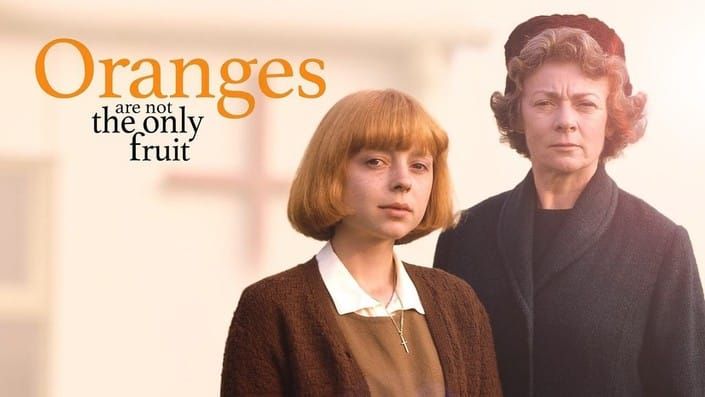
The series features a relatively small cast, allowing the focus to remain firmly on Jeanette’s journey. Charlotte Coleman plays the teenage Jeanette and delivers a performance that earned widespread praise from critics and viewers alike.
Coleman captures both Jeanette’s vulnerability and determination as she struggles to reconcile her identity with the expectations placed upon her. Geraldine McEwan stars as Jeanette’s mother, one of British television’s most memorable and complex parental figures.
Strict, passionate and unwavering in her beliefs, she remains convinced she is acting in Jeanette’s best interests even as their relationship begins to fracture.
Other cast members include:
- Cathryn Bradshaw as Melanie
- Kenneth Cranham as Pastor Finch
- Pam Ferris as Mrs White
- Celia Imrie as Miss Jewsbury
The performances throughout the series helped elevate the material and remain highly regarded more than thirty years later.
LGBTQ+ Representation
When Oranges Are Not The Only Fruit aired in 1990, LGBTQ+ representation on British television was far more limited than it is today.
Few programmes centred openly on lesbian characters. Even fewer explored sexuality with the honesty and emotional depth found here. The series was groundbreaking because it treated Jeanette’s sexuality as an essential part of her identity rather than something to be hidden or sensationalised.
At the same time, the drama did not present easy answers. Instead, it explored the emotional consequences of rejection, isolation and conflicting loyalties.
The relationship between faith and sexuality remains one of the most powerful aspects of the story. For many viewers, particularly those raised within religious communities, Jeanette’s experiences felt painfully familiar.
The series also challenged stereotypes by presenting LGBTQ+ characters as complex human beings rather than caricatures. That approach helped pave the way for future British dramas featuring queer characters.
Without Oranges Are Not The Only Fruit, later series such as Tipping The Velvet, Lip Service and Gentleman Jack may have found a more difficult path to mainstream television.
Filming Locations
The series was filmed primarily in northern England. Many locations were chosen to reflect the industrial towns and working class communities that inspired Winterson’s original story.
The production deliberately avoided glamour, instead creating a realistic and grounded environment that reflected Jeanette’s upbringing. Churches, terraced streets and community halls all play important roles in establishing the world of the drama.
The northern setting is central to the story’s identity. It reinforces themes of tradition, community and social expectations while providing a believable backdrop for Jeanette’s journey.
Although modest compared to modern television productions, the locations remain highly effective and authentic.
Seasons, Episodes And Release History
Oranges Are Not The Only Fruit premiered on BBC One in January 1990.
The adaptation was produced as a self contained drama rather than a continuing series.
Viewer guide:
Episodes: 3
Original Broadcaster: BBC One
Country of Origin: United Kingdom
Original Release: 1990
Genre: Drama
Running Time: Approximately 165 minutes in total
The three episodes tell a complete story from beginning to end.
Because the series was adapted from a standalone novel, there were never plans for additional seasons.
Awards, Ratings And Reviews
The critical response to Oranges Are Not The Only Fruit was overwhelmingly positive.
The series won the BAFTA Award for Best Drama Series and received widespread praise for its writing, performances and emotional impact.
Critics highlighted:
- Charlotte Coleman’s performance
- Geraldine McEwan’s portrayal of Jeanette’s mother
- The adaptation of Winterson’s novel
- LGBTQ+ representation
- Its exploration of religion and identity
Winning a BAFTA was a significant achievement and helped establish the programme as one of the most important British dramas of its era.
The series continues to appear on lists of the greatest LGBTQ+ television productions ever made.
IMDb Score And Audience Reception
Oranges Are Not The Only Fruit currently holds an IMDb rating of approximately 8.0 out of 10. For a drama first broadcast more than thirty five years ago, that remains an impressive score.
Viewers frequently praise:
- The writing
- Charlotte Coleman’s performance
- Geraldine McEwan’s portrayal of Jeanette’s mother
- The emotional honesty of the story
- Its historical importance
Many audience reviews describe the series as ahead of its time.
Younger viewers discovering the drama today are often surprised by how relevant its themes remain. Questions surrounding faith, identity and acceptance continue to resonate with modern audiences.
Where Can UK Viewers Watch Oranges Are Not The Only Fruit?
Availability varies depending on licensing arrangements.
The series has previously appeared on BBC services and has been released on DVD.
Viewers should check:
- BBC iPlayer
- Amazon Prime Video
- Apple TV
- Google TV
- DVD retailers
Because it is considered a classic BBC drama, availability can change periodically.
Physical media remains one of the most reliable viewing options.
Why Oranges Are Not The Only Fruit Matters Today
More than three decades after its original broadcast, the themes explored by Oranges Are Not The Only Fruit remain highly relevant.
The drama examines the tension that can exist between personal identity and community expectations. It explores the cost of rejection and the importance of self acceptance.
For LGBTQ+ viewers, the story remains powerful because it reflects experiences that many people have faced, particularly within religious environments.
The series also serves as an important reminder of how far television representation has progressed. Programmes such as Heartstopper, Deadloch and Gentleman Jack exist within a media landscape shaped by pioneering dramas like this one.
Its legacy extends far beyond its original three episodes.