Nicola Nicoletti reveals the real story behind his AI music
Nicola Nicoletti's creator speaks exclusively to SoapLandTV about AI music, songwriting, award nominations and plans for short films.

Nicola Nicoletti might be an AI-generated pop star, but behind the music, the emotions and the virtual character is a real person whose experiences have helped shape an increasingly ambitious creative project.
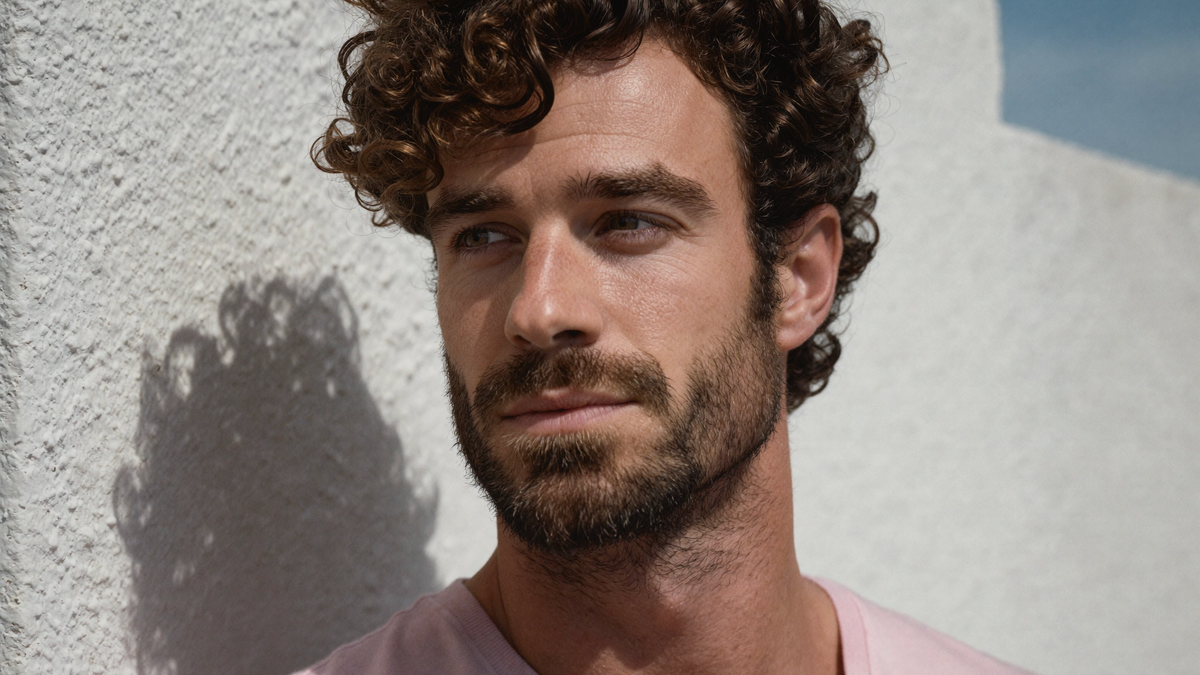
What started as an experiment with AI music in June 2025 has developed into a multilingual virtual performer, with original songs, music videos and an expanding fictional world. Nicola's appearance is also more personal than some listeners might realise, with his curly hair, beard and eyes modelled on those of the person who created him.
The music draws on equally personal experiences. Writing from the perspective of a gay man, Nicola's creator explores love, relationships and the complications of modern dating. Some songs have taken months to write, while the response from listeners has brought unexpected encouragement.
The project has also received three nominations at the 2026 SIQA AI Music Awards, including Best AI Pop Artist, AI Album of the Year for Gilded and Best AI International Song for Tarde Demais.
With Resonance: Volume One arriving on Friday 30 October, a second album planned for early 2027 and ideas developing for short films, Nicola's creator spoke exclusively to SoapLandTV about the journey so far, the work behind AI-generated music and what could come next.
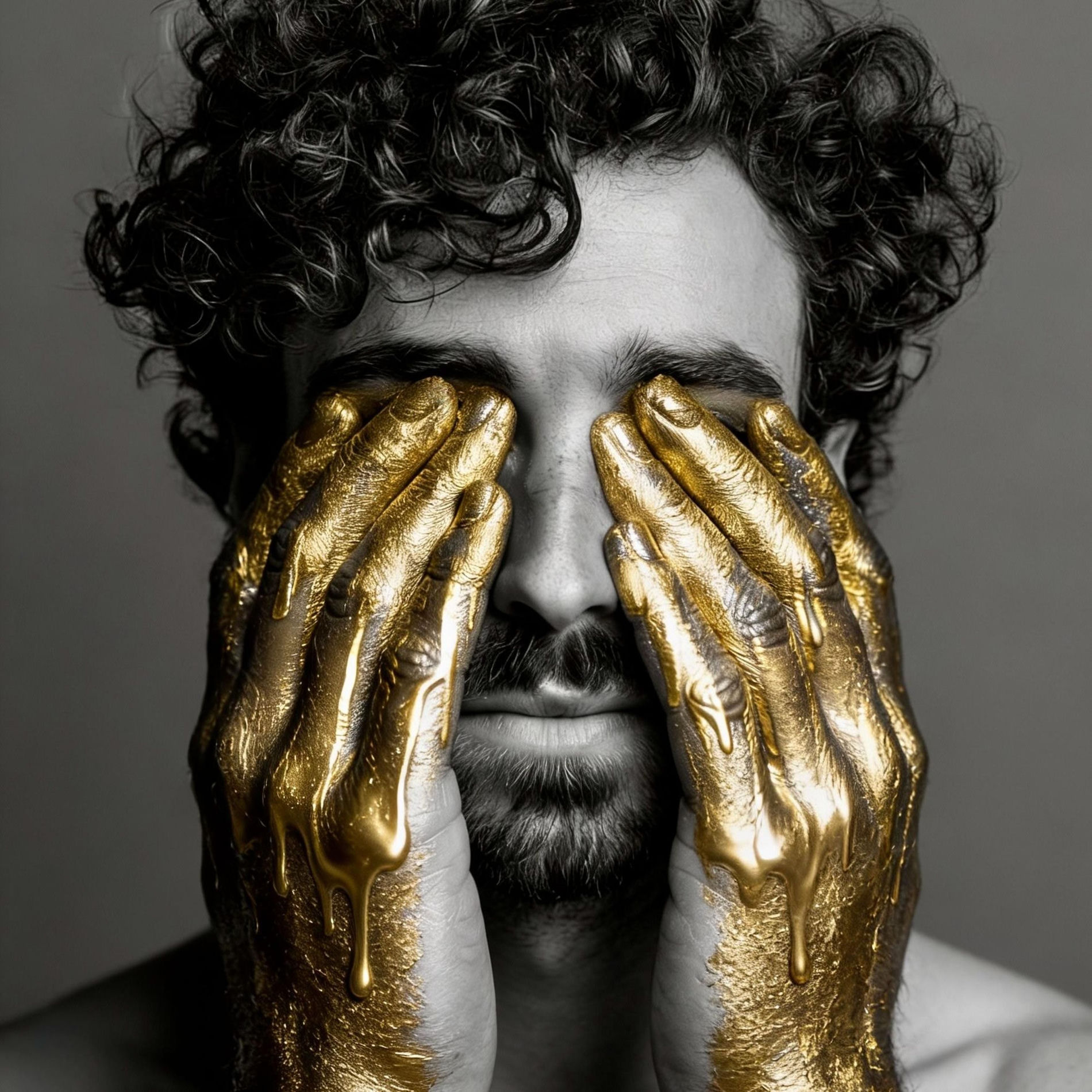
For readers discovering you for the first time, how would you introduce Nicola Nicoletti and your music?
Nicola Nicoletti is a virtual project that has evolved from curious exploration into a full-fledged audiovisual universe firmly rooted in emotional pop. I explore different sounds and themes, but the emotions are central to everything I do. I’ve always loved languages and have spent years living abroad so I knew that I wanted to make Nicola multilingual with songs mostly in English, but also in Spanish, Italian, French and Portuguese.
I think of his overall persona as a romantic realist. He’s casual and approachable; he loves the idea of love, but he’s also very realistic about the messiness of it all and the absurdity of modern dating. He recognises that absurdity without placing himself above it. He knows that he’s in the middle of it, too. Visually and musically, my goal has always been to build a world that feels real, tangible and genuine.
What inspired you to start creating music, and how did the Nicola Nicoletti project first come about?
This whole thing really started casually. I only found out that AI music existed in June 2025. I was curious to see what it sounded like so I gave it a try and was shocked. I kept playing around and wasn’t really taking it seriously the first couple of months.
As I was generating more songs, though, I thought I should give the voice a name and image. I’d originally planned on something more constructed and less natural. I was trying to create a name that might represent the different places I’d lived, as well as his own pan-Mediterranean sensibilities. The original persona/character looked quite different too. Still realistic, but nothing like the Nicola we see today. He was more “stock hot guy”. He didn’t have curls or a beard and his style was more polished. I decided though that I wanted him to feel more approachable and for both his name and his look to be more closely related to me so I changed those.
Once I’d decided that his name would be a more “normal” name I immediately thought of Nicola. It’s one of my favourite names and it just felt right. Then Nicoletti happened almost by accident. When I was preparing to distribute the first track, I realised that using just Nicola might cause problems. So I started to think about what surname would work with Nicola.
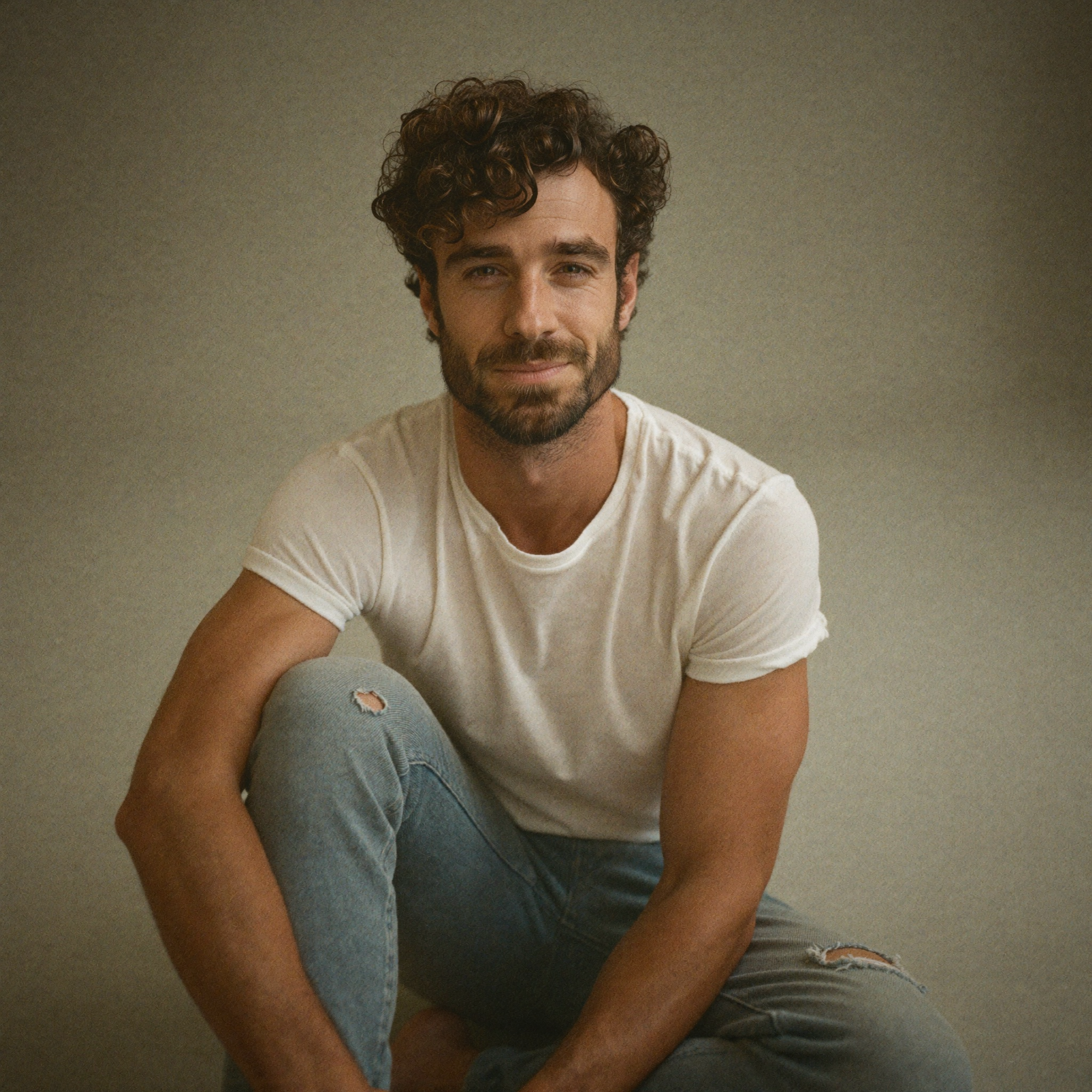
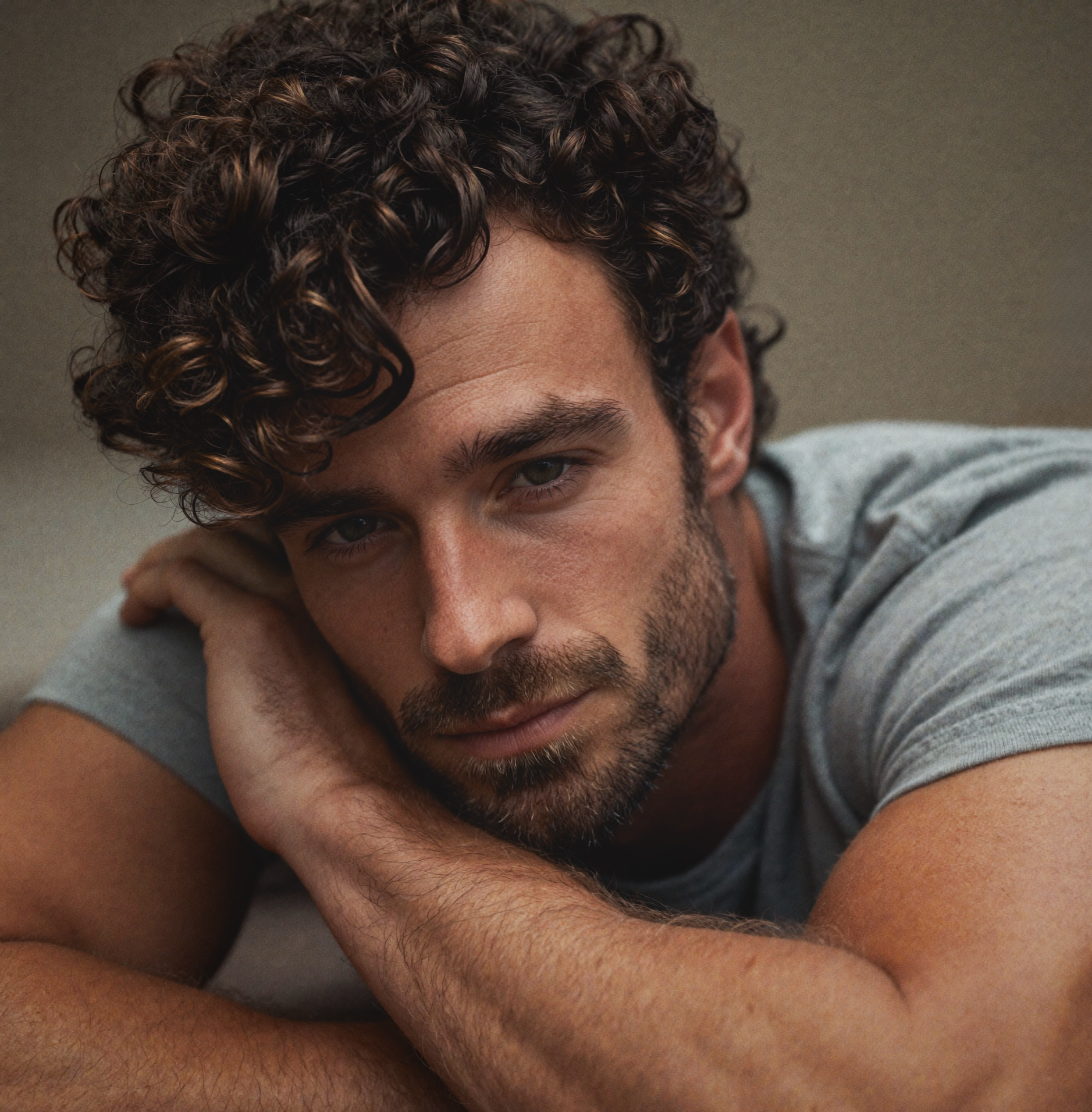
Nicoletti is personal to me and it just worked so well with Nicola. Then came his new look … and this is where I get a lot of questions. We are definitely not the same person, but I did want him to carry some of my own traits so I gave him my hair, beard, and eyes. That’s pretty much where the similarities end, though.
How would you describe your musical style, and what influences the sound and atmosphere of your songs?
My style has evolved since I first started. My first few releases were very different from what I do now. I’d describe my actual style as emotional synth-pop at its core. The core atmosphere sound is shaped largely by layered synths and more recently, downtempo breakbeat percussion. You can hear the evolution across my releases.
When I put out my debut album Gilded, the focus was clearly synth-pop. But over the past year, I’ve experimented a lot. I've leaned into trip-hop influences and on my upcoming project Resonance, I pulled back the modern electronics quite a bit to draw inspiration from traditional romantic stylings like French chanson, bolero, fado, and others. I really like experimenting and trying new things. I usually just start with “what would it sound like if I used this with this?” and go from there.
Can you tell us a little about your creative process? How does an idea develop into a finished track?
It really depends a lot on the song. 99% of the time, though, it starts with the lyrics. Usually random lines come to me out of nowhere and I’ll type them in my notes app. I don’t usually have a specific song in mind for those, but I keep them and usually use most of them later when I’m writing something deliberately.
Sometimes I sit down to specifically write about something concrete. I start typing awful lines just to get the general ideas of the song out and onto the screen. Then I’ll usually leave the lyrics alone for a while and come back to it with fresh eyes and rewrite the initial lines. Sometimes the songs just fly out of me nearly ready to go. I wrote the lyrics for “Can’t Hate You” in about 30 minutes, for example. “Like Anyone” on the other hand, took about 4 or 5 months.
Once I have the lyrics, I start on the musical part. I use a combination of Suno and ElevenLabs for generating the music and vocals. I have my go to prompts that I update for each song to include things like time signature, BPM, specific instrumentation and how those instruments should be used, percussion type, vocal performance, general vibe, etc. Once I have the base song (the one that generally sounds how I want it to), the iteration begins. Both on the lyrics and the music. This is where I hear if a line feels too full or too thin, find rhymes that don’t land like I’d expected them to, or that just don’t sound as good as they looked on the screen.
This is also where I decide where I want an instrumental solo, where I might want to add another instrument to the mix, where I need back up vocals, ad libs, where I want a falsetto or different vocal performance, if I’ll add an outro, etc. After all that is finished, I take the track to Logic Pro and do the mastering with my manually built chain.
Is there a particular song or project that means the most to you personally, and why?
I couldn’t possibly answer this question with just one and certainly not without mentioning “Perfect’s Overrated.” It was the first song to really take off and to this day is my most popular song. Another song that’s very special to me is “Like Anyone.” I wrote it specifically for Pride and, as I mentioned above, it took months for me to get the lyrics right and I feel quite proud of it.
Right now, though, the project that might mean the most to me is Resonance. I’ve lived abroad for a long time and before that was always fascinated by languages, different cultures, and music in different languages. That exposed me to so many different musical traditions that have had an indelible impact on me as a person as well as the music I enjoy.
So earlier this year, I started thinking about what some of my songs’ lyrics would sound like in a chanson or bolero style. So I gave it a try and really liked what I was hearing. Then I started adding in different modern elements. It eventually became a much larger project than I’d anticipated and I began incorporating inspiration not only from chanson and bolero, but also samba-canção, fado, torch songs, and more.
The songs aren’t meant to actually represent those genres, but those genres did serve as inspiration. In total, there are 13 reimagined songs with one bonus song that’s not been released before. It’s an English translation of a song that’s previously only been released in Spanish.
What has surprised you most about the response from listeners so far?
I think just the fact that so many people have connected to my words. I’d never imagined I could write lyrics at all, much less lyrics that people would identify with. I receive messages all the time from people saying that the words have helped them through something or that it feels like a song was written specifically for them.
I write from my perspective and experiences as a gay man, yet so many people from different backgrounds, countries, faiths, and orientations are able to see themselves in my lyrics and that has truly been the most beautiful thing to see.
Beyond that, though, I think one of the biggest surprises has been the passion listeners have not only for the music, but also for Nicola in general. People have connected with the persona I created in ways I never imagined.
What's been your biggest challenge as an independent creator, and what have you learnt along the way?
Balancing the sheer weight of this project with my real life has been a massive challenge. When you’re an independent creator building an entire virtual artist from the ground up, you aren't just writing songs. You’re the songwriter, creative director, prompt engineer, video editor, mastering engineer, social media manager, and marketing department. It requires a tremendous amount of time and financial investment: subscriptions for the music, image and video platforms, audio and visual editing and mastering tools, distribution, etc.
Beyond the logistical strain, the public conversation around AI has been both eye-opening and stressful. There is a lot of anti-AI hostility and an assumption that using these tools means pushing a single button and having a completed, meaningful piece handed to you.
People often assume when they see the AI label that there’s no human involved or at best, someone just typing something like “make me a nice pop song” or “make me a nice picture”. In reality, it takes dozens of hours of lyric rewrites, endless iterations, post-production audio clean-up, video direction, and editing to get to the final product.
What I’ve learned along the way is that you can’t create in order to appease the skeptics. They’ll either engage in good faith or they won’t. You have to focus on the people who actually listen and feel something. The moment someone tells me a song helped them through a breakup or feel seen, all the negativity and hostility fade away.
For me, these tools are just that: tools. They don’t decide the emotions or the stories, they just produce what I direct them to … and that always comes from me. Authenticity isn't about the tools in your chain; it's about the story you're telling. And that’s always been true.
What are you working on next, and where can new listeners discover and support your music?
I’m currently working on my second full album. It’s mostly finished, but there are a few tracks I’m still finalising.
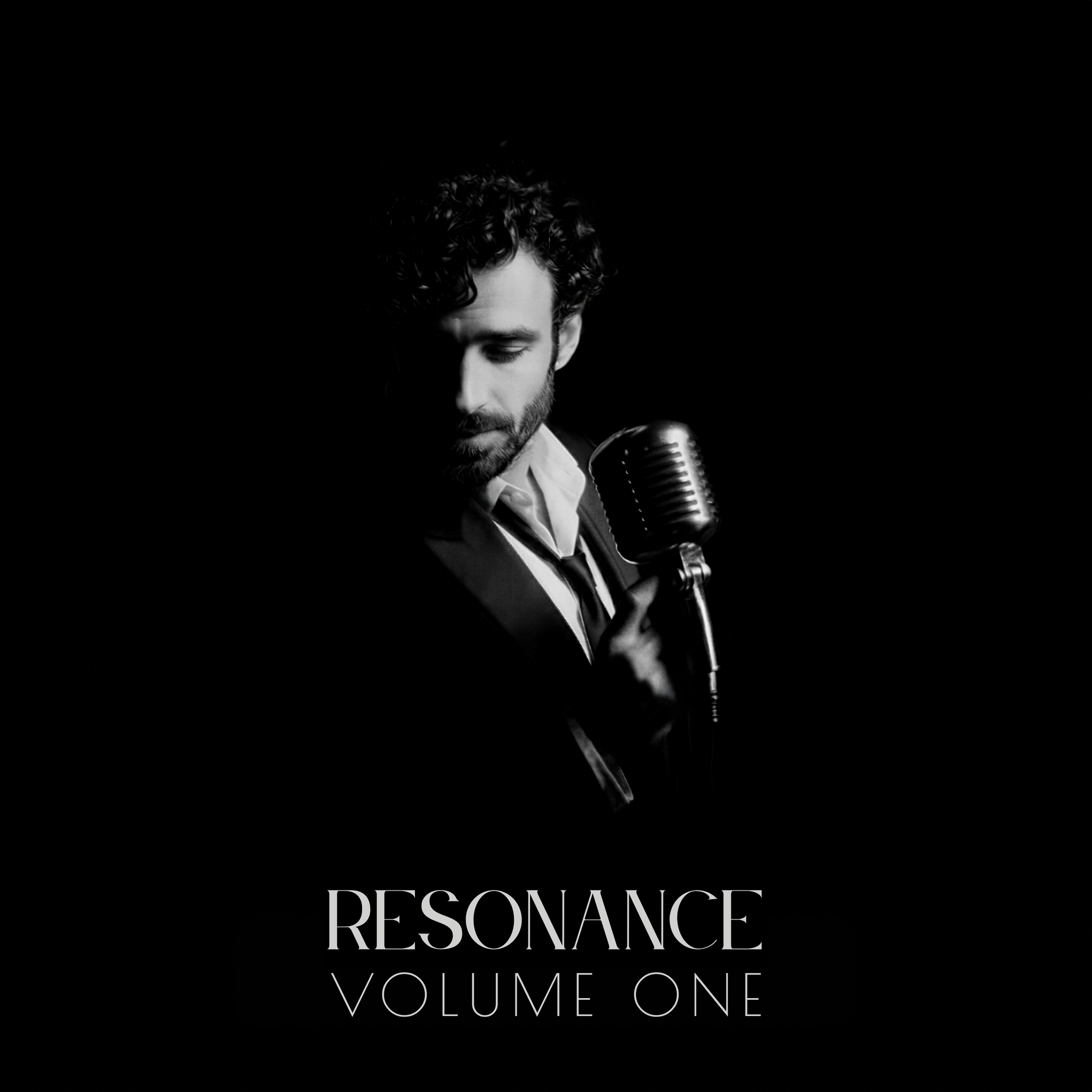
That won’t be out until early 2027, though. Much closer is “Resonance: Volume One” which will be released on 30 October and I’m very excited about it.
Beyond the music, I’m also starting to think about where else I can take Nicola and right now I'm thinking about standalone stories. I’m currently fleshing out a few ideas for short films. One is a complete departure from the Nicola we know and the others are a bit less of a departure, but still nothing like we've seen Nicola do before.
He currently exists in his own layer of fiction, but I’d like to see him inhabit a secondary layer of fiction. Still Nicola, but telling stories that aren’t his own and aren’t necessarily based on his music. I’m not sure exactly where I’ll go with it, but it’s something I’m really enjoying my experiments with. I'm very lightly introducing a bit of that in the first full video for a “Resonance” release. It's for the song “Perfecto Está de Más,” the Spanish version of “Perfect’s Overrated” and it incorporates dialogue into the music video.
This will be the first time we see Nicola interacting with people and the world outside of his music. I really enjoyed putting it together, but it definitely introduces new challenges. Among many other things, writing natural, believable dialogue, maintaining voices and accents, getting the delivery of lines correct, and then the sound design.
New listeners can find my music on all major music streaming platforms, YouTube, and Patreon. On my Patreon I share additional information on how different songs and videos came to be, what goes into making the videos, early streaming and photos that don’t make it to Instagram.
Where to listen and follow Nicola Nicoletti
Listeners can explore Nicola Nicoletti's music on Spotify and follow new releases, videos and other updates through Instagram.
Nicola also has a Patreon page, offering supporters a closer look at the music, creative process and additional content.