Marvel’s VisionQuest Recreates AI Mistakes by Hand After Refusing to Use Generative AI
Marvel’s VisionQuest used human designers to recreate strange generative AI mistakes after its showrunner decided not to use the technology.

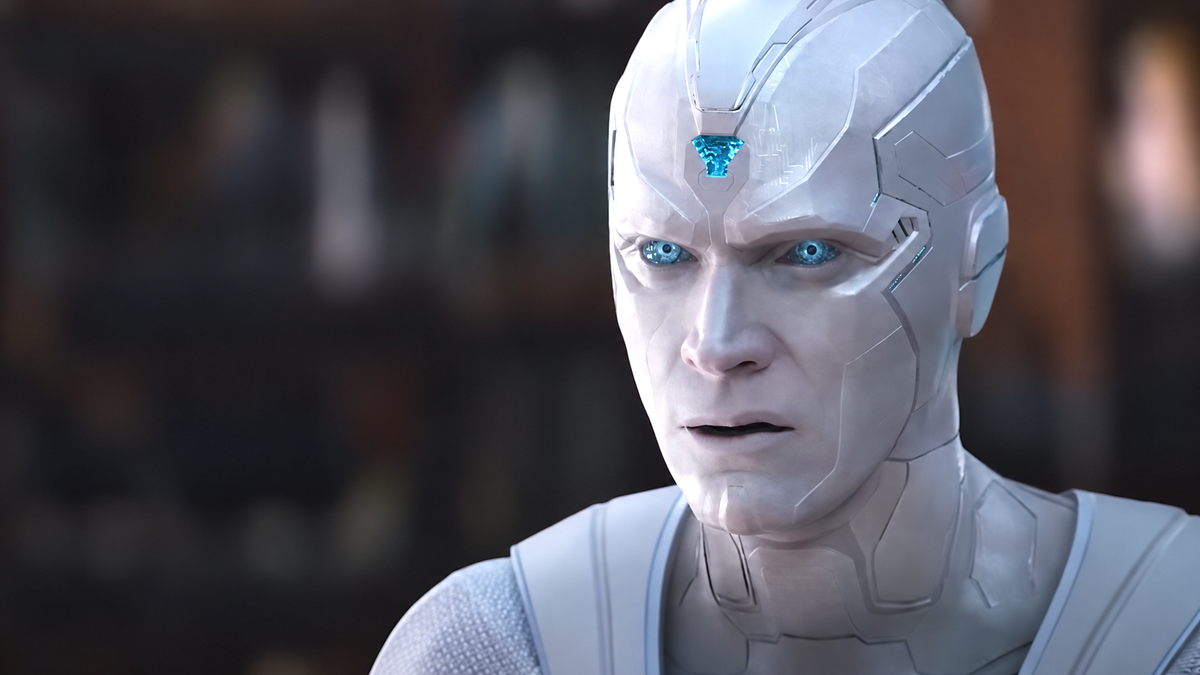
Marvel’s VisionQuest is a television series about artificial intelligence, but the people making it decided they didn’t need generative AI behind the scenes.
Instead, the production team has taken some of the strange mistakes associated with AI-generated images and deliberately recreated them using traditional set design.
Showrunner Terry Matalas confirmed that generative AI was not used to make the upcoming Disney+ series. That decision creates an unusual contrast because VisionQuest puts artificial intelligence at the centre of its story as Paul Bettany returns as Vision.
Production designer Will Hughes-Jones and his team instead created physical environments inspired by the kinds of errors generative AI can make when attempting to understand real spaces.
Inside Vision’s Mindspace, a representation of what is happening inside his mind, viewers can spot deliberately incorrect details including incomplete staircase banisters and chairs that appear to merge into walls. Repeated flowers and fruit add to the feeling that something about the environment isn’t quite right.
It means human designers have effectively been asked to imitate the mistakes made by machines.
The idea is particularly fitting for VisionQuest. Vision is himself an artificial being, while James Spader is returning as Ultron, bringing one of Marvel’s most famous fictional artificial intelligences back into the story.
Marvel has previously attracted attention for its real-world use of generative AI. The opening titles of Secret Invasion incorporated AI-generated imagery, making VisionQuest taking a different production approach especially notable.
Watch Marvels trailer here:
Rather than using AI technology simply because the programme is about AI, the production has turned the limitations of current generative systems into part of its visual language.
The result could produce one of the more unusual intersections between AI and television this year. The machines inspired the mistakes, but people had to build them.