Icon of the Seas brings robots and digital spectacle to sea
Explore the entertainment technology aboard Royal Caribbean’s Icon of the Seas, from robotic performances and moving art to spatial audio and AI.

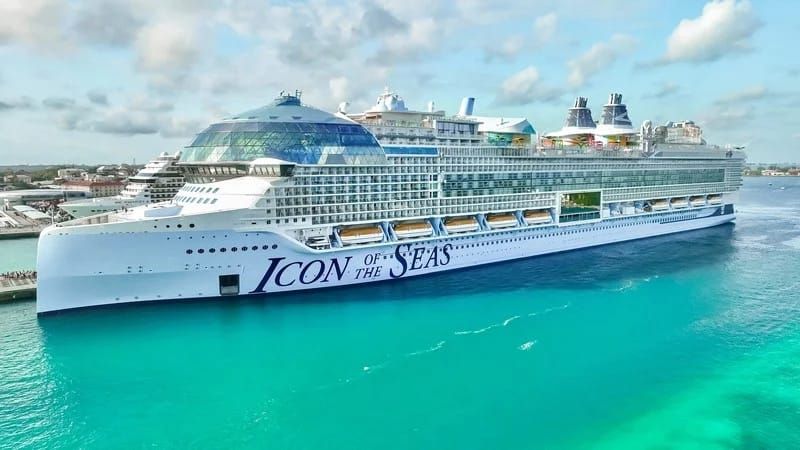
Icon of the Seas is a Royal Caribbean cruise ship that carries thousands of holidaymakers between destinations while offering accommodation, restaurants, theaters, swimming pools and a water park onboard.
Built in Finland and introduced to passenger service in January 2024, it debuted as the world’s largest cruise ship, with the space to accommodate approximately 7,600 guests at maximum capacity. Its size is impressive, but the technology inside its entertainment venues tells an equally interesting story.
Robotic arms become diving platforms, thousands of moving tiles respond to environmental data, and carefully positioned sound helps draw audiences into live performances. Digital scenery changes the setting around skaters, while software and mechanical systems coordinate effects above a performance pool.
Alongside those attractions, artificial intelligence supports selected operations, including elevator efficiency and route optimization, making Icon a useful example of several different technologies working within one enormous passenger experience.
The official world record
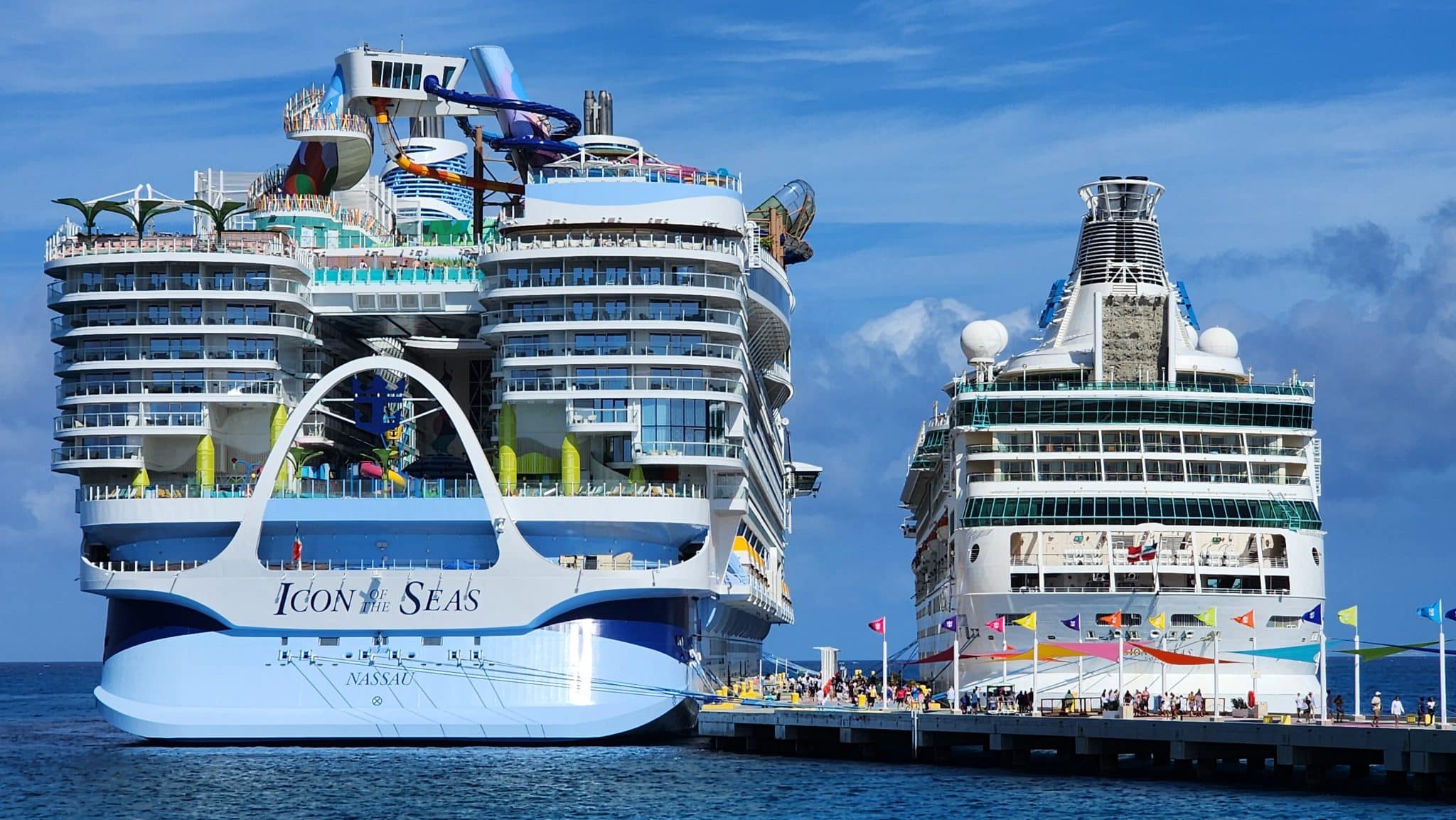
Icon of the Seas achieved the Guinness World Records title for the largest passenger liner, or cruise ship, with the record dated November 27, 2023. That identifies its achievement within the passenger-ship category, rather than declaring it the largest vessel of every type.
Cruise ships are normally compared by gross tonnage, a measurement based on enclosed internal volume, so the figure describes their size rather than how much they weigh.
Royal Caribbean’s current fleet statistics list Icon and its newer sister ships, Star of the Seas and Legend of the Seas, at 248,663 gross tons each. Icon therefore shares that published size with the other two vessels.
The Guinness page retains a different figure of 250,800 gross tons; the specifications here use Royal Caribbean’s current fleet figure, while the Guinness entry documents the official record achievement.
From a Finnish shipyard to passenger service
Royal Caribbean announced the Icon Class in 2016, with construction of its first ship formally beginning on June 14, 2021. A ship class is a family of vessels built around a shared design, and Icon gave this family its name. Finnish shipbuilder Meyer Turku constructed the vessel at its yard in Turku, Finland, where its accommodation, machinery and entertainment infrastructure were brought together.
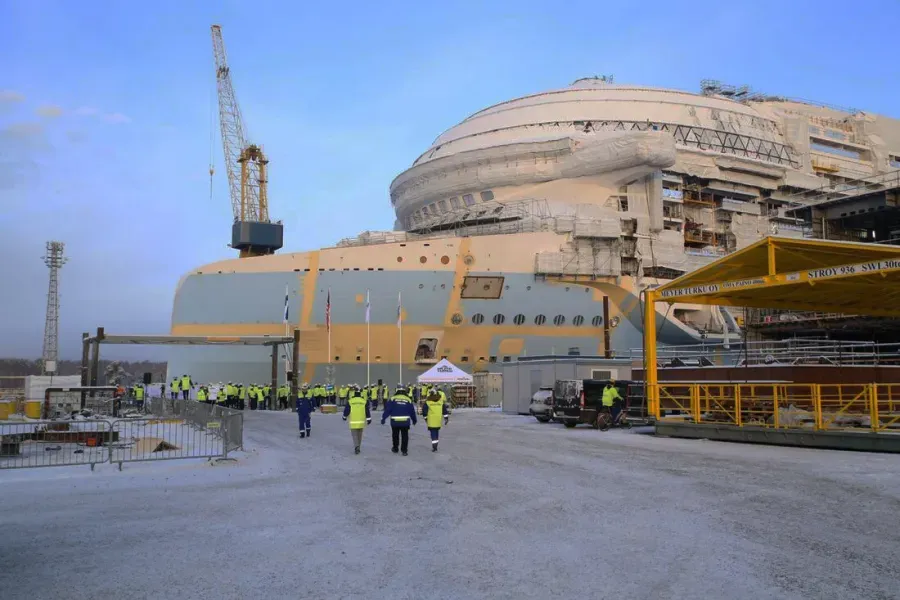
The ship was floated out on December 9, 2022, entering the water during construction, before delivery to Royal Caribbean on November 27, 2023. Its maiden passenger voyage departed Miami on January 27, 2024, which explains why both 2023 and 2024 appear in accounts of its arrival. One marks the completed vessel’s handover, while the other marks the beginning of its passenger service.
Icon measures approximately 365 meters long and has 20 decks, the shipboard equivalent of floors, with 2,805 staterooms. Standard double occupancy, meaning two guests per room, provides capacity for 5,610 passengers, rising to approximately 7,600 when additional berths are used. Around 2,350 crew support the operation of a ship whose leisure facilities include seven swimming pools and six water slides.
Power comes from six dual-fuel engines, which can operate using different fuels, with liquefied natural gas, or LNG, serving as the primary fuel. Their combined output is approximately 67.5 megawatts, equivalent to 67,500 kilowatts. That machinery forms part of the infrastructure behind a vessel whose accommodation, public spaces and entertainment venues all require power throughout a sailing.
Watch a video from Meyer Turku showing the construction:
The Pearl turns live data into moving art
One of Icon’s most distinctive installations is The Pearl, a large spherical structure surrounding a staircase in the Royal Promenade, a central public space.
Its surface contains thousands of moving tiles, creating patterns around passengers as they walk through it. This is kinetic art, meaning artwork in which physical movement is part of the experience, with Royal Caribbean describing 3,600 tiles on Icon and three actuators powering each tile.
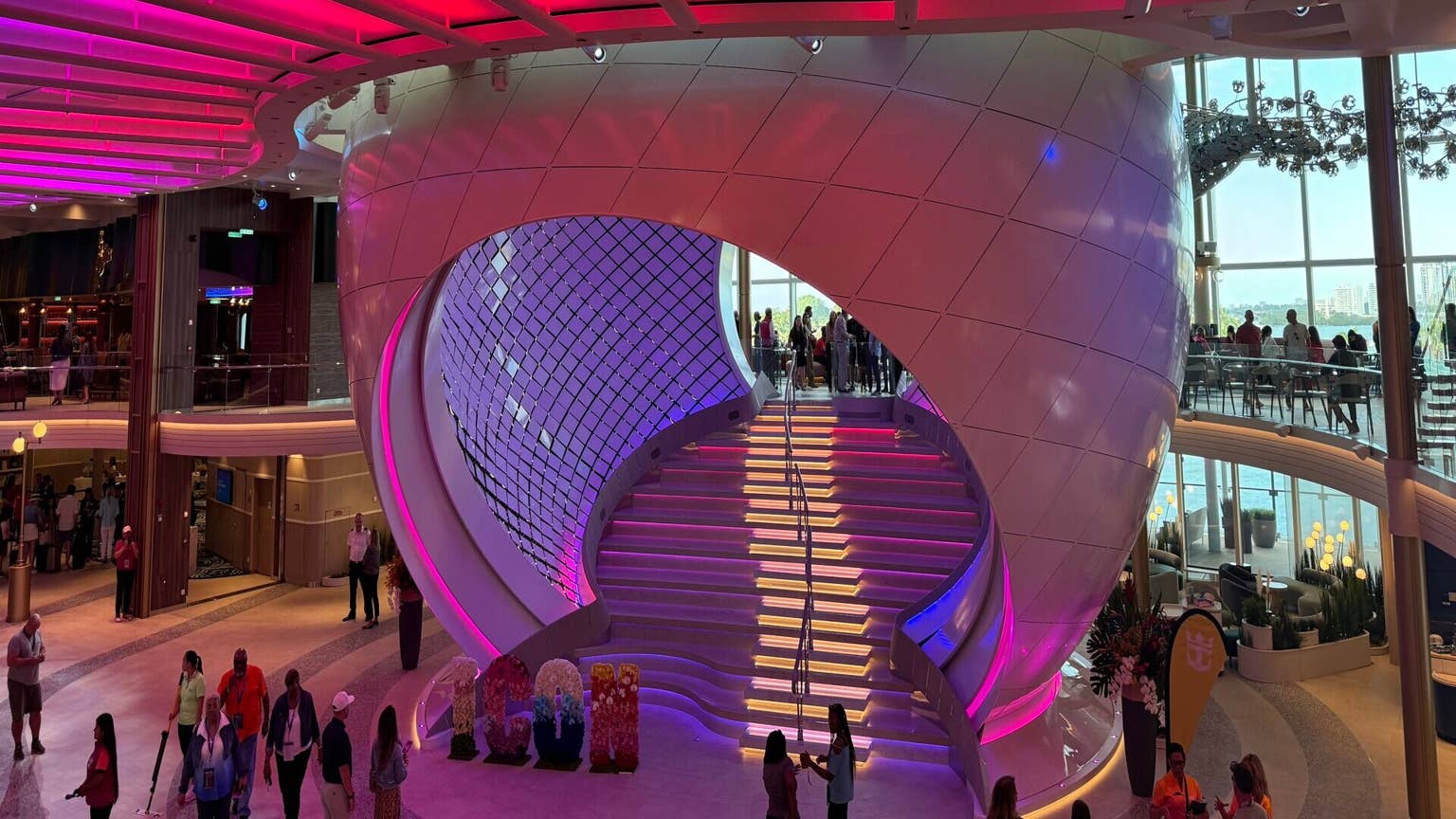
An actuator is a mechanism that turns a control signal into movement, allowing software to produce a physical response. Across The Pearl, those movements build into larger patterns that evoke natural phenomena. The installation’s creator, artist BREAKFAST, explains that live tidal and wind data from the Caribbean influence its behavior, with information retrieved online helping the artwork change with environmental conditions.
The underlying principle connects incoming information to mechanical motion: data influences the software’s output, and the control system moves the installation’s components. Passengers experience an artwork that physically shifts around them, rather than an animation confined to a screen. Its documented operation is responsive art, although the use of live data does not by itself establish that a generative AI model is creating the display.
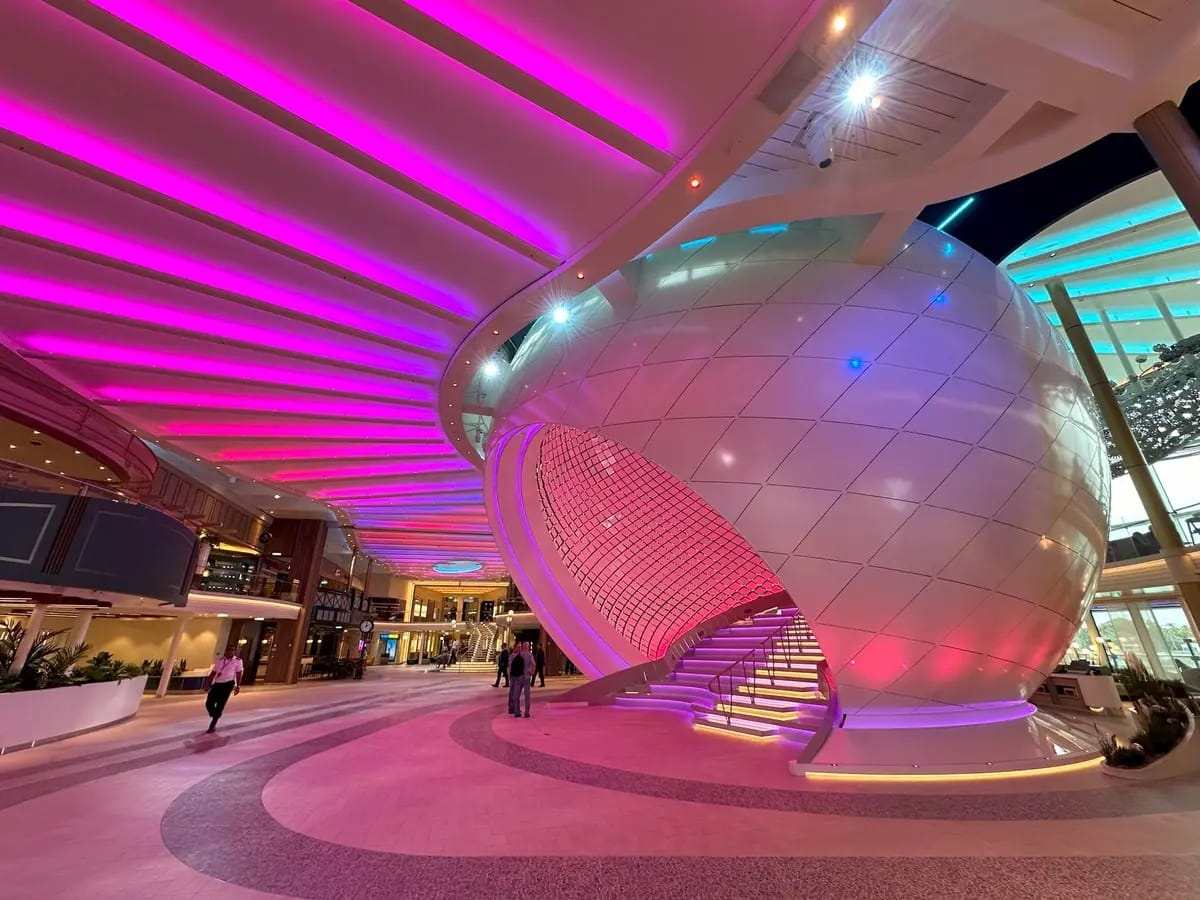
The Pearl also performs a structural function, helping support the ship while allowing large windows and ocean views around the Royal Promenade. Load-bearing means that a structure carries forces from the building or vessel around it. Here, the engineering that supports the public space is incorporated into an attraction that passengers can walk through and experience as artwork.
Robotic arms become part of the performance
The AquaDome brings a different combination of engineering and entertainment to the ship, containing the AquaTheater and its performance pool.
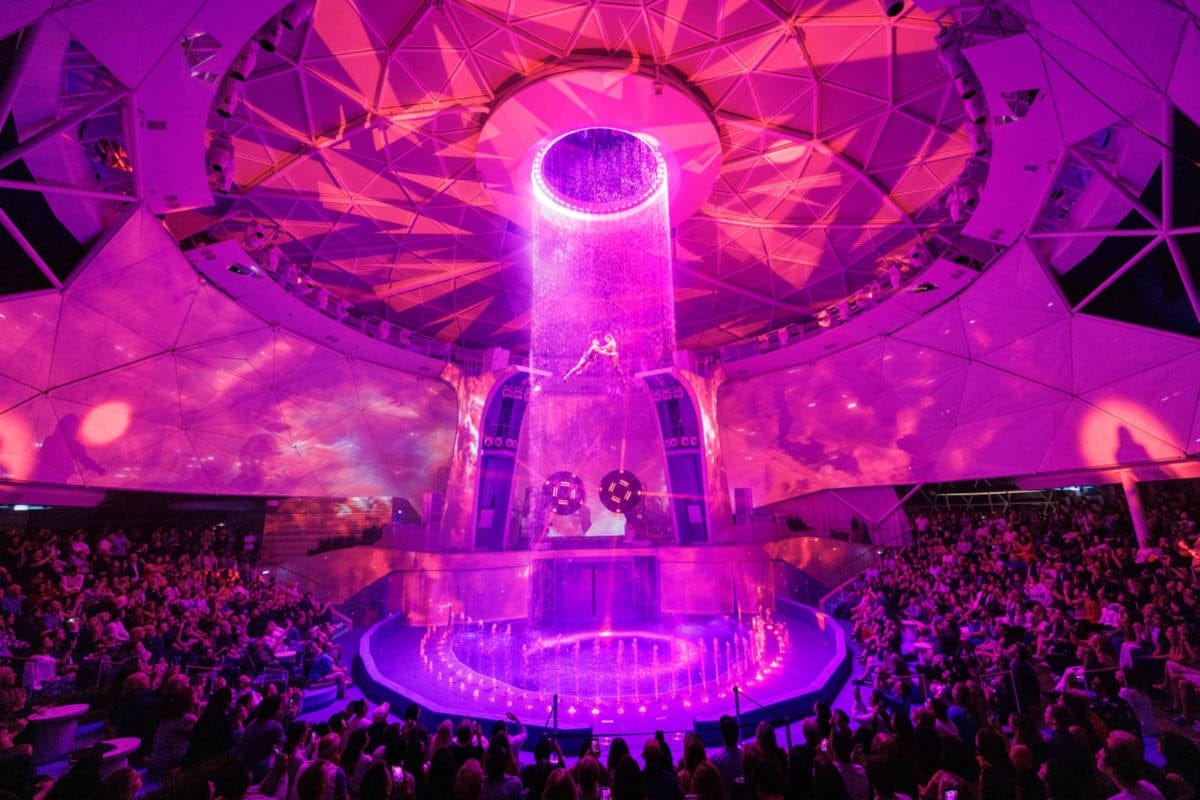
Four robotic arms, projection technology and a waterfall approximately 55 feet high contribute to a space that combines daytime ocean views with evening productions. Moving equipment becomes part of the performance environment alongside the water, lighting and human cast.
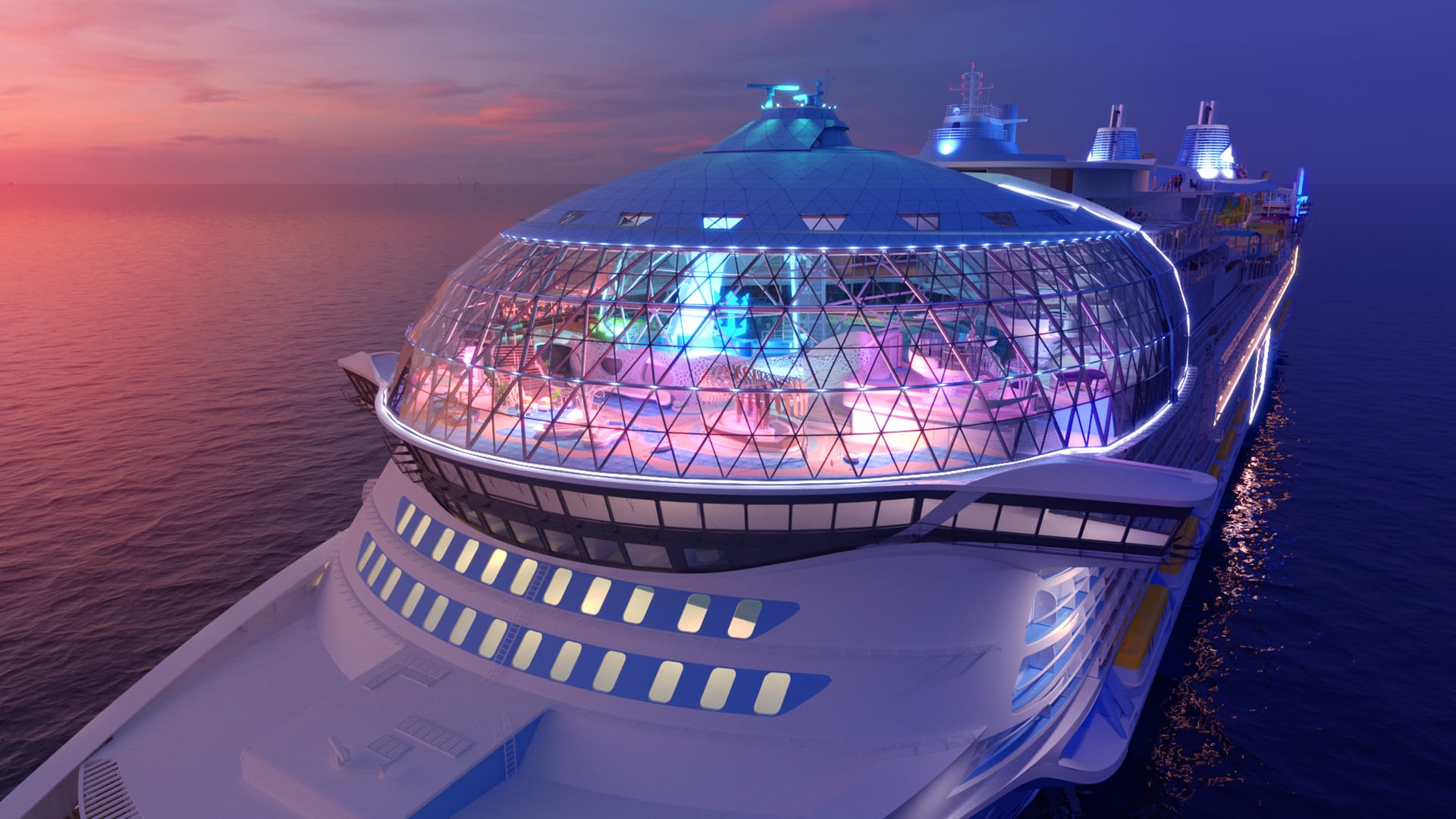
In the launch description of Aqua Action!, robotic arms serve as diving platforms and help create the set. High divers, aerialists, skateboarders, slackliners and synchronized swimmers perform alongside the technology, while a double 3D flying system extends movement above the performance area.
Theatrical flying systems use controlled suspension equipment to carry performers through space, allowing action to reach beyond a conventional stage.
For the production team, this brings robotic motion, performer flying, water effects, lighting and video into the same show. Robotics describes machines carrying out physical actions, while automation describes tasks executed through a control system. Those capabilities enable coordinated spectacle, but the published descriptions do not establish that AI independently decides the choreography or directs the performers.
Digital scenery transforms the ice arena
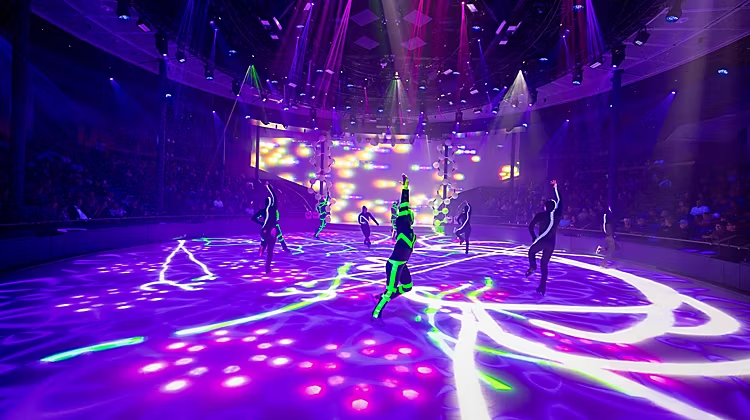
Absolute Zero is Icon’s oval ice arena, used for skating and live productions. Its launch show, Starburst: Elemental Beauty, combined skating with digitally mapped backdrops and lighting in a production inspired by the periodic table of elements. The physical performance and the digital setting work together, giving the audience scenery that can change around the skaters.
Projection mapping, identified among the ship’s entertainment technologies, means fitting projected images to the shape and position of a physical surface. The technique makes imagery appear to belong to the performance environment, rather than simply playing within the rectangular frame of a screen.
It gives designers a way to change atmosphere and scenery through digital content while preserving space for physical performance.
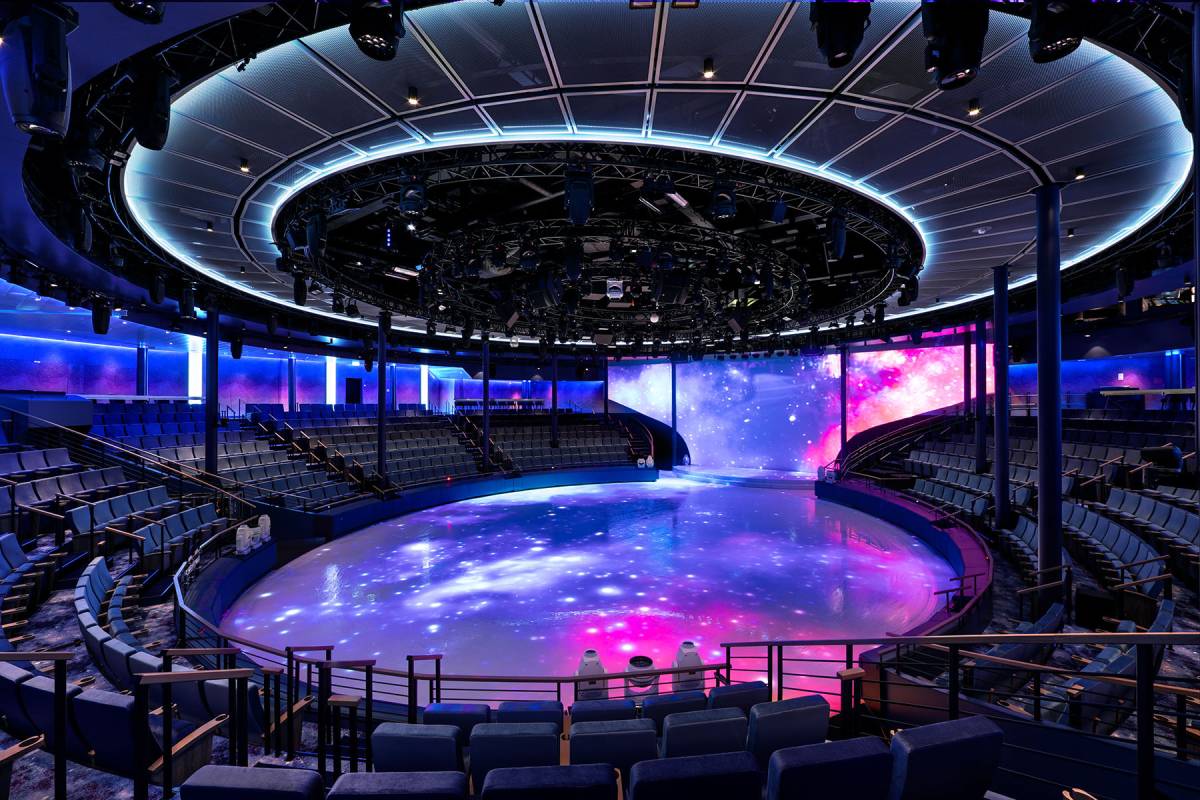
Accurate alignment determines where that imagery lands, while timing determines how it works with music, lighting and movement. These are practical production considerations: a visual effect needs to appear in the right place at the right moment to support the scene.
The technology expands what designers can build around a performance while keeping the skaters at its center.
Absolute Zero also has a substantial audio installation, including 18 L-Acoustics A15i Wide speakers, four A15i Focus speakers, four A10i Wide speakers and six X12 speakers. Twelve KS21i subwoofers, speakers designed to reproduce low-frequency sound such as deep bass, complete the documented list. Those specifications show how the venue combines visual production with a dedicated sound system suited to its performance space.
Spatial audio places sound within the show
Across Icon, more than 400 L-Acoustics loudspeakers were installed by audiovisual specialist Control AV. The manufacturer identifies its equipment in 18 venues and other spaces, including Absolute Zero and the Royal Theater.
In the theater, L-ISA Hyperreal Immersive technology provides spatial audio, allowing sound to appear to come from particular positions within the performance environment.
The system uses object-based mixing, an approach that treats a voice, instrument or effect as a separately controllable sound element. Each audio object can be assigned a position, with processing distributing its signal across the loudspeaker system to create that impression.
This gives engineers control over the relationship between what audiences hear and what they see, using both live inputs, such as microphones, and prerecorded material.
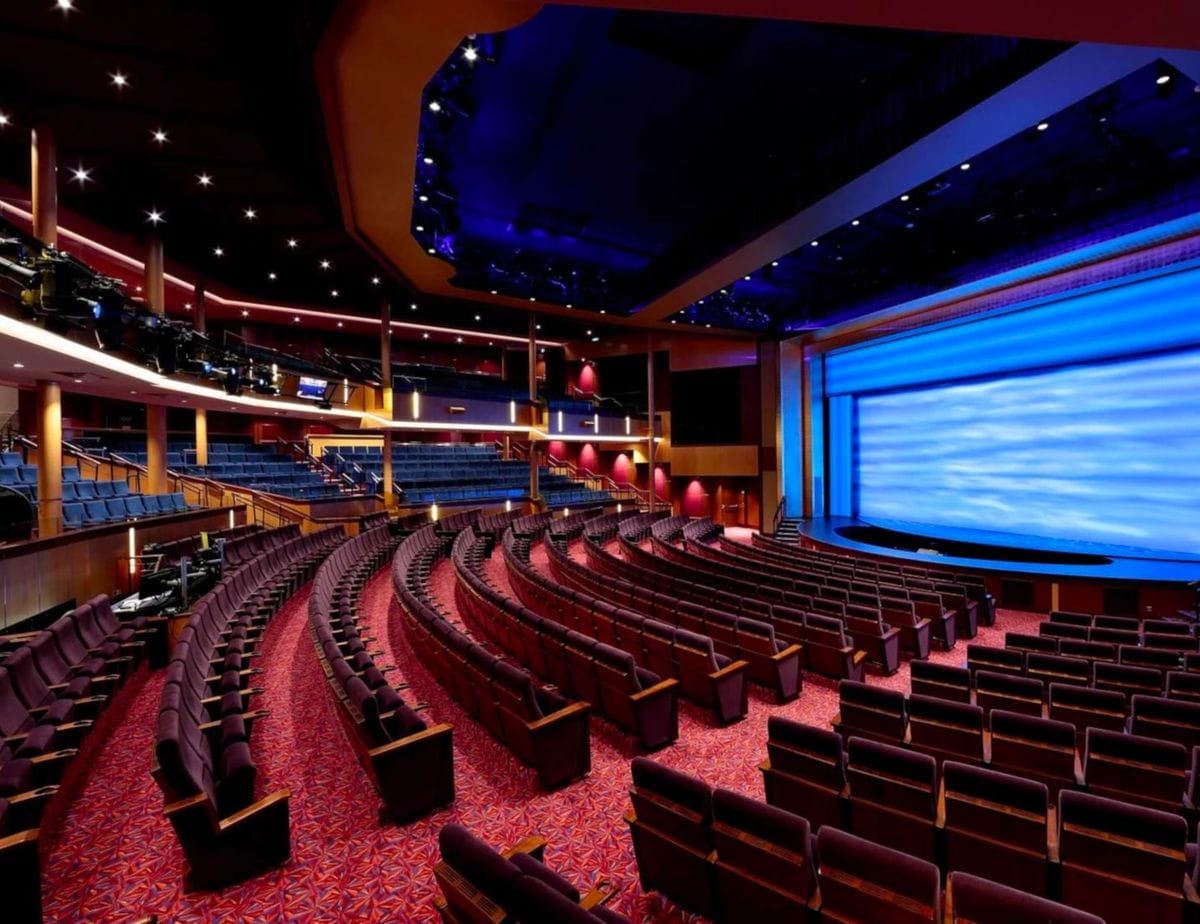
The Royal Theater’s installed equipment includes 52 Kiva II loudspeaker enclosures arranged in seven arrays, meaning coordinated groups of speakers. Six SB18i subwoofers support the low frequencies, while two A10 enclosures, 52 X8 speakers and 20 compact 5XT speakers provide additional coverage. The installation combines the main speaker system with equipment serving different parts of the room.
Those supporting roles include fills, which provide sound to areas needing additional coverage, and surrounds, which extend the sound field around listeners. Delay speakers are timed to work with the main system, helping sound arriving from different locations remain coordinated. These details matter because a large theater needs to serve audiences across the room, rather than produce a convincing result in only a few seats.
The wider installation of sound, lighting and video systems involved nearly five years of work. It brought together the different requirements of theaters, lounges, open spaces and smaller venues, each with its own layout and entertainment needs. The visible show is therefore only one part of a much larger audiovisual project.
Where AI fits into the passenger experience
One of Icon’s visible AI applications is its elevator system, which helps passengers move between decks. Royal Caribbean describes 22 elevators across two principal banks using destination dispatch, where passengers select their destination before entering a car.
The system assigns an elevator to the journey, allowing requests to be coordinated, and Royal Caribbean says AI improves efficiency by learning usage patterns throughout the day.
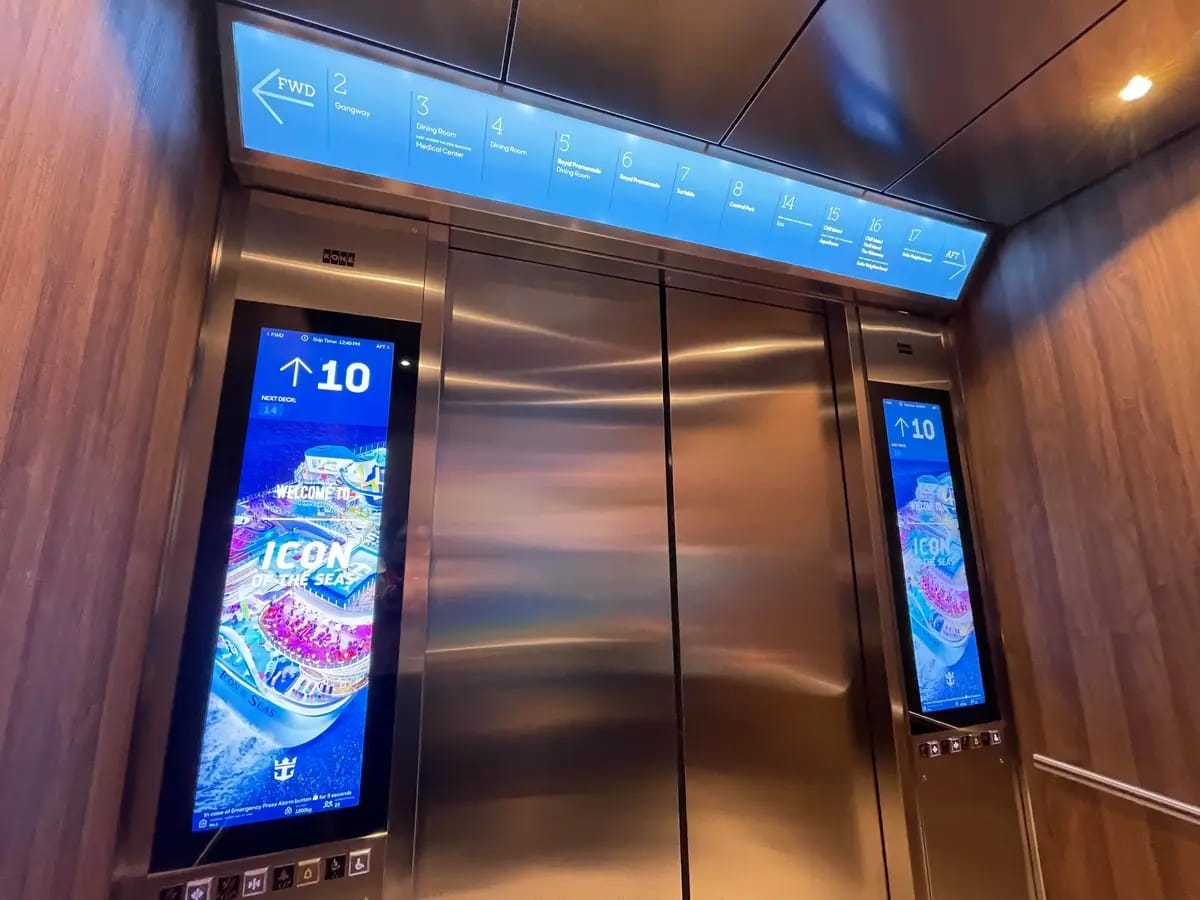
The immediate task is deciding which car should serve a request, while learning recurring patterns adds a predictive element. Grouping compatible journeys can reduce unnecessary stops and help manage the movement of large numbers of people. It is a practical example of software influencing the passenger experience through decisions that most guests may barely notice.
AI also supports route optimization, helping identify efficient ways to operate ships between destinations. Across Royal Caribbean Group, machine learning, software that learns patterns from data, supports operational guidance and monitors electricity used by accommodation and passenger services.
One application is anomaly detection, which flags readings that differ from expected behavior so that an unusual increase in energy consumption can be investigated.
These systems sit alongside the technology used in the entertainment venues, with each performing a different function. AI supports selected operational decisions, while robotics, responsive art, projection and spatial audio shape much of the spectacle. Keeping those distinctions clear helps explain what passengers are experiencing without treating every sophisticated system as the same kind of technology.
The digital engineering behind the attractions
Large pools and entertainment structures positioned high on a ship affect its balance. Their weight, location and the movement of water must be considered when assessing how the vessel behaves. Icon uses NAPA Stability, software supporting these calculations with models developed during the ship’s design, providing a detailed foundation for operational decisions.
Those models underpin a digital twin, a computer representation of the actual vessel used for analysis. NAPA Fleet Intelligence shares information with teams ashore, while NAPA OptiFloat supports calculations involving trim, the difference between how deeply the bow and stern sit in the water, and displacement, which corresponds to the ship’s total loaded mass.
The stability and emergency systems also communicate with the Wärtsilä NACOS navigation system, connecting information from different parts of the vessel. A digital twin is not automatically an AI model, but its ship-specific detail supports the management of a vessel carrying substantial structures, pools and performance spaces. That engineering helps make the entertainment architecture possible.
How the ship’s neighborhoods fit together
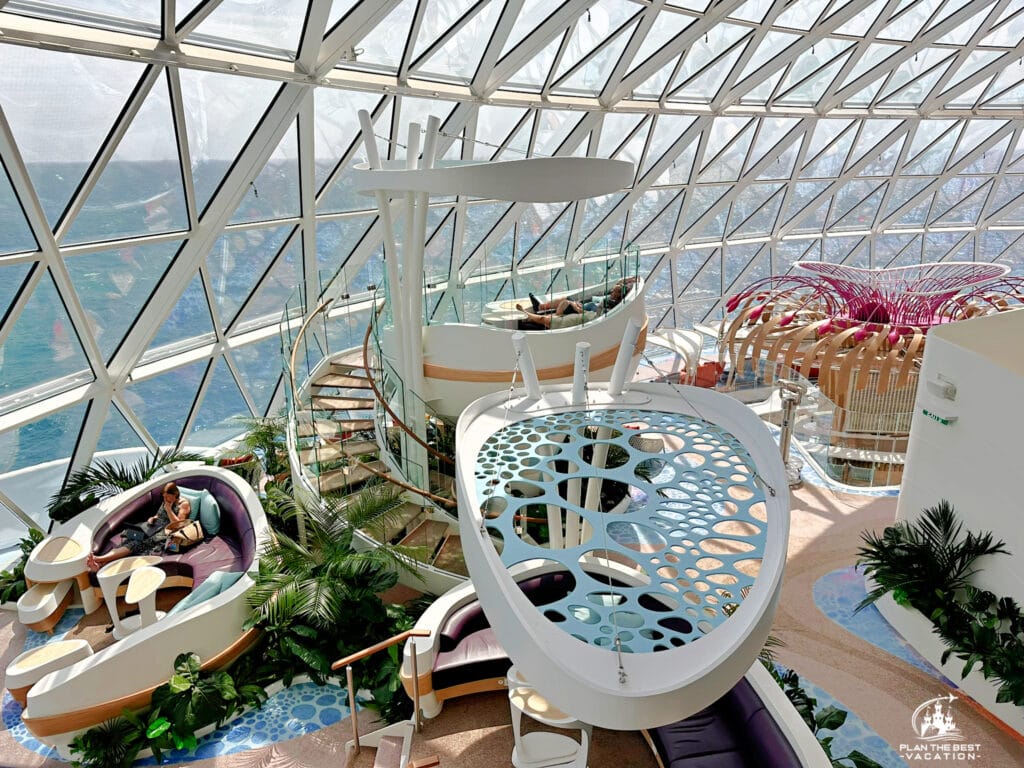
Icon is divided into eight neighborhoods, grouping accommodation, attractions and facilities into recognizable areas across multiple decks.
The Royal Promenade forms an interior social hub containing The Pearl, shops, bars and dining, while Central Park provides an open-air planted space.
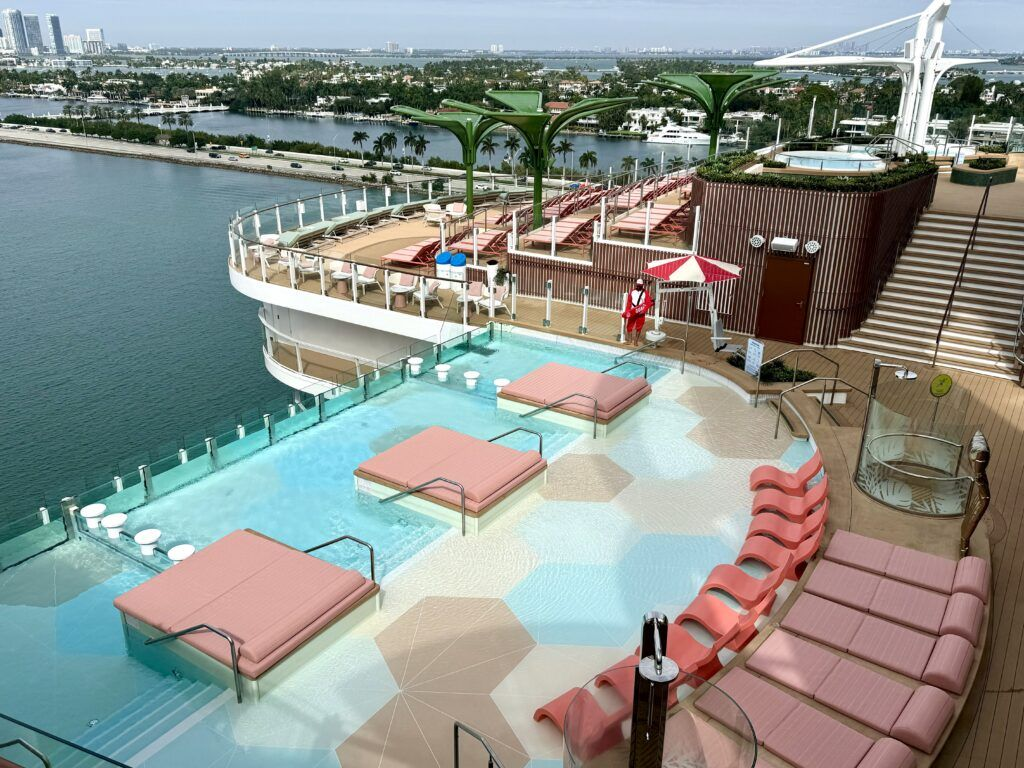
The AquaDome brings together performances, dining and ocean views within another distinct part of the ship.
Thrill Island houses the Category 6 water park and sporting attractions, while Chill Island combines pools and relaxation spaces.
The Hideaway provides an adults-only pool setting, and Surfside focuses on families with young children, including water play and casual dining.
The Suite Neighborhood contains accommodation and dedicated facilities for suite guests.
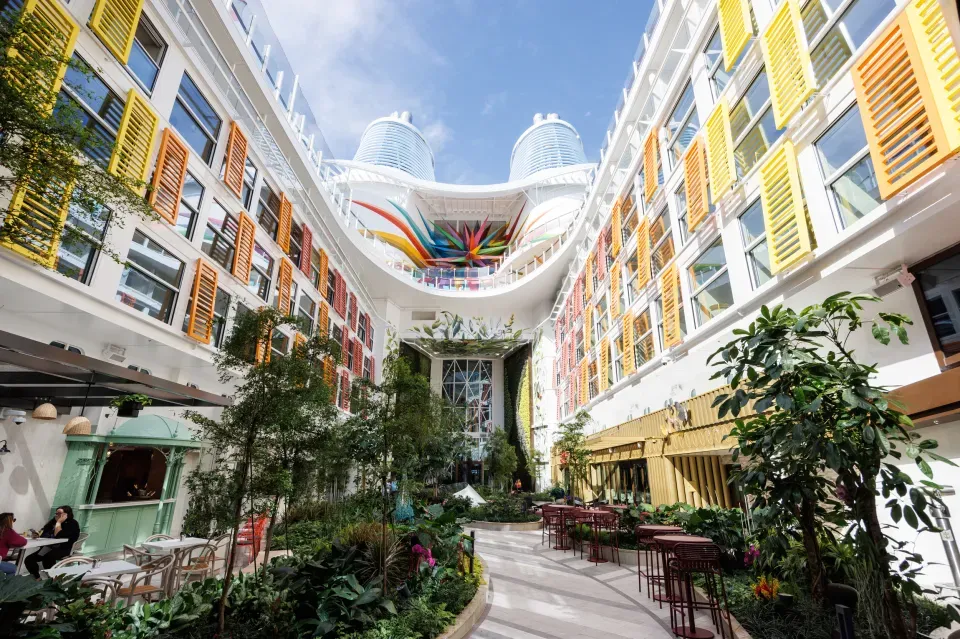
For passengers moving between those spaces, much of the technology becomes part of the experience without requiring an explanation.
Moving tiles turn a staircase into an attraction, robotic platforms join a live performance, and carefully positioned sound helps draw an audience into the action.
Artists, performers and production teams give those systems their creative purpose, while the engineering behind them supports experiences that would be difficult to stage in a conventional venue.
Icon of the Seas shows how entertainment technology extends beyond what appears on a screen. Its attractions combine physical movement, responsive software, digital imagery and live performance, with different systems contributing to different parts of the experience.
Explore the interactive deck plans to see how the venues fit together, or find attractions, itineraries and current booking information on the official Icon of the Seas website.