How Do Meta AI Glasses Actually Work? Cameras, Microphones and Meta AI Explained
How do Meta AI glasses work? We explain their cameras, microphones, speakers, recording indicators, visual AI and new Muse assistant.

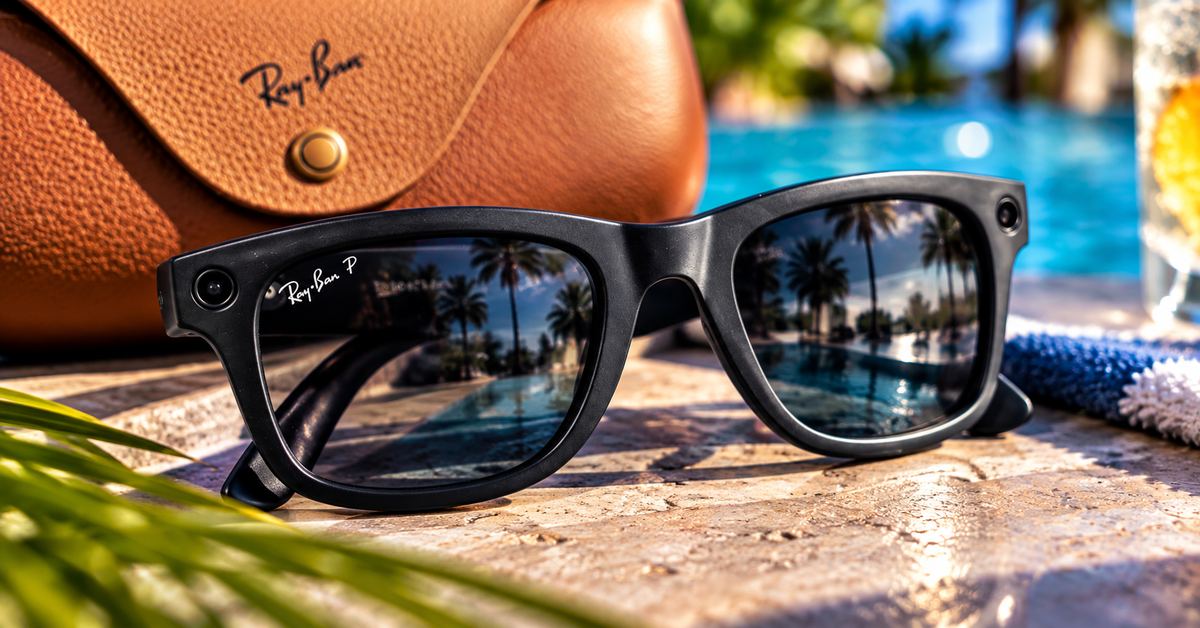
Meta’s AI glasses might look like conventional eyewear, but depending on the model their frames can contain cameras, multiple microphones, open-ear speakers and a direct connection to artificial intelligence. The technology allows somebody to photograph what they’re seeing, listen to music, make calls or ask AI about the world around them without holding a phone.
Understanding how that works also helps separate several things that are easily confused. A camera being available to AI isn’t necessarily the same as somebody recording a video, while different Meta glasses now have significantly different capabilities.
What’s actually inside the glasses?
Camera-equipped Ray-Ban Meta models combine a front-facing camera with microphones and speakers built into the frame. Ray-Ban Meta Gen 3 has a 12-megapixel camera capable of recording 3K video, a six-microphone array and up to nine hours of battery life.
The speakers use an open-ear design rather than sitting inside the ear canal. That allows the wearer to listen to music, podcasts, calls and AI responses while remaining able to hear at least some of their surroundings.
How does the camera work?
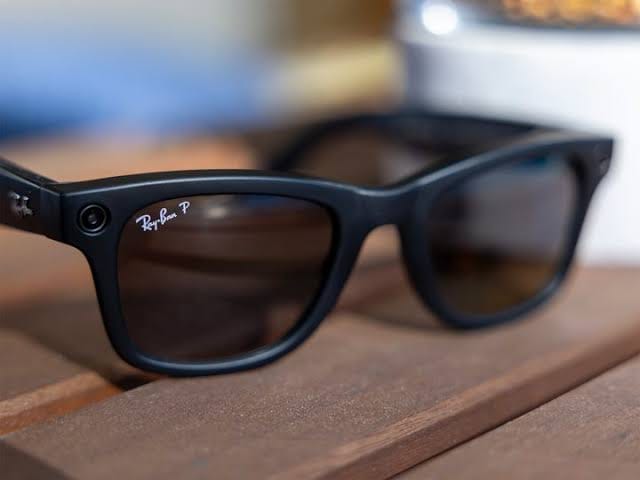
For normal photography and video, the camera captures approximately what the wearer is looking towards. Content intended for the user’s gallery is stored privately on the glasses until the wearer chooses to import it to their phone.
When gallery content is being captured, a white LED on the front signals that the camera is in use. Meta says deliberately covering or disabling that indicator disables the camera as well, making it harder to simply tape over the light and continue recording.
Can Meta AI see what you’re looking at?
On supported models, yes. A wearer can ask Meta AI about something in front of them and the camera provides visual information needed to answer the question.
Ray-Ban gives examples including asking the glasses to describe what the wearer is seeing, identify a monument, translate visible text, scan a QR code or provide information about a plant. Relevant visual information is sent to Meta’s cloud for AI processing.
Importantly, Ray-Ban says the capture LED doesn’t illuminate for some newer visual-AI functions because those images aren’t being captured for the gallery. Meta says privacy protections apply to this processing and that identifiable information such as licence plates or phone numbers can be removed.
Are the microphones always listening?
Voice interaction requires the glasses to detect commands, while the microphones are also used for calls and recording video. Ray-Ban says that after some AI requests the microphone can remain active briefly so the wearer can ask a follow-up question without repeating the wake phrase.
If the wearer begins speaking during that short period, the audio is processed as part of the interaction. A notification LED indicates when audio is being processed, and the follow-up mode ends automatically after several seconds of inactivity.
Where does Muse fit in?

Meta is bringing its new Muse personal AI agent to its glasses. Muse goes beyond conventional question-and-answer AI by remembering information supplied by its owner and carrying out tasks on their behalf.
Meta says Muse will eventually help glasses users manage schedules, habits and longer-term tasks without constantly reaching for a phone. Muse is currently rolling out in the US and is due to arrive on AI glasses.
What about the glasses without cameras?
Ray-Ban Meta Audio demonstrates that much of the experience doesn’t actually require visual technology. These glasses retain microphones, open-ear speakers and AI but contain no camera or display.
They can play music and podcasts, handle calls and provide access to AI for up to 12 hours on a charge. Removing the camera also makes them lighter, with Meta quoting a weight of 43 grams.
That makes Meta’s range increasingly diverse. One pair might essentially function as AI-enabled open-ear headphones, while another can photograph the world, interpret visual information and eventually display digital information in front of the wearer.