How Did AI Begin? The History of Artificial Intelligence Explained
How did AI begin? Discover the history of artificial intelligence, from Alan Turing and Dartmouth to machine learning, AlphaGo and today’s generative AI.

Artificial intelligence can feel like a very modern invention, but the story of AI began decades before ChatGPT, image generators or AI video. Researchers have been exploring whether computers could learn, solve problems and imitate aspects of human intelligence for more than 70 years.
The history of artificial intelligence has included remarkable breakthroughs, periods of huge optimism and times when progress appeared to stall completely. Understanding that journey helps explain why today’s AI boom did not suddenly appear from nowhere.
Alan Turing asks whether machines can think
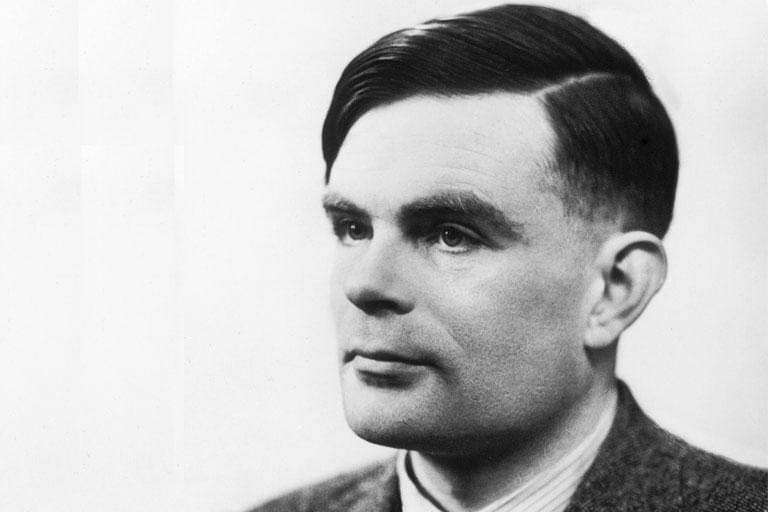
One of the most important early figures in the history of AI was British mathematician and computer scientist Alan Turing. In 1950, he published Computing Machinery and Intelligence, opening with a question that still feels strikingly relevant today: “Can machines think?”
Rather than becoming stuck on exactly what thinking meant, Turing proposed an experiment that became known as the imitation game and later became closely associated with the Turing Test. The basic idea was to consider whether a computer could communicate convincingly enough for a person to struggle to distinguish its responses from those of another human.
Turing did not invent modern artificial intelligence, but his work helped establish some of the questions researchers would continue exploring for generations.
1956: artificial intelligence gets its name
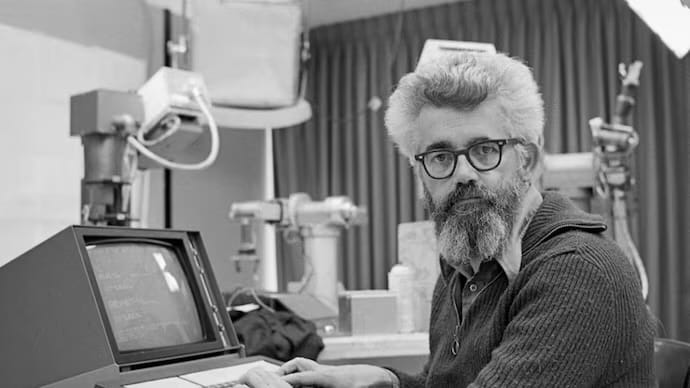
A major turning point arrived in 1956 when researchers gathered at Dartmouth College in the United States for the Dartmouth Summer Research Project on Artificial Intelligence.
John McCarthy, Marvin Minsky, Nathaniel Rochester and Claude Shannon were among the figures behind the project. McCarthy is credited with introducing the term artificial intelligence, helping establish AI as its own field of research.
The ambitions were already surprisingly broad. Researchers were interested in whether machines could learn, use language, solve problems and reproduce other aspects of intelligence, even though the computers available to them were enormously less powerful than modern devices.
Early success creates huge expectations
Early AI programmes demonstrated that computers could solve certain mathematical problems, play games and work through logical challenges. At the time, these achievements encouraged enormous optimism about how quickly machine intelligence might develop.
Reality proved more difficult. Computers had limited processing power, relatively little data was available and systems that worked well on carefully controlled problems often struggled with the complexity of the real world.
When some of the biggest predictions failed to materialise, enthusiasm and funding fell. These periods became known as AI winters, although research itself continued.
Computers learn from examples
One of the biggest changes in AI came from developing systems that could learn from data rather than relying entirely on fixed instructions written by programmers.
This became central to machine learning. Instead of attempting to tell a computer exactly how to deal with every possible situation, researchers could provide examples and allow a system to find useful patterns within them.
As computers became more powerful and the amount of digital information available increased, machine learning became much more capable. Systems improved at tasks including recognising images, processing speech and making predictions.
Deep Blue defeats the world chess champion
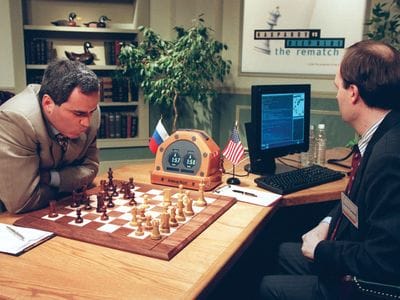
Artificial intelligence returned to worldwide attention in 1997 when IBM’s Deep Blue faced reigning world chess champion Garry Kasparov.
Deep Blue won their six-game rematch by 3.5 points to 2.5, becoming the first computer system to defeat a reigning world chess champion in a match under standard tournament conditions.
It was a major moment in the public history of AI, but Deep Blue was highly specialised. Being exceptionally good at chess did not mean the computer possessed the broad intelligence or understanding of a human being.
The 2010s bring another AI breakthrough
AI development accelerated dramatically during the 2010s as researchers gained access to more powerful computers and enormous collections of digital information.
In 2012, a system known as AlexNet achieved a major improvement in an international image-recognition competition. Put simply, it demonstrated how much better computers could become at recognising what appeared in photographs when they had enough examples and sufficient computing power.
Another landmark arrived in 2016 when Google DeepMind’s AlphaGo defeated champion Go player Lee Sedol by four games to one. Go had long been considered an especially difficult challenge for computers, making the result another powerful demonstration of how far machine learning had advanced.
A 2017 breakthrough helps shape modern AI
Another important development arrived in 2017 when Google researchers published a paper called Attention Is All You Need.
The paper introduced an approach known as the Transformer, which became hugely important in the development of modern language AI. The complicated mathematics is not something beginners need to understand, but its importance is easier to explain.
Transformers gave researchers a much more powerful way of building systems that could work with language and understand relationships between words across large amounts of text. That approach would eventually help support the development of the large language models behind many of today’s generative AI tools.
Generative AI brings the technology to everyone
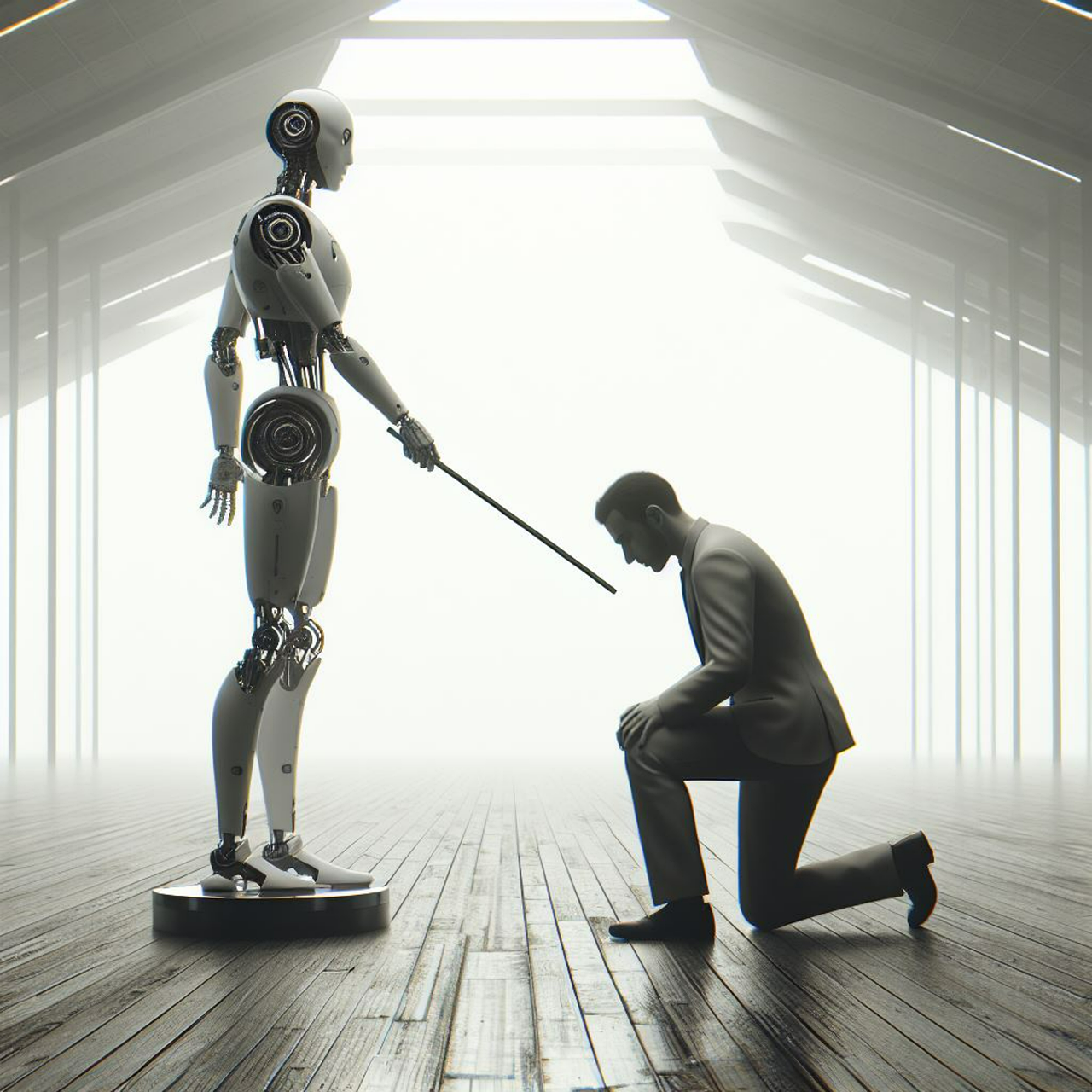
Artificial intelligence was already being used in areas such as recommendations, translation, speech recognition and image recognition before generative AI became widely visible.
Generative systems changed the relationship between people and AI because users could interact with the technology directly. Instead of AI simply recommending or recognising something behind the scenes, people could ask systems to create text, images, voices, music and increasingly sophisticated video.
That change has also brought AI firmly into conversations about film, television and entertainment. Technology that once appeared mainly in laboratories, specialist software and science fiction can now become part of the creative process itself.
The story of AI is still developing
Modern artificial intelligence is the result of decades of research rather than one invention or one individual breakthrough. Turing helped frame some of the earliest questions, Dartmouth established AI as a field, machine learning changed how computers could learn and later breakthroughs made increasingly capable generative systems possible.
The next SoaplandTV beginner’s guide looks at the different types of artificial intelligence, including the AI already being used today, generative AI and the much-discussed idea of artificial general intelligence.
Explore more from SoaplandTV’s AI & Entertainment series at SoaplandTV.co.uk.
Sources- Alan Turing’s Computing Machinery and Intelligence, Dartmouth College’s history of the 1956 AI project, IBM’s Deep Blue archive, research on AlexNet, Google DeepMind’s AlphaGo research and Google Research’s 2017 Attention Is All You Need paper.