Harvey Keitel Warns AI Cannot Replace Human Actors as Voice Cloning Debate Grows
Harvey Keitel says AI can reproduce an actor’s voice but not the emotional depth behind a human performance as digital replicas reshape entertainment.

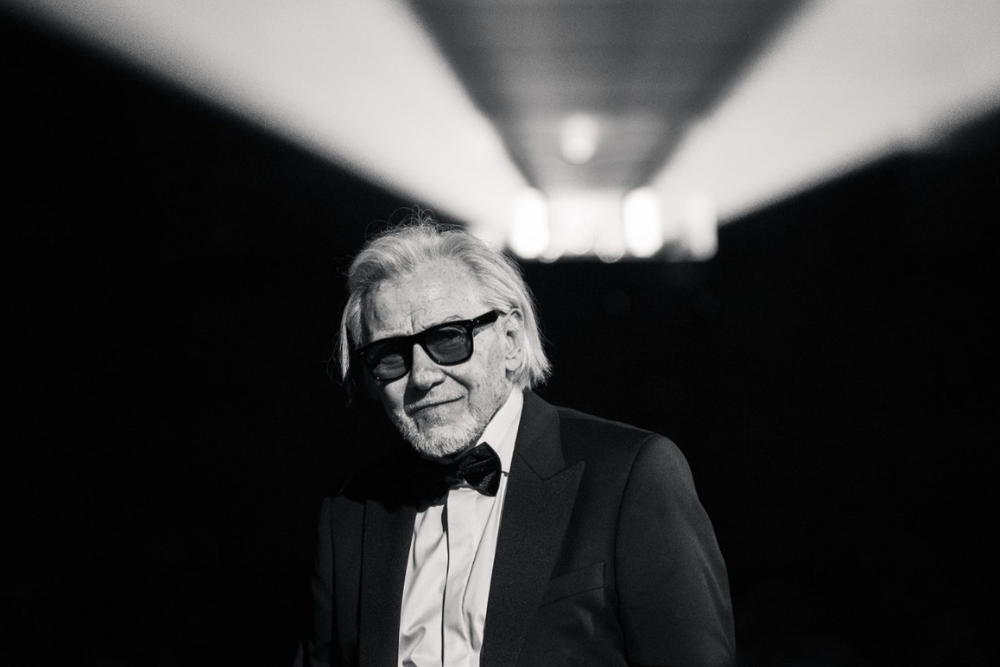
Harvey Keitel has questioned whether artificial intelligence can ever reproduce what makes a human performance feel real, arguing that technology may imitate an actor’s voice or appearance without capturing the emotional life behind it.
The veteran actor raised his concerns while attending the Karlovy Vary International Film Festival, where he presented a screening of Martin Scorsese’s Mean Streets. His comments come as performers are increasingly being asked to decide whether their voices and likenesses can be licensed for digital recreation
Harvey Keitel questions what AI can really reproduce
Keitel’s argument goes beyond whether artificial intelligence can make a convincing copy of someone’s voice. He believes the qualities audiences connect with in a performance come from the person behind it, including their experiences, emotions and interpretation of the material.
Discussing the rapid development of AI within entertainment, Keitel warned that technology could reproduce recognisable elements of a performer without recreating what makes that performer distinctive. He pointed to the growing market for licensed digital voices as an example of the difference between sounding like somebody and actually delivering their performance.
Michael Caine has licensed his voice for authorised AI use through voice technology company ElevenLabs, including a digital recreation connected with an audiobook production of Homer’s The Odyssey. Keitel questioned whether even an approved recreation could capture the emotional qualities audiences associate with Caine himself.
His concern is therefore not simply about permission. It is about whether technology capable of producing a recognisable voice can reproduce the experiences and instincts that shaped the original performer.
Licensed AI voices are different from unauthorised cloning
That distinction matters because not every digital replica involves somebody losing control of their identity. Licensed digital replicas operate with a performer’s permission, while unauthorised cloning raises much more serious questions around consent, ownership and the use of somebody’s voice or likeness without approval.
An actor may choose to license a digital version of their voice under an agreement setting out where it can be used, what they will be paid and what restrictions apply. Once created, that authorised voice could potentially generate newly spoken material without the performer recording every individual sentence themselves.
That creates new possibilities for performers who want to participate in the technology. It could allow them to approve uses that would otherwise require further recording sessions or potentially continue licensing a recognisable voice for carefully controlled projects.
However, permission answers only the rights question. It does not automatically answer the artistic one, because an authorised synthetic voice can still leave audiences debating whether what they are hearing should be considered the same kind of performance as the actor delivering the words themselves.
What does a human actor bring that AI cannot?
Acting involves considerably more than speaking dialogue accurately. A hesitation, breath, glance or slight change in emphasis can completely alter the meaning of a scene, with those choices influenced by training, instinct and the performer’s own understanding of the character.
Keitel has spent decades working in film, and his comments reflect a view of acting as something shaped by lived experience. Fear, love, disappointment, ageing and loss can influence how an actor approaches a role even when none of those experiences is explicitly written into the script.
Artificial intelligence can analyse patterns and produce increasingly convincing speech, movement and imagery. The more difficult question is whether reproducing the outward signs of emotion is the same as a person understanding and interpreting the emotion in the first place.
That distinction may matter more in some productions than others. Synthetic performers could find a natural place in animation, fantasy, experimental filmmaking or projects intentionally designed around virtual characters, while emotionally demanding dramatic performances may prove harder for audiences to accept without a human performer behind them.
Performers around the world are negotiating the same issue
Keitel’s comments sit within a much wider international debate over digital replicas. Performers and their representatives have increasingly pushed for agreements requiring clear consent and compensation when artificial intelligence is used to recreate somebody’s voice, face or performance.
In the United States, Screen Actors Guild-American Federation of Television and Radio Artists (SAG-AFTRA) has made protections surrounding digital replicas a major part of its negotiations. The principle behind those protections is increasingly becoming central to the wider industry: performers should know when a digital version of them is being created, understand how it will be used and have meaningful control over the agreement.
Elsewhere, virtual performers, synthetic voices and entirely digital personalities are already developing their own audiences. That suggests AI-created entertainment is unlikely simply to disappear, even if human performers remain strongly opposed to particular uses of the technology.
The question is becoming less about whether synthetic performers will exist and more about how they should operate alongside the people whose work built the entertainment industry around them.
Could AI eventually replace actors?
There is unlikely to be one answer because acting covers such a wide range of work. Background characters, temporary voices and highly stylised digital productions could be easier to generate than a leading actor expected to carry a feature film through subtle emotional performance.
Economics will inevitably influence how studios experiment with the technology. If AI can reduce the time or cost involved in certain kinds of production, companies will continue exploring it, although technological capability does not guarantee that audiences will embrace the result.
Human performers also bring something beyond the finished scene. Audiences follow actors between projects, watch interviews, become invested in their careers and associate particular performances with the real people who created them.
A synthetic performer would have to build that connection in a very different way. Some virtual characters may eventually develop loyal followings of their own, but that would not necessarily mean they are replacing the relationship audiences already have with human stars.
The real argument is about what counts as a performance
Keitel’s comments reach one of the hardest questions created by AI entertainment. If a digital voice has been legally licensed, accurately recreated and used with the performer’s permission, is the resulting dialogue still that actor’s performance?
There may never be a single answer. Some viewers may care primarily about whether the finished story works, while others will place considerable value on knowing that the emotion they are watching or hearing came from a human being interpreting the moment.
AI can increasingly imitate the visible and audible parts of performance, and those capabilities will almost certainly continue improving. What remains far less certain is whether audiences will eventually regard imitation and human performance as interchangeable, or whether the difference Keitel is describing becomes even more important as synthetic entertainment grows.
Sources: Harvey Keitel’s Karlovy Vary comments, ElevenLabs information on Michael Caine’s licensed AI voice, and SAG-AFTRA guidance on AI and digital replicas.
For more on how artificial intelligence is changing actors, films and the wider entertainment industry, visit SoapLandTV’s AI & Entertainment hub, including our Industry & Debate, AI Films, AI Animation and Behind the Technology coverage.