Emmerdale's Charity Dingle Reaches Breaking Point After Months Of Trauma


Content warning: This article discusses themes of sexual assault and trauma which some readers may find upsetting.
Charity Dingle has survived more than most during her years in Emmerdale, but new scenes show the character reaching one of the lowest points of her life as the emotional impact of recent events becomes impossible to ignore.
In recent episodes, Charity took the courageous step of reporting Dr Caitlin Todd to the police after he sexually assaulted her. While reporting the crime was an important moment, the aftermath has proven far more complicated than simply seeking justice. The trauma of what happened continues to affect every part of her life, and the strain is beginning to show.
New scenes reveal a woman carrying an enormous burden while desperately trying to hold herself together.
The storyline has already highlighted how survivors can continue to struggle long after the initial incident. Charity has attempted to carry on with everyday life, but the emotional weight of what happened to her has continued to build.
Adding to her stress is the secret she has been keeping regarding baby Layla's paternity. While Charity has been trying to protect those around her, she has also found herself becoming increasingly isolated.
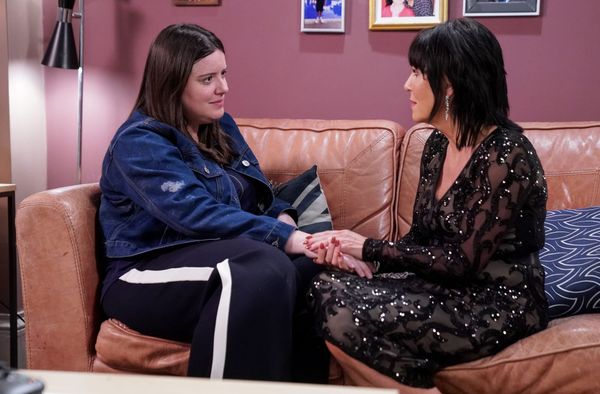
One of the most moving developments comes when Charity and Cain Dingle share a rare heart to heart.
The timing is significant because Cain is facing a devastating challenge of his own after learning that his cancer has spread. Both characters are carrying immense emotional pain, yet their conversation shows how much they still care about each other despite everything they have been through over the years.
Charity encourages Cain to open up to Moira and Liam about what he is facing. However, when the focus turns to her own struggles, she remains reluctant to reveal the full extent of her suffering.
That reluctance speaks volumes.
For many survivors, opening up can be one of the hardest parts of recovery. While Charity has already found the strength to report the assault, talking openly about its ongoing impact is a different challenge altogether.
Meanwhile, Mackenzie Boyd is becoming increasingly concerned. Mack knows something is seriously wrong but feels powerless to help the woman he loves. In scenes that are likely to resonate with many viewers, he admits to Chas that he feels completely out of his depth.
Rather than knowing how to fix the situation, Mack is confronted by the reality that some problems cannot simply be solved.
His frustration comes from a place of love, but it also highlights how difficult it can be for family members watching somebody they care about struggle.
At the same time, Chas finds herself trapped in an impossible position.
She understands far more about Charity's situation than Mack does, yet she is also trying to respect Charity's confidence. As concern grows, the pressure on those closest to Charity begins to intensify.
The situation reaches a turning point when Mack attempts another conversation with Charity.
Instead of finding comfort in his support, Charity feels overwhelmed. Unable to cope with the emotions she has been carrying, she rejects the opportunity to talk and drives away alone.
What follows is one of the most worrying moments in the storyline so far.
As Charity's family realise she has disappeared, panic begins to spread. Efforts to find her prove unsuccessful, forcing loved ones to confront the possibility that she may be in serious distress.
Eventually, Mack makes the difficult decision to contact the police and report Charity missing.
For viewers who have followed Charity's journey, the scenes represent the culmination of months of pressure. Between the horrific sexual assault, the police investigation, family complications and the emotional strain of carrying so many secrets, the character has been pushed to her limits.
When Charity is eventually found standing alone by a lake, the storyline takes another significant turn.
A stranger notices that she is distressed and attempts to offer reassurance. However, when the stranger touches her, Charity instinctively reacts and lashes out.
The moment is brief, but it carries enormous significance. Trauma can affect how people respond to situations long after an incident has occurred. The stranger quickly realises that Charity's reaction may be linked to deeper emotional wounds, particularly when it comes to issues surrounding consent and personal boundaries.
Instead, the stranger responds with understanding, giving Charity the space she needs. As trust slowly develops between them, Charity begins to consider opening up about what she has been through.
While Charity's family remain desperate to help, her chance encounter highlights how difficult it can be to speak honestly to the people closest to us when we fear causing them pain or worry.
What makes this storyline particularly powerful is that it avoids presenting recovery as simple or straightforward.
Reporting the assault was not the end of Charity's story. In many ways, it was only the beginning of a much longer emotional journey.
As Charity struggles to process everything that has happened, viewers are seeing a character who is trying to find a path forward while carrying immense trauma. Her disappearance is not about weakness. It is about the reality of how overwhelming emotional pain can become when left unspoken.
The coming scenes will reveal whether Charity is finally able to share what she has been carrying for so long and whether accepting help might become the first step towards healing.
If you have been affected by any of the issues discussed in this article, support is available. Readers in the UK can contact Rape Crisis England & Wales on 0808 500 2222 or visit the Rape Crisis website for confidential support and information.