Could a Deepfake Fool Police into Believing a Crime Happened?
UK police are developing deepfake detection tools after testing two million digital assets. Discover the technology and risks of fabricated evidence.

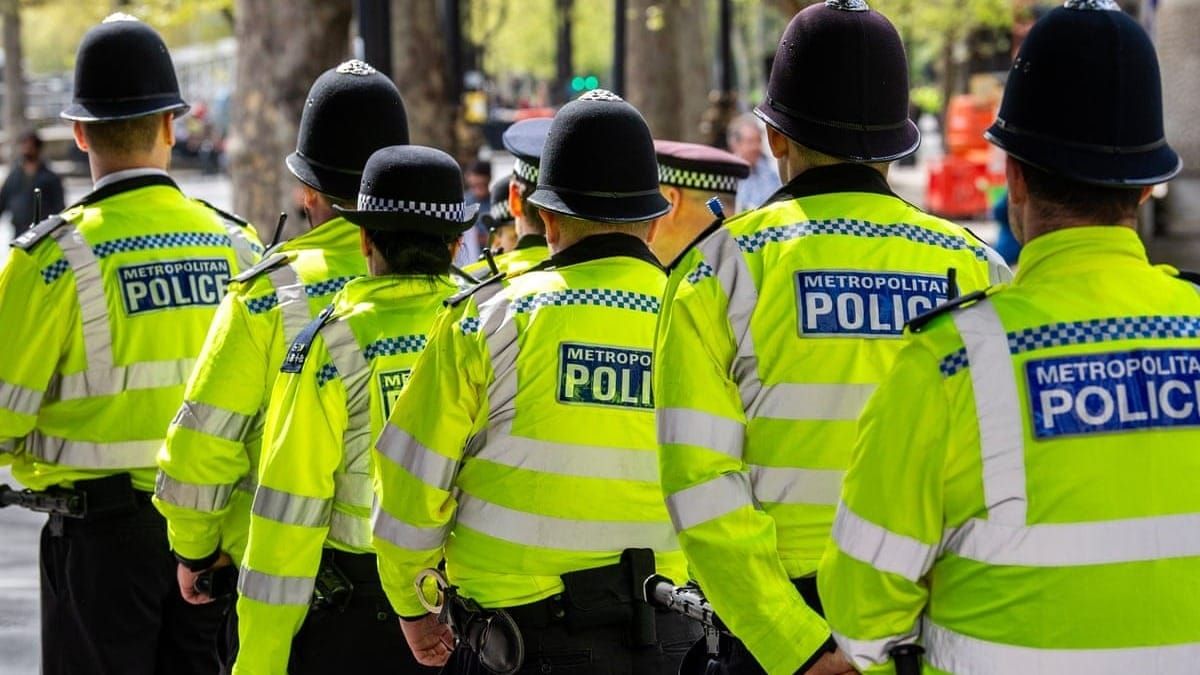
Police are preparing for a new threat to criminal investigations as artificial intelligence makes it increasingly possible to fabricate convincing photographs, videos and voice recordings that could be mistaken for genuine evidence.
The Home Office has confirmed that its Policing AI Threat Hub, known as PATH, is working on technology to detect deepfakes and protect the criminal justice system from deliberately manufactured digital material. The challenge is particularly serious because a convincing recording could potentially misdirect an investigation, implicate an innocent person or undermine confidence in authentic evidence.
Two million digital assets used in government testing
The scale of Britain's research programme demonstrates how difficult identifying artificial content has become.
A government-backed Deepfake Detection Challenge brought together the Home Office, Department for Science, Innovation and Technology, Alan Turing Institute and technology specialists to examine potential detection methods.
The programme provided approximately two million genuine and synthetic digital assets for training and testing, giving participating teams eight weeks to develop their proposals.
Seventeen submissions were received, with six teams selected to demonstrate their technology to more than 200 stakeholders. The shortlisted organisations included IBM, Frazer-Nash Consulting, Oxford Wave Research and researchers from the University of Southampton.
Some technologies progressed towards further benchmarking and user testing, with particular attention paid to identifying manipulated audio and imagery.
A separate government assessment published in March 2026 examined 59 deepfake detection providers. It found that the industry remains relatively immature, with 83% of the businesses assessed classified as micro or small enterprises.
How can software identify a fake recording?
Deepfake detection involves several distinct technical approaches, often used together to improve reliability.
Image-based classifiers can examine frequency patterns, inconsistent textures, lighting irregularities and statistical artefacts associated with generative models. Other systems analyse the consistency of facial movements, lip synchronisation and changes between video frames.
Audio detectors can examine spectral characteristics, pitch continuity and acoustic patterns to identify possible voice synthesis. However, natural recordings affected by compression, background noise or editing can produce misleading results.
Some detection approaches also examine provenance information, including embedded metadata, digital signatures and cryptographically verifiable records identifying how content was created or modified.
These methods address different questions. A classifier estimates whether media resembles synthetic content, while a provenance system attempts to establish a verifiable history of the file.
Neither approach is infallible. Metadata can be missing, files can be legitimately edited, and sophisticated synthetic content can evade detection.
What happens when someone submits false evidence?
Suppose police receive a recording apparently showing a suspect making a threatening statement. Investigators may need to establish whether the person actually spoke those words, whether the audio was manipulated and whether the recording originated from the claimed device.
An AI detection result might justify further forensic examination, but it cannot independently establish whether the alleged event occurred.
Investigators could examine the original recording device, file structure, creation history, transmission records and corroborating evidence. Where appropriate, a digital forensic examiner could explain the findings in court.
Deliberately manufacturing false evidence can have serious legal consequences, depending on the conduct and circumstances. Potential offences may include perverting the course of justice, but criminal liability cannot be inferred simply because a disputed recording contains artificial content.
The defence must also be able to challenge the reliability and interpretation of material used against an accused person.
Why detection software can produce misleading answers
A major technical difficulty is distribution shift, where software trained on one collection of examples encounters synthetic media produced using newer generators or unfamiliar processing techniques.
A system performing well on laboratory datasets may be less reliable when analysing heavily compressed social-media videos or recordings affected by environmental noise.
False positives are particularly concerning. Incorrectly identifying genuine evidence as artificial could potentially undermine a legitimate victim's account, while a false negative might allow fabricated material to influence an investigation.
The government's own Deepfake Detection Challenge identified the need for better datasets reflecting real operational conditions. Researchers also highlighted the importance of representative testing material rather than relying only on controlled examples.
An international problem with consequences for British courts
The technology is developing internationally, with detection providers targeting fraud, identity verification, disinformation and forensic investigation.
UK authorities are particularly concerned about AI-generated intimate-image abuse and child sexual exploitation material. From June 2026, new legislation also criminalised creating, adapting or supplying tools designed to generate non-consensual intimate images, with penalties of up to three years' imprisonment and an unlimited fine.
PATH is intended to provide police forces with shared expertise, training and benchmarked detection tools rather than leaving every force to evaluate products independently.
The benefit could be considerable if officers can identify manipulated recordings before investigations are misdirected. However, the most defensible approach combines software-assisted detection with forensic examination, corroboration and proper judicial scrutiny.
As synthetic media becomes increasingly convincing, investigators will need to demonstrate not just why they believe a recording is false, but how that conclusion can be independently tested.