China’s AI Video Boom Hits 221,900 New Shows in Just Six Months
China’s AI video boom produced 221,900 new Douyin shows in six months as studios, streamers and cities race to build an AI entertainment industry.

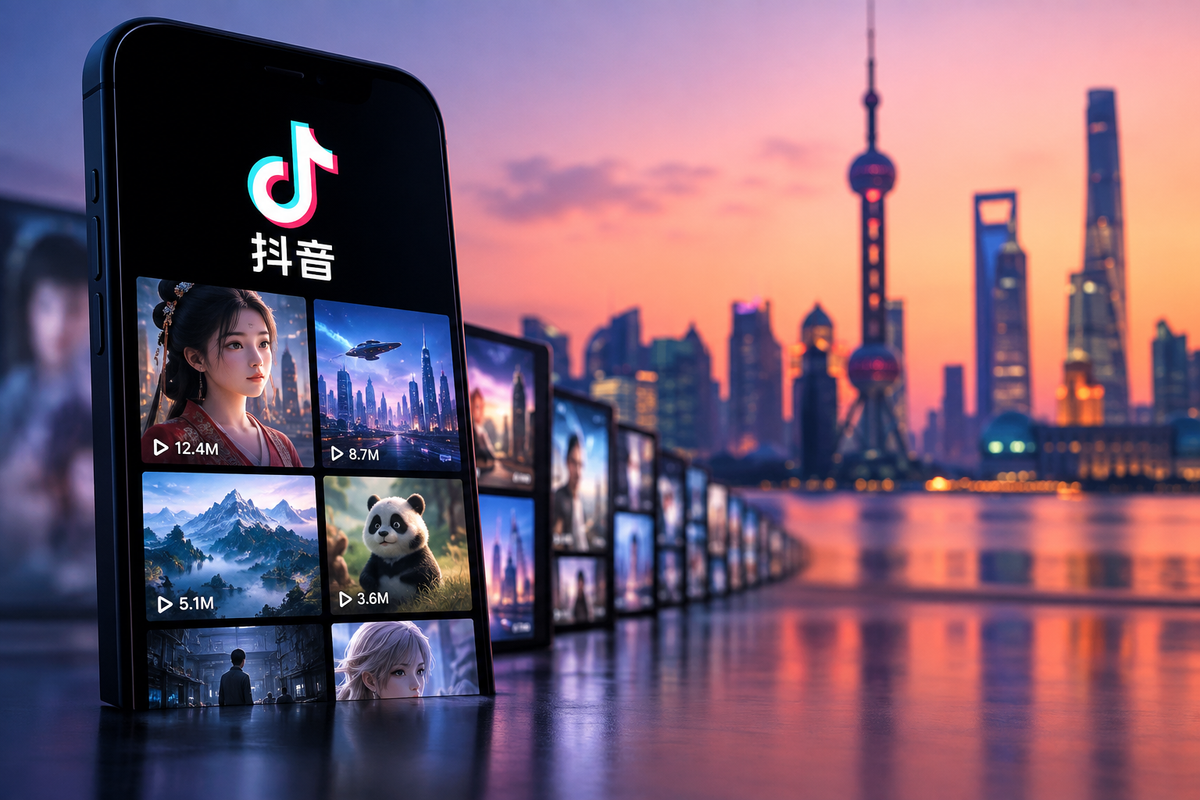
China’s AI entertainment boom has reached an extraordinary scale, with 221,900 new AI shows launched on Douyin during the first six months of 2026 alone. Fresh industry figures published on September 24 reveal how quickly AI video is moving from experimentation into large-scale entertainment production across the country.
Douyin, the Chinese counterpart to TikTok, recorded the 221,900 new AI shows between January and June. Only 1,055 passed 100 million views, however, showing the enormous gap between the amount of AI entertainment being produced and the number of projects breaking through to very large audiences.
Rapidly falling production costs are helping fuel the expansion. During the first half of 2026, the cost of producing AI short dramas fell from around 5,000 yuan, approximately $750, per minute to only a few hundred yuan per minute.
The difference can become even greater when expensive scenes are involved. One filmmaker based in Hainan estimated that a wedding scene costing around 60,000 yuan, approximately $9,000, to shoot conventionally could be created using AI for around 1,400 yuan, or just over $200.
China’s push is also extending beyond individual filmmakers experimenting with cheaper production methods. Shanghai introduced measures in May to support AI-powered microdramas with computing resources and cloud-based AI models, while Beijing has established a 260 million yuan, approximately $39 million, fund supporting audiovisual technology.
Shenzhen is also attracting AI filmmakers with technical support, content-generation resources and subsidized workspace. The growing competition between cities means access to computing power and AI production infrastructure is increasingly becoming part of where filmmakers choose to base their businesses.
Major streaming platforms are expanding their involvement too. On August 20, iQIYI held its 2026 Creator Conference in Beijing and reaffirmed plans to go all in on AI across parts of its entertainment business.
The company used the event to unveil a major expansion of NadouPro, its professional AI film and television production platform. By August, NadouPro had grown to more than 25,000 active creators and had supported over 200 professional projects, while new features were being introduced to connect creators with commercial work and distribution opportunities.
China’s AI filmmaking expansion has also reached traditional movie theaters. On April 27, Bona Film Group announced that its 90-minute science-fiction production Sanxingdui: Future Memories had received a public screening license from China’s National Film Administration.
The movie uses AI video technology and has been described as the first AI-generated film from a major Chinese studio to receive approval for a theatrical release in the country. Bona has said the production is due to reach Chinese theaters during 2026.
Together, the developments show an AI entertainment pipeline stretching from creators producing mobile dramas for social platforms to major companies developing feature-length movies. What began with experimental clips is increasingly being surrounded by professional production platforms, funding, infrastructure and distribution.
The 221,900-show figure also exposes the biggest challenge facing that rapidly growing industry. Fewer than half of one percent of those Douyin launches passed 100 million views, meaning dramatically cheaper production has made it possible to create far more entertainment without guaranteeing that audiences will actually choose to watch it.
China is now demonstrating just how quickly AI can increase the volume of entertainment being produced and reduce the cost of creating certain scenes. The next stage will show whether demand can grow quickly enough to match the extraordinary amount of new AI content now entering the market.
Image - AiGen.