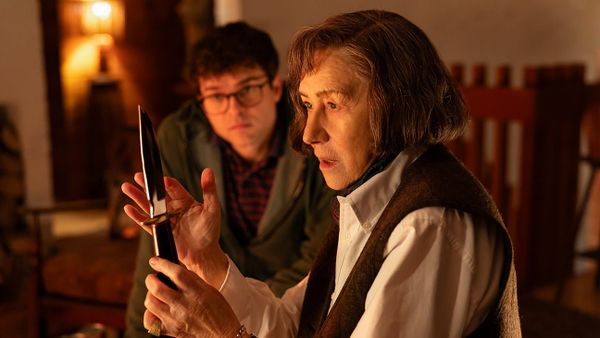
Channel 4's The Experiment Shows How Easily Cruelty Can Be Disguised as Care
Channel 4's The Experiment examines disability discrimination, Nazi-era ideas and how convincing promotional material can disguise harmful practices.


Channel 4's The Experiment has delivered one of the week's most disturbing television investigations, examining how members of the British public respond when discriminatory ideas about disabled people are presented as compassionate solutions to social care problems.
Broadcast on Thursday 22 October, the documentary is presented by actor Mat Fraser and disability rights campaigner Sophie Morgan. Its central experiment takes place inside a convincing but entirely fictional care facility, where visitors encounter arrangements inspired by the discrimination and segregation of disabled people under Nazi Germany.
The programme challenges audiences to consider whether they would recognise harmful treatment when it is accompanied by professional language, reassuring surroundings and arguments about saving public money.
Inside the Fake Residential Facility
At the centre of the documentary is SegriLife House, a fabricated care facility designed to resemble a modern residential service for disabled adults.
Visitors encounter carefully prepared promotional material, corporate branding and explanations suggesting that the facility offers an innovative alternative to supporting disabled people in the community.
However, the residents are disabled and neurodivergent actors, and the environment has been designed to test the visitors' responses. Segregated accommodation, restrictive routines and discussions about the financial costs of disability are presented in ways intended to sound reasonable.
The experiment reveals how presentation can affect people's judgement. Some visitors express concern about what they are seeing, while others appear willing to accept restrictions when they are framed as practical or beneficial.
The unsettling issue is not simply whether individuals recognise overt cruelty. It is whether they question assumptions that disabled people should have less independence because providing appropriate support costs money.
How Artificial Intelligence Helped Create the Illusion
The documentary also uses AI-generated promotional material as part of the fictional organisation's presentation, adding another dimension to its examination of persuasion.
The material contributes to the professional appearance of SegriLife House, helping create a convincing institutional identity around ideas that would appear more troubling if described plainly.
This is a particularly relevant detail at a time when businesses and organisations can produce polished promotional images and messaging with relatively little effort.
Artificial intelligence does not create the underlying prejudice, but convincing synthetic material can contribute to the way an organisation presents itself and influences public perceptions.
For viewers, the programme provides a reminder that professional design, reassuring language and attractive promotional material do not establish whether an organisation's practices are ethical.
The Nazi History Behind the Experiment
Fraser and Morgan visit Hartheim Castle in Austria, one of the killing centres used during the Nazi regime's persecution of disabled people.
The documentary explores Aktion T4 and the systematic devaluation of disabled lives, including the use of arguments about dependency and economic costs to justify segregation and murder.
That history is central to the programme because it demonstrates the consequences of treating disabled people primarily as burdens rather than individuals entitled to dignity, independence and protection.
The documentary does not demonstrate that contemporary Britain is equivalent to Nazi Germany. Its purpose is to examine how dangerous ideas can become more acceptable when their origins are concealed and their language is softened.
What The Experiment Reveals About Modern Attitudes
The programme's most significant contribution is its examination of ordinary assumptions rather than openly expressed hatred.
Discussions about welfare spending, social care and public resources frequently involve difficult financial decisions. However, those decisions also concern people whose lives, relationships and freedom can be directly affected.
By placing visitors inside a fictional institution, the documentary asks whether the language of efficiency and financial responsibility can distract from restrictions on people's rights.
The experiment itself also raises ethical questions, including whether reactions in a staged environment can be treated as representative of wider public opinion.
Nevertheless, its central challenge is worth considering. People may reject discrimination in principle while accepting arrangements that restrict disabled people's choices when those arrangements are presented as caring or convenient.
The Experiment is available through Channel 4's streaming service following its broadcast on 22 October.