AI glasses translate live Dutch theatre into 223 languages as actors perform
LiveText AI glasses turn actors’ real-time dialogue and singing into subtitles in 223 languages while audiences continue watching the stage.

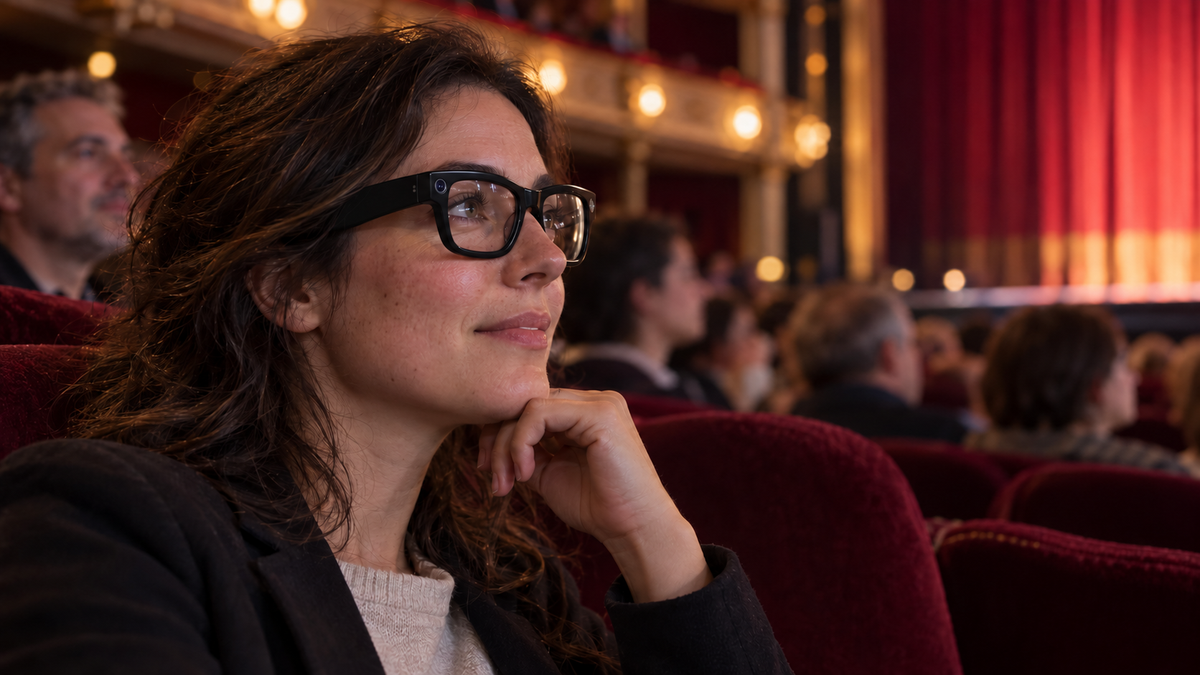
Theatre audiences in the Netherlands can now watch actors perform while subtitles in their chosen language appear directly in front of their eyes.
Het Nationale Theater has started offering LiveText smart glasses at selected performances, using AI to turn what actors are actually saying and singing on stage into live subtitles available in 223 languages.
The system is particularly unusual because it does not simply display a translated copy of the script. It listens to the actors through their individual microphones, converts the live audio into text and translates it when required before sending the subtitles to the glasses worn by audience members.
That means the subtitles follow the performance taking place that night rather than assuming every pause, delivery and piece of dialogue will happen at exactly the same moment as a prepared script.

The words appear within the viewer’s field of vision while they continue looking toward the stage. Different text colors can identify different actors, helping audiences follow a conversation without constantly shifting their attention toward a separate caption screen.
LiveText was developed by Het Nationale Theater with XRAI, a company specialising in live captioning and translation technology. The theatre describes the system as a world-first innovation for the performing arts and is now offering the glasses free at selected performances in The Hague and during touring productions.
The technology has two obvious audiences. International visitors can watch Dutch-language productions without needing to understand Dutch, while deaf and hard-of-hearing audiences can follow dialogue through live captions.
It could also change the experience of seeing theatre while travelling. Language can be one of the biggest barriers when deciding whether to book a play or musical abroad, particularly when visitors do not know enough of the local language to follow a full performance.
LiveText is designed to reduce that problem without changing what everyone else in the theatre sees. Someone using the glasses receives their own subtitles while the actors, stage design and physical production remain exactly as they are.
The system can handle spoken dialogue and singing, which opens it to more than conventional plays. Musical theatre and other performances where lyrics form part of the storytelling could potentially use the same approach.
There are still limitations with live translation because speech needs to be processed before the translated words can appear. Languages with different sentence structures can also require the software to hear more of a sentence before deciding how it should be translated.
Het Nationale Theater is collecting audience feedback as the glasses are introduced more widely. The aim is to continue improving the system with XRAI while exploring how this type of accessibility technology could be used by other venues.
Unlike AI tools designed to generate performers or replace parts of a production, LiveText sits around the existing performance. The actors still perform live, but technology could allow considerably more people to understand what they are saying.