WorldPride Amsterdam 2026 Shows Why Pride and Safer Spaces Still Matter
WorldPride Amsterdam 2026 runs from July 25 to August 8, celebrating 25 years of marriage equality with 35 LGBTQ+ safer spaces across the city.


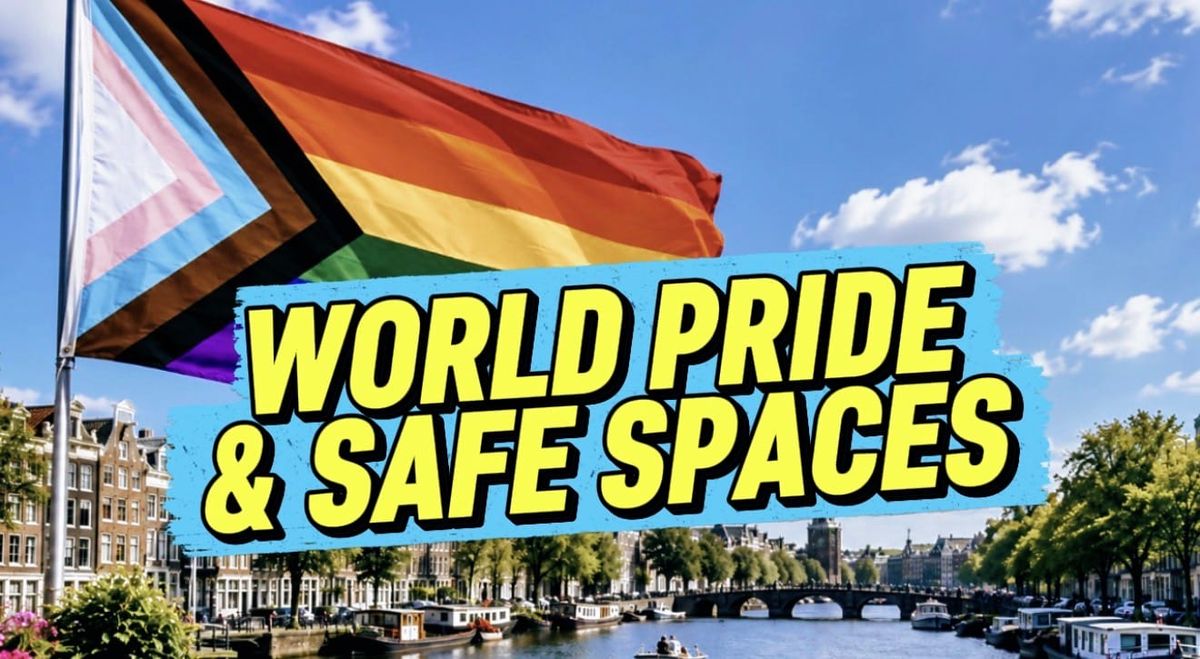
WorldPride Amsterdam 2026 will bring two weeks of celebration, visibility and community to the Dutch capital from July 25 to August 8.
The event will take place as the Netherlands marks 25 years since becoming the first country in the world to legalise marriage between same sex couples. Amsterdam will welcome visitors from across the world for a programme combining parades, cultural events, community gatherings and discussions about LGBTQ+ rights.
WorldPride will celebrate how far equality has progressed, while also recognising that legal rights do not always guarantee safety or acceptance in everyday life.
That message has become particularly relevant following a serious assault after Pride Amersfoort. Although the incident has understandably caused concern, the response from LGBTQ+ organisations, venues and public authorities also shows the strength of the community and the practical support being created ahead of WorldPride.
Pride Amersfoort brought thousands of people together
A man who had attended Pride Amersfoort was seriously assaulted while cycling home in the direction of Leusden at around 3am on Saturday morning.
He told police that he had been pulled from his bicycle and attacked by several young men riding fatbikes. He suffered serious injuries and was taken to hospital by ambulance.
Police are investigating what happened and have appealed for witnesses, information and camera footage. Officers are also examining whether the assault was connected to the victim’s LGBTQ+ identity, although an anti-LGBTQ+ motive has not been confirmed.
The assault deserves to be treated seriously, but it should not be allowed to define the whole of Pride Amersfoort.
Hundreds of people had taken part in the Pride Walk, while thousands more joined the wider celebrations. Organisers described the day as one of connection, visibility and community.
That wider picture matters. Pride Amersfoort was not simply the location of a disturbing incident. It was also a successful public gathering where LGBTQ+ people, families, friends and allies came together peacefully.
The positive response is not to become less visible. It is to make sure people can continue attending Pride, travelling home and participating in public life with confidence and support.
WorldPride Amsterdam will provide 35 safer spaces
One of the most important measures being introduced during WorldPride Amsterdam is a network of 35 dedicated safer spaces across the city.
People who experience harassment, discrimination or feel unsafe will be able to seek help at participating locations. These will include the Stedelijk Museum, De Nieuwe Kerk, Amsterdam’s city archives and several hotels where security is already available.
Staff at the locations will be able to provide support and help someone contact the police when necessary.
The initiative is being led by RITA, which stands for Report It, Always. The organisation supports LGBTQ+ people who experience discrimination, exclusion, harassment or violence.
RITA co-founder Jerrald Justin has described the safer spaces as a necessity rather than an optional addition to the event. The longer term ambition is to build a wider network of supportive locations across the Netherlands.
The safer spaces should not be seen as evidence that Pride itself is unsafe. Large public events already rely on medical teams, security staff and clear emergency procedures. This initiative ensures that there is also visible and accessible support for people facing LGBTQ+ related harassment.
It is a practical example of community organisations, museums, hotels, public services and event organisers working together.
Better reporting gives LGBTQ+ people a stronger voice
RITA received between 30 and 40 reports connected to Pride Amersfoort.
These reports should not all be interpreted as violent crimes. They may include verbal harassment, exclusion, threatening behaviour and other experiences that made people feel unsafe.
However, the number demonstrates why accessible reporting systems are important.
RITA was established in 2024 after concerns about LGBTQ+ people experiencing unsafe situations on public transport and in taxis. Almost 900 reports were received through the platform during 2025.
That figure is concerning, but increased reporting can also show that more people now know where to turn and feel more confident about speaking up.
When incidents remain unreported, repeated patterns can be difficult to identify. A trusted reporting platform allows organisations and authorities to understand where problems are happening and what kind of support is needed.
It also sends an important message to LGBTQ+ people that they do not have to accept harassment in silence.
Pride visibility can help build understanding
Recent figures involving young people in Amsterdam have raised concerns about LGBTQ+ acceptance.
The 2023 Youth Health Monitor reportedly found that 43 percent of young people aged between 13 and 16 considered a relationship between two people of the same sex to be normal. That was down from 63 percent in 2021.
Researchers have said that attitudes are influenced by a complicated combination of factors, including education, religion, social surroundings, gender expectations and online content.
There is no single explanation, and Pride cannot be expected to solve a broad social problem on its own.
However, positive LGBTQ+ visibility can form part of the response.
Pride allows people to encounter LGBTQ+ lives and relationships outside online arguments or stereotypes. It presents LGBTQ+ people as neighbours, relatives, colleagues, parents, friends and members of the same community.
Young people attending WorldPride may see couples, families, older LGBTQ+ people, athletes, artists, workers and community organisations represented openly.
That visibility may be especially meaningful for a young person who has never previously felt represented or accepted.
WorldPride combines celebration with human rights
WorldPride Amsterdam will include far more than parades and parties.
A three day Human Rights Conference will bring together activists, policymakers, researchers and community representatives to discuss LGBTQ+ rights, health, wellbeing, culture, workplace inclusion and political action.
The wider programme will also include events focused on young people, women, older LGBTQ+ people, sport, arts, trans communities, intersex visibility and religious inclusion.
Celebration remains central to Pride. For many people, it may be one of the few occasions when they feel completely comfortable holding a partner’s hand, speaking openly about their life or simply being themselves.
At the same time, Pride creates space for serious conversations and practical action.
It allows communities to share experiences, build support networks and campaign for improvements that continue after the final parade has finished.
WorldPride celebrates 25 years of marriage equality
The Netherlands has an important place in LGBTQ+ history.
In 2001, it became the first country in the world to allow same sex couples to marry. WorldPride Amsterdam 2026 will mark the 25th anniversary of that milestone.
The anniversary is a reason for celebration. It also provides a reminder that progress was achieved through years of campaigning, public visibility and the courage of people who refused to accept unequal treatment.
Those achievements should never be dismissed or taken for granted.
Marriage equality changed lives and gave same sex couples legal recognition that had previously been denied to them. WorldPride will honour that progress while recognising that equality must also be reflected in daily life.
True equality means being able to attend a celebration, travel home, hold a partner’s hand and participate openly in society without expecting abuse.
Pride remains a source of joy and belonging
The assault following Pride Amersfoort deserves a full investigation, but it should not overshadow the thousands of people who gathered peacefully or the positive work taking place ahead of WorldPride.
The creation of 35 safer spaces shows organisations responding with practical support rather than allowing fear to dominate the conversation.
WorldPride Amsterdam 2026 will celebrate love, community, visibility and 25 years of marriage equality. It will also encourage reporting, strengthen support networks and bring international attention to the continuing importance of LGBTQ+ rights.
Pride matters because it reminds people they are not alone.
It gives LGBTQ+ people the opportunity to celebrate openly, allows allies to stand beside them and helps create connections that continue throughout the year.
The strongest response to prejudice is a community that remains visible, supported and determined to enjoy the freedoms that earlier generations worked so hard to secure.
Article updated 13/7/26
Sources: Reporting from dutchnews.nl and iamexpat.nl, information from RITA and the official WorldPride Amsterdam programme