Will AI Answer Your Next Police Call Instead of a Human?
Police AI is being introduced to 101 call routing, with 20 million calls received annually. Find out how it works, the safeguards and what happens to 999.

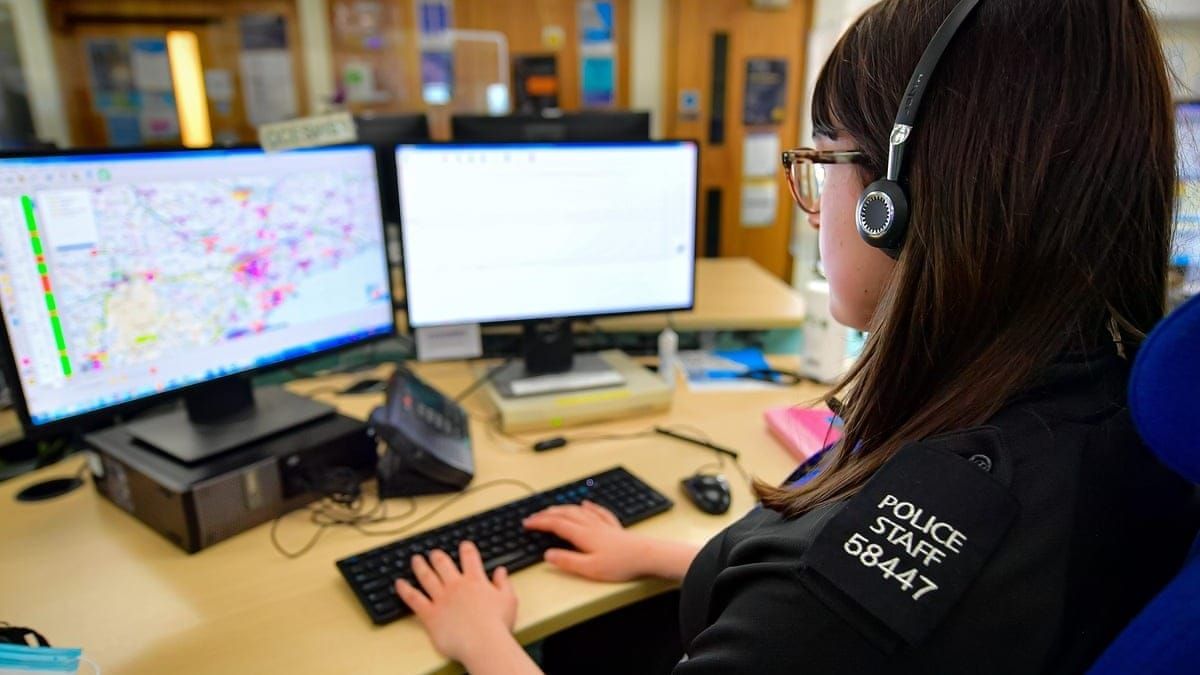
Artificial intelligence is being introduced into police telephone systems across England and Wales, with new software designed to understand why somebody is calling 101 and direct them towards the appropriate service.
The government says the technology could significantly reduce unnecessary demand on police control rooms, although it has drawn a clear distinction between non-emergency call routing and the handling of emergency calls. Its current policy does not support using AI to answer 999 calls.
Four million calls reaching the wrong service
The national 101 service receives approximately 20 million calls annually, according to Home Office figures published in August 2026.
Around four million of those calls, equivalent to 20%, concern issues that should be handled by other organisations, including local authorities, NHS 111 and electricity network operators.
Officers and police staff can spend considerable time dealing with enquiries about matters outside their responsibilities, reducing the capacity available for crime reports and safeguarding concerns.
The government has invested £1.4 million in a call-routing system developed with the National Police Chiefs' Council and Vodafone Business. It estimates that wider adoption could save policing up to £8.5 million annually, although that figure is a projection rather than an achieved financial saving.
Trials involving 15 police forces successfully redirected enquiries concerning fly-tipping, noise complaints and road traffic incidents involving damage only.
How does the AI understand a caller?
The system uses an artificial intelligence model to interpret a caller's stated reason for contacting the police and match it against a set of possible enquiry categories.
Technically, this type of system can be understood as an intent-classification application. It processes speech or transcribed language, identifies likely meanings and attempts to select an appropriate routing category.
Such systems may involve automatic speech recognition to convert audio into text, followed by natural-language processing that classifies the request. The government has not disclosed enough technical detail to establish the complete architecture of the particular system being deployed.
The distinction between a routing model and a conversational chatbot is important. The system does not have to generate unrestricted answers to every question; its principal purpose is to identify a suitable destination for the call.
A caller reporting a broken streetlight might be directed towards the appropriate local authority, while someone needing police assistance should remain within the policing system.
What happens when the software gets it wrong?
Call classification involves uncertainty, particularly when somebody is distressed, speaks unclearly or describes a complicated situation.
A person reporting repeated threatening behaviour might initially mention noise complaints, for example, even though their circumstances require police intervention.
The Home Office says the system has been tested against variations in accents and phrasing. It also requires callers to confirm whether the software has understood their request before accepting a suggested transfer.
Additional safeguarding questions are used for broad categories, and calls are passed to police when the system cannot confidently determine the appropriate route. Crucially, callers can request a human handler rather than accepting automated direction.
These safeguards are particularly important for vulnerable people, including those experiencing domestic abuse, coercive control or mental distress.
What do police leaders say?
Acting Deputy Chief Constable Stuart Hooper, the National Police Chiefs' Council's lead for contact operations, described the system as an initiative that could help forces manage demand while protecting call-handling capacity.
He said it would allow operators to "focus on those who genuinely need police support."
Neighbourhood Watch Network also welcomed the proposals, citing concerns raised by members about delays and difficulties contacting police through 101.
However, the value of the technology cannot be assessed solely by counting how many calls are diverted. Forces will also need to examine whether callers reach the correct service, whether vulnerable people receive appropriate assistance and whether anyone abandons a call after being incorrectly directed.
Will AI record and transcribe emergency calls?
The government has announced a broader £16.5 million programme to modernise communication between police and the public, including AI-assisted transcription of 999 and 101 calls.
Speech-recognition systems convert spoken language into written text, potentially helping operators record incidents and identify recurring demand.
However, automatic transcripts can contain errors involving names, addresses, numbers, background speech and regional accents.
In an emergency, a misheard house number or incomplete account could have serious consequences if the transcript were treated as authoritative without checking the original recording.
Police forces therefore need appropriate procedures for correcting transcripts, maintaining access to original audio and recording any manual amendments.
What happens next?
The government expects implementation to vary between forces because existing telephone systems and contact-centre arrangements differ.
Introducing new software also creates technical challenges involving compatibility with legacy systems, network resilience, data protection and accessibility.
Any meaningful assessment should examine end-to-end waiting times, successful transfers, repeat contacts, abandoned calls and the number of safeguarding incidents that were initially misclassified.
For callers, the practical position remains straightforward. Dial 999 when immediate emergency police assistance is required, and use 101 for non-emergency policing enquiries.
AI may help manage the enormous volume of routine calls, but the operational test will be whether people requiring urgent help can still reach trained staff quickly and reliably.