Peppa Pig AI Row: Why UK Agents Are Fighting Child Voice Cloning Clauses
The Peppa Pig AI row has raised serious questions over child voice cloning, consent and whether young performers should ever sign away future AI rights.


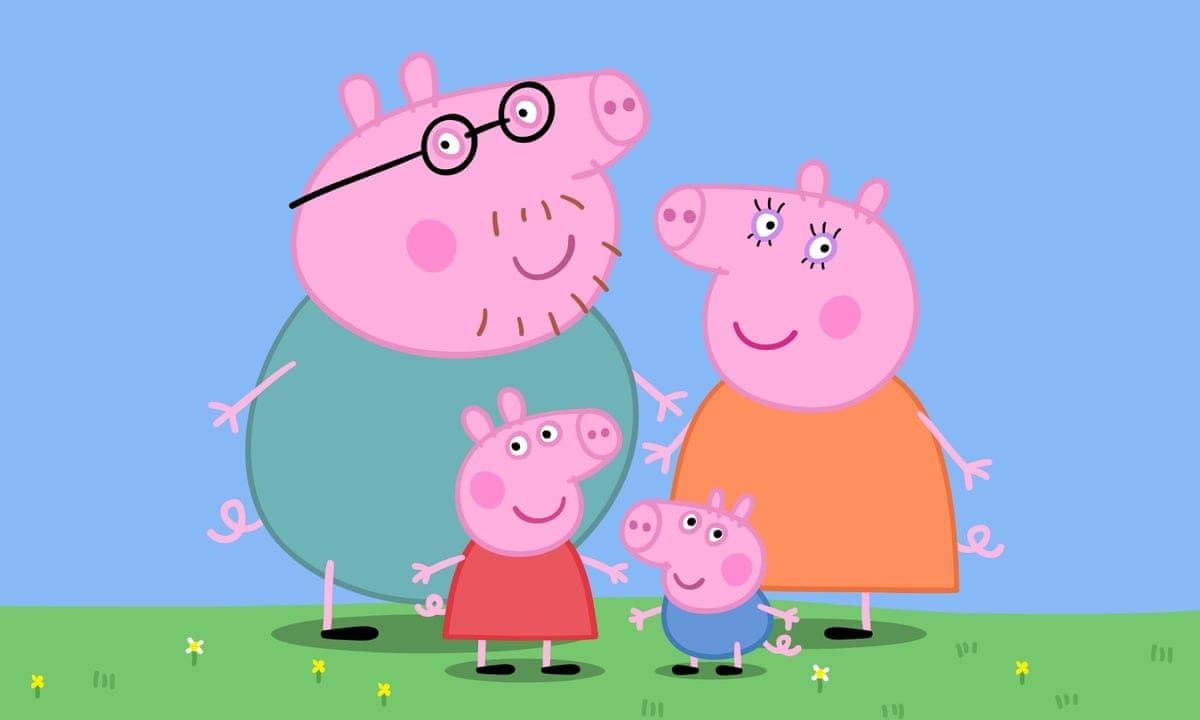
Artificial intelligence is creating a new problem for the entertainment industry: what happens when the performer being asked to hand over rights to their voice is a child?
UK agents representing young performers have challenged artificial intelligence (AI) clauses in child voice acting contracts, arguing that children should not have their voices captured, cloned or reused through AI before they are old enough to understand the consequences. The dispute has been widely linked to Peppa Pig, although the open letter at the centre of the campaign does not name the programme or its owner, Hasbro.
Why are UK agents fighting the contracts?
The Agents of Young Performers Association (AYPA) says a major studio behind an international children’s franchise offered contracts to child voice actors containing terms allowing AI use of their voices across commercial material connected with the franchise
According to the association, attempts to have the clause removed were rejected. That prompted the open letter, which has now attracted more than 2,000 signatures from agents, performers, parents and others supporting stronger protection for young actors.
The central concern is wider than whether AI should ever be used in animation. AYPA argues that a child cannot fully understand what it could mean to allow a company to capture or clone their voice, particularly if that permission could affect work created years after the original recording session.
A young performer could, for example, record dialogue for a programme at the age of ten. A sufficiently detailed digital replica of that childhood voice could potentially be used later to create lines the performer never actually recorded, depending on the technology available and the rights granted under the contract.
Why is consent different when the actor is a child?
AYPA argues that parental permission should not be treated as unlimited consent for a child's voice to become a permanent commercial asset. Its open letter calls for agreements involving children's voices to be exempt from AI use and rejects contracts requiring young performers to surrender voice rights indefinitely.
The issue sits alongside existing safeguards for children working in entertainment, but AI creates questions those safeguards were not originally written to answer. In England, children under school leaving age taking part in certain film, television and other performances may require a local authority performance licence, while rules also cover areas including supervision and welfare.
Those arrangements are designed to protect children while they work. They do not provide a simple answer to a much newer question: whether an adult should be able to authorise the creation of a digital version of a child's voice that could potentially outlast the job, programme or even the child's time as a young performer.
What does AI voice cloning actually mean?
Voice cloning uses recordings of someone speaking to create a digital model capable of producing new speech that resembles their voice. The quality and capabilities vary considerably between systems, but increasingly sophisticated tools can generate dialogue that the original speaker never recorded.
That does not automatically mean every contractual reference to AI allows unlimited cloning. The wording of an agreement matters enormously, including what material can be created, how long permission lasts, whether new approval is required, what compensation is paid and whether the performer can later withdraw permission.
Those details are precisely why performer organisations are demanding clearer contracts. Consent to recording dialogue for an animated programme is not necessarily the same thing as consent to create a reusable digital voice capable of generating entirely new performances.
Has Peppa Pig actually been confirmed?
The AYPA open letter deliberately does not identify the production or studio involved. Reports subsequently connected the dispute with Peppa Pig, bringing Hasbro into the controversy, but that distinction remains important when reporting what has actually been confirmed.
Hasbro acknowledged that it was aware of the open letter while saying it could not comment on specific contractual negotiations or arrangements. The company also said protection of child performers was important to it and that it intended to engage responsibly and transparently as industry standards around AI develop.
The wider issue therefore extends beyond one children's programme. AYPA is asking studios and producers across the industry to adopt contracts that explicitly prevent children's voices from being captured, cloned, trained or reused through AI.
UK actors are already fighting for stronger AI protection
The disagreement comes during a much larger negotiation over performers' voices, faces and bodies. UK performers' union Equity has been pressing for stronger AI protections and says its principles include explicit consent, transparency over terms and fair payment when performers' work or identity is used.
The strength of feeling among performers is significant. In an indicative ballot involving members who had worked under major UK film and television agreements, 99.6 per cent of respondents said they would be prepared to refuse digital scanning on set in order to secure adequate AI protections.
Equity is also campaigning for new automatic rights over a person's voice, face and body. It argues that these so-called personality rights could provide an additional layer of protection where existing copyright, performers' rights and data protection rules do not fully address emerging forms of digital replication.
The same argument is happening outside the UK
The UK is not dealing with these questions in isolation. In the United States, Screen Actors Guild-American Federation of Television and Radio Artists (SAG-AFTRA) has negotiated increasingly detailed AI provisions covering issues such as informed consent, compensation and digital replicas.
Its 2025 commercials agreements introduced specific AI safeguards alongside enhanced protections for minors. Among the provisions, performer consent is required before a digital replica is created, while informed consent is required before it is used.
That approach demonstrates one possible direction for the wider industry. Rather than treating AI permission as a broad clause hidden inside a conventional performance agreement, unions are increasingly pushing for specific consent tied to defined uses and appropriate payment.
Where should the industry draw the line?
AI can have legitimate uses in entertainment, and performers may choose to license digital versions of their voices under agreements that give them control and compensation. The difficult question is whether the same principle should apply when the performer is too young to make that decision independently.
For child performers, there is also a question that reaches beyond employment law or today's technology. A decision made by adults during someone's childhood could potentially affect control over a recognisable part of their identity years later.
That is why this dispute matters beyond Peppa Pig. As synthetic voices become easier to create, the entertainment industry will increasingly have to decide not simply what technology can do, but what performers should be asked to surrender in return for a job.
Sources: The Agents of Young Performers Association open letter and current signatory record, Hasbro's public response to the dispute, UK Government guidance on child performance licences and supervision, Equity material covering AI protections and performers' rights, and SAG-AFTRA information on AI safeguards and protections for minors.
For more on how artificial intelligence is changing television, film and creative work, visit SoapLandTV's AI & Entertainment hub, including our Industry & Debate, AI Films, AI Animation and Behind the Technology coverage.