Part 1: The Flying Doctors, RFDS and the Real Heroes Behind Australia’s Royal Flying Doctor Service
Discover the remarkable true story behind The Flying Doctors and RFDS, and how Australia’s Royal Flying Doctor Service has saved lives for almost 100 years.

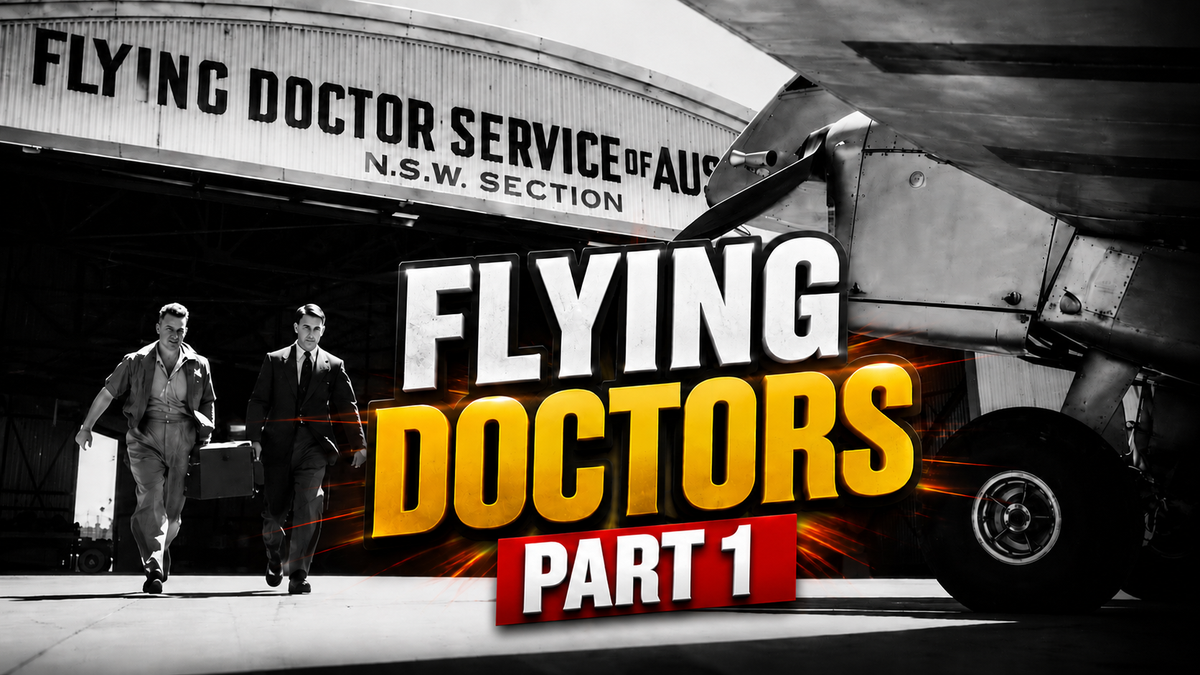
For many television viewers, The Flying Doctors was an unforgettable drama that brought the Australian Outback into living rooms around the world.
The series introduced audiences to medical emergencies, community life and personal stories set against vast landscapes that seemed unlike anywhere else on Earth.
More recently, RFDS has introduced a new generation to the same world through a modern television drama inspired by the Royal Flying Doctor Service. What many viewers may not realise is that the real story behind both programmes is every bit as remarkable as anything shown on screen.
For almost one hundred years, the Royal Flying Doctor Service has provided healthcare to people living in some of the most remote regions of Australia. What began as a bold idea in the 1920s has grown into one of the world’s largest and most respected aeromedical organisations.
Long before television cameras arrived in the Outback, the Flying Doctors were already changing lives.
The Challenge Of Healthcare In Remote Australia
Australia is one of the largest countries in the world, yet much of its population lives around coastal cities. Beyond those urban centres lies the Outback, a vast region of deserts, cattle stations, remote communities and isolated settlements stretching across millions of square kilometres.
For much of Australia’s early history, living in these regions came with enormous challenges. Medical care was often days away. If someone became seriously ill, suffered an injury or experienced complications during childbirth, reaching a doctor could involve travelling hundreds of miles over difficult terrain.
Many people simply did not receive medical treatment in time. The reality was particularly harsh for families living on isolated cattle stations, where neighbours could be many miles away and communication options were limited.
It was a problem that concerned a Presbyterian minister named John Flynn.
John Flynn’s Vision
Born in Victoria in 1880, Reverend John Flynn spent years working in remote parts of Australia.
During his travels, he saw first hand the difficulties faced by people living far from hospitals and medical facilities. Flynn believed every Australian deserved access to healthcare regardless of where they lived.
He described his dream as creating a “mantle of safety” across the Australian interior. His vision involved more than simply building hospitals.
The distances involved were too great. Instead, he wanted a system capable of bringing healthcare directly to people in need. At the time, the idea seemed ambitious.
Aviation was still developing and aircraft technology remained relatively new. Many doubted whether such a service could work. Flynn refused to give up.
The Birth Of The Flying Doctors
On 15 May 1928, Flynn’s vision became reality. The Australian Inland Mission Aerial Medical Service launched from Cloncurry in Queensland.
The operation began with a single aircraft, a De Havilland DH.50, operating in partnership with the young airline Qantas.
Initially planned as a trial, the service quickly demonstrated its value. Doctors could travel far more quickly than before, reaching patients who otherwise might have waited days for treatment.
Patients requiring urgent care could also be transported to hospitals. The success of the project led to expansion. Over time, the service evolved into what became known as the Flying Doctor Service.
n 1942 the service was renamed the Flying Doctor Service, and in 1955 the Queen granted the use of the Royal prefix, making it officially the Royal Flying Doctor Service.
Today, it is recognised around the world.
The Qantas Connection
One of the most fascinating aspects of the Flying Doctors story is its connection to Qantas.
Long before the airline became one of the world’s best known carriers, it played a crucial role in helping establish the aerial medical service.
Qantas supplied aircraft and pilots during the early years of the project. Without that partnership, the Flying Doctors may never have become reality. The relationship remains an important chapter in Australian aviation history.
It demonstrates how innovation, cooperation and determination helped transform healthcare in some of the world’s most challenging environments.
Alfred Traeger And Radio Medicine
Aircraft solved one problem. Communication remained another. How could isolated families contact medical professionals when emergencies occurred?
Engineer Alfred Traeger developed a solution that transformed life in remote Australia. His pedal powered radio systems allowed people living far from towns and hospitals to communicate with doctors.
Users generated power by pedalling, making the system practical in locations without reliable electricity. The technology became known as radio medicine.
Families could seek advice, report emergencies and receive guidance from healthcare professionals without leaving their properties.
The impact was enormous. Radio medicine helped connect remote communities and became one of the most important developments in rural Australian healthcare.
The School Of The Air
The communications technology pioneered through the Flying Doctors would also help revolutionise education. Children living in remote regions often faced significant barriers to attending school.
Educator Adelaide Miethke recognised that radio communication could provide a solution. By adapting similar systems, teachers could deliver lessons directly to students living hundreds of miles away.
This idea eventually evolved into the School of the Air. For generations, children in remote communities were able to receive education through radio links that connected them to teachers and classmates.
The Flying Doctors therefore played a role not only in improving healthcare but also in transforming educational opportunities across the Australian interior.
Robin Miller And The Sugar Bird Lady
Among the most celebrated figures in Flying Doctor history is Robin Miller.
A nurse and pilot, Miller became famous from the late 1960s through to the mid-1970s for travelling throughout Western Australia delivering healthcare and vaccinations to children living in isolated communities.
She often flew vast distances to reach families who had limited access to medical services. Her most celebrated work came during a polio outbreak in Western Australia, when she flew to remote communities administering the Sabin oral vaccine - delivering each dose on a sugar lump to disguise its bitter taste. It was the children in those Aboriginal communities who gave her the name "Sugar Bird Lady", and it stuck for the rest of her life.
The nickname became part of Australian folklore. Robin Miller’s work demonstrated the human side of the Flying Doctors story.
Behind every aircraft and every medical mission were dedicated individuals committed to helping others. Her legacy remains an important part of RFDS history.
A National Institution
What began with a single aircraft in Queensland has grown into one of Australia’s most respected organisations. According to official figures, the organisation assists more than 900 people every day across its 23 aero bases and fleet of 79 aircraft.
Its services now include aeromedical retrievals, mental health programmes, dental clinics, telehealth consultations and specialist healthcare support.
Nearly one hundred years after John Flynn first imagined a mantle of safety across the Australian interior, the Royal Flying Doctor Service continues to fulfil that vision.
It remains a lifeline for countless Australians and the inspiration behind two of the country’s most memorable television dramas. In Part 2, we’ll explore how The Flying Doctors became one of Australia’s biggest television successes and why viewers around the world fell in love with Cooper’s Crossing.
Sources: Royal Flying Doctor Service Australia, RFDS Facts & Figures, RFDS History, Screen Australia, The Flying Doctors production records, RFDS television series records.