Part 2: How The Flying Doctors Became One Of Australia’s Most Loved Television Dramas
Discover how The Flying Doctors grew from a 1985 mini series into one of Australia’s biggest television exports and an enduring Outback drama.

By the mid 1980s, the Royal Flying Doctor Service was already one of Australia’s most respected organisations.
Its story contained all the ingredients of compelling television. There was drama, danger, heroism, human emotion and some of the most spectacular landscapes in the world.
Television producers recognised the potential. In 1985, The Flying Doctors first appeared as a mini series. The production proved successful enough to convince broadcasters that the concept could work as an ongoing drama.
A full series followed in 1986. Few could have predicted just how successful it would become. Over the next several years, The Flying Doctors grew into one of Australia’s biggest television exports, introducing international audiences to life in the Outback while creating characters and storylines that remain fondly remembered decades later.
Cooper’s Crossing Became The Heart Of The Series
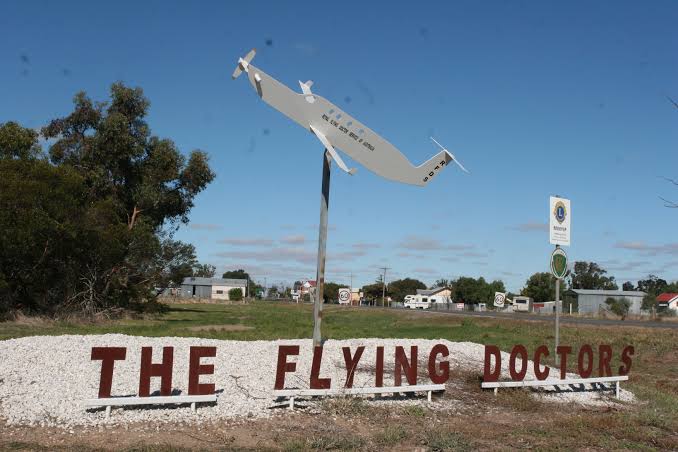
One of the programme's greatest strengths was its setting. The fictional town of Cooper's Crossing quickly became much more than a backdrop for the action. Actually filmed in the real Victorian town of Minyip, Cooper's Crossing felt authentic and lived in. It had a pub, local businesses, family homes and the Flying Doctor base that connected the community to the wider world.
Viewers became familiar with the streets, buildings and gathering places in much the same way soap viewers become attached to Coronation Street, Ramsay Street or Summer Bay.
The town created a sense of community that helped distinguish the programme from many other medical dramas. Medical emergencies may have driven the weekly stories, but Cooper’s Crossing was where audiences felt at home.
More Than A Medical Drama
Although the Flying Doctor Service provided the inspiration, The Flying Doctors was never solely about medicine. The series successfully blended medical emergencies with long running personal storylines, friendships, romances and family struggles.
That combination gave the show a soap style feel that broadened its appeal. One week might focus on an emergency retrieval from a remote station.
The next could explore a relationship breakdown, a family crisis or tensions within the community. This mixture of drama and character development helped viewers build strong connections with the people on screen. It also helped explain why the programme remained successful for so many years.
Dr Tom Callaghan
Among the most recognisable characters was Dr Tom Callaghan, played by Andrew McFarlane. Tom became one of the central figures in the early years of the series and embodied many of the values associated with the Flying Doctors.
Professional, compassionate and dedicated to his patients, he often found himself balancing medical responsibilities with personal challenges.
McFarlane’s performance helped establish the tone of the series and made Tom one of its most memorable characters. For many viewers, he remains one of the faces most closely associated with The Flying Doctors.
Geoff Standish And Kate Wellings
If there was one storyline that captured viewers’ hearts, it was the relationship between Dr Geoff Standish and Sister Kate Wellings.
Played by Robert Grubb and Lenore Smith respectively, Geoff and Kate became one of Australian television’s most popular couples. Their relationship developed gradually across multiple storylines, allowing viewers to invest emotionally in their journey.
Like many great television romances, it experienced highs and lows, happiness and heartbreak. Decades after the programme ended, many fans still cite Geoff and Kate as their favourite part of the series.
Their popularity helped demonstrate that audiences were watching for far more than medical emergencies. The relationships mattered just as much.
Rebecca Gibney And Emma Plimpton
Another key figure in the success of the show was Rebecca Gibney.
Before becoming one of Australia’s best known television stars, Gibney played mechanic Emma Plimpton. Emma brought energy, humour and warmth to Cooper’s Crossing and quickly became a favourite with viewers.
Her storylines often reflected the realities of life in a remote community, while also providing some of the lighter moments that balanced the more dramatic aspects of the series.
Rebecca Gibney would go on to enjoy a hugely successful television career, but many viewers still remember her time on The Flying Doctors with affection.
Her chemistry with Peter O'Brien, who joined the show in the second season as dashing pilot Sam Patterson, became one of the series' most popular storylines.
Together, Emma and Sam became two of Cooper's Crossing's most beloved characters
The Buckley Family
No discussion of The Flying Doctors would be complete without mentioning Vic and Nancy Buckley. Played by Maurie Fields and Val Jellay, the couple became important members of the Cooper’s Crossing community.
Their pub often served as a meeting place where residents gathered to celebrate, argue, share news and support one another.
Like many classic soap settings, it became one of the social centres of the programme. The Buckleys helped reinforce the sense that Cooper’s Crossing was a real community rather than simply a collection of television sets.
Why The Flying Doctors Connected With Audiences
The programme succeeded because it offered something different. Viewers enjoyed the medical drama, but they also connected with the characters and the setting.
The vast Australian landscapes provided stunning visuals that distinguished the series from urban dramas. The stories often explored issues that felt relevant and relatable.
Themes included grief, family relationships, addiction, domestic violence, friendship, community spirit and resilience.
The programme also celebrated the importance of helping others and supporting those in need. Those themes remain timeless.
A Major International Success
The popularity of The Flying Doctors extended far beyond Australia. The series was sold to numerous countries and developed particularly strong followings throughout Europe.
In the United Kingdom, it became a familiar part of television schedules and attracted viewers who were already embracing Australian programming.
Many people who enjoyed Neighbours and Home and Away also discovered The Flying Doctors. However, the programme offered something different from those soaps.
The Outback setting created a sense of adventure, while the medical stories added urgency and emotional stakes. For British audiences, the series also provided a glimpse into a part of Australia that felt both fascinating and unfamiliar.
The Flying Doctors By The Numbers
The original mini series premiered in 1985.
The regular series launched in 1986 and continued until 1992.
Across nine seasons, 221 episodes were produced, including the original mini-series.
A spin-off titled R.F.D.S. followed in January 1993, running for a further 13 episodes and bringing the overall total to 234
Few Australian dramas have enjoyed such longevity or international success.
Even today, the programme continues to attract nostalgic viewers and remains one of the most recognised titles in Australian television history.
Why Viewers Still Remember The Flying Doctors
Many television dramas disappear from public memory after they end.
The Flying Doctors has proven more resilient. Part of that is due to nostalgia. Viewers who grew up with the series remember the characters and storylines fondly.
However, the programme’s lasting appeal goes beyond nostalgia. The themes remain relevant. The stories still resonate. The setting remains unique.
Most importantly, the real organisation that inspired the drama continues to operate every day. That ongoing connection between fiction and reality gives The Flying Doctors a legacy that few television programmes can match.
In Part 3, we’ll explore how the modern drama RFDS brought the Flying Doctors story into the twenty first century and how the real Royal Flying Doctor Service continues to save lives across Australia today.
Sources: Royal Flying Doctor Service Australia, RFDS Facts & Figures, RFDS History, Screen Australia, The Flying Doctors production records, RFDS television series records.