Microsoft reveals plans to scale up Maia AI chips as it targets bigger deployments in 2027
Microsoft plans to scale its Maia AI chip programme to multi-gigawatt deployments from 2027, with Maia 300 production deployments planned next year.

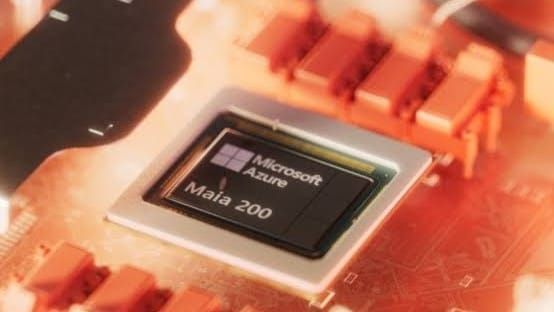
Microsoft has announced plans to expand its Azure Maia artificial intelligence chip programme to multi-gigawatt deployments from 2027, as the technology giant looks to increase the computing capacity behind its AI services.
The announcement, published on 12 October, confirms that the Maia 200 accelerator is already serving production workloads, including Microsoft Copilot. Microsoft also plans to bring GitHub Copilot and Microsoft Foundry onto the platform by the end of 2026.
What Microsoft has announced about Maia 300
The company's next-generation Maia 300 system is designed to support larger AI workloads and increase the number of interactions that can be handled by each data centre rack.
Microsoft says each Maia 300 rack system will combine 96 accelerators, with a 167-kilowatt power envelope, 27.6 terabytes of high-bandwidth memory and 1.7 petabytes per second of aggregate memory bandwidth.
The company says the architecture is intended to improve computing capacity and the economics of expanding AI services. Production deployments are planned to begin in 2027, meaning the new system should not be described as already being in general production use.
Why the announcement matters for AI
Demand for AI computing continues to place pressure on the infrastructure needed to train and run increasingly capable models. By developing its own accelerators, Microsoft is seeking greater control over how its hardware, software and cloud services work together.
The Maia programme also demonstrates how major technology companies are pursuing alternatives to relying entirely on third-party processors. Microsoft says its systems can support its own models, OpenAI models and leading open-source model families.
However, the announcement is a statement of Microsoft's plans rather than evidence that every proposed deployment has already been completed. The company's intended rollout begins in 2027, and the practical effects on customers will depend on implementation and availability.
For the wider entertainment industry, the expansion is relevant because AI infrastructure supports an increasing range of creative and production-related services. More computing capacity could help power tools used for development, editing, visual effects and other digital workflows, although Microsoft has not announced that Maia 300 is specifically designed for film or television production.
The development therefore offers a broader picture of the infrastructure race behind AI, with Microsoft positioning its own hardware as a central part of its future cloud strategy.