Mad Max director George Miller explains what AI still cannot replace in filmmaking
Mad Max director George Miller says AI can be a filmmaking tool but cannot replicate the human experiences that shape powerful storytelling.

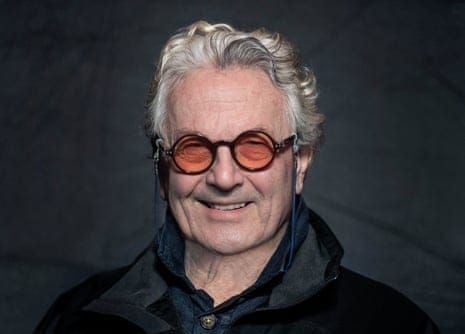
Mad Max director George Miller has explained why he believes artificial intelligence can help filmmakers without replacing the human experiences that give cinema its emotional power.
Speaking to Variety Australia at the launch of Tropfest's 2027 festival in Sydney on October 9, Miller acknowledged that filmmaking has continually changed as new technologies have emerged. However, he questioned whether AI could ever reproduce the experiences that inform an artist's creative decisions.
Technology is another filmmaking tool
Miller has spent decades working in an industry transformed by advances in cameras, editing and visual effects. His career, particularly the Mad Max franchise, demonstrates how technical innovation can help filmmakers realise ambitious creative ideas.
He does not believe AI should automatically be rejected. Instead, he sees it as another tool, while questioning the assumption that generating convincing material is the same as understanding what makes a story meaningful.
Why human experience matters
Miller made his argument particularly memorable by pointing to experiences AI cannot personally have, including falling in love, experiencing grief and growing up with a troubled childhood.
Those experiences can shape how artists portray relationships, loss and conflict. AI can analyse information and generate an imitation of emotional expression, but Miller questions whether that is equivalent to understanding the feelings being portrayed.
His distinction matters as studios explore generative AI for visual effects, scripts and other parts of production. The ability to produce content quickly does not automatically determine whether that content has emotional depth or serves a story.
What comes next?
The debate surrounding AI filmmaking is increasingly about where the technology belongs and who retains creative control.
Miller's position offers a perspective from a director whose work has repeatedly embraced technical innovation. Rather than treating AI and human creativity as mutually exclusive, he argues that the technology can be useful without replacing the experiences that inform an artist's work.
For an industry exploring increasingly powerful tools, that is an important distinction: technology can help make a film, but the human experiences behind its storytelling remain difficult to reproduce.
Image credita/Photograph: Jessica Hromas/The Guardian