Is Cathy evil in Netflix’s East of Eden? What Steinbeck’s novel says about Florence Pugh’s character
Florence Pugh plays Cathy Ames in Netflix's East of Eden. Here is how John Steinbeck wrote her in the 1952 novel, and where the series takes its own path with her story.
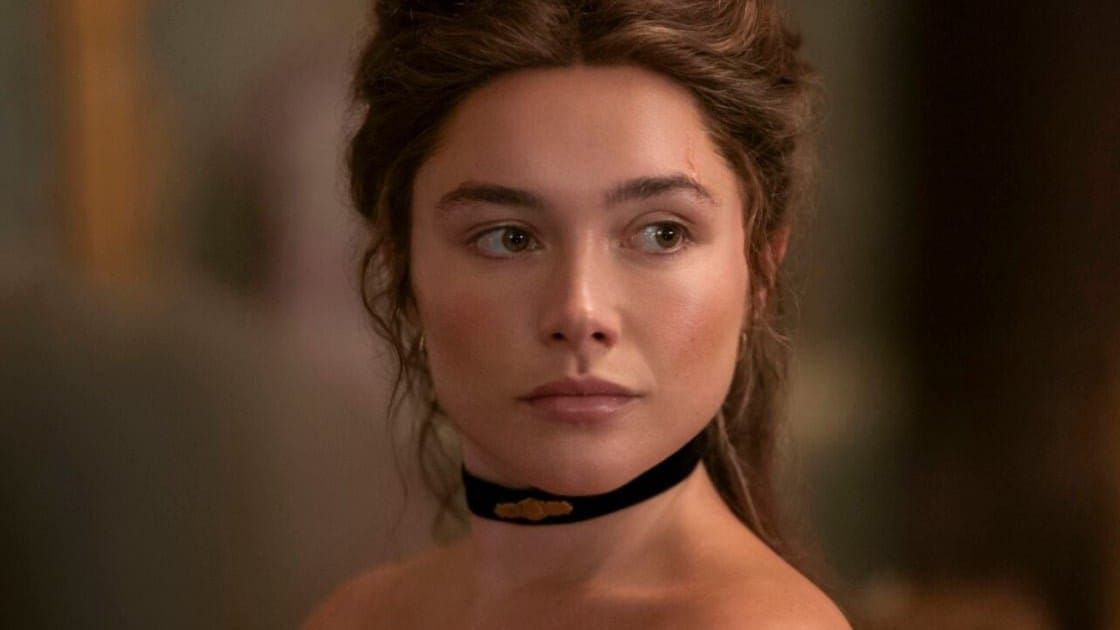
Cathy Ames has divided readers for more than 70 years, and Netflix's East of Eden has reopened the argument. The seven-part adaptation of John Steinbeck's 1952 novel arrived on the streaming service on Thursday 1 October, with Florence Pugh playing Cathy and also serving as a producer.
The series was adapted by Zoe Kazan, who runs it alongside Jeb Stuart, and anyone who has watched it may be left wondering how much of the woman on screen comes from the book. The short answer is that Steinbeck wrote her as a monster, while the series sets out to understand her.
How Steinbeck introduces Cathy
The novel leaves readers in no doubt from the moment she appears. Steinbeck's narrator opens her chapter with the line "I believe there are monsters born in the world to human parents", and what follows reads like a case history. As a girl in Massachusetts, Cathy learns to imitate feelings she does not have and to use men's desire against them. She stages an incident that gets two local boys punished, and her Latin teacher later takes his own life after becoming involved with her.
Her early crimes grow steadily worse. She steals from her parents and sets fire to the family home with them inside, then becomes the lover of Mr Edwards, a man who runs brothels. When he discovers what she has done, he beats her and leaves her for dead, and she drags herself to the Connecticut farm of Adam Trask and his brother Charles. Adam nurses her back to health and marries her, yet on their wedding night she drugs him and sleeps with Charles.
From wife to Kate
Once Adam takes her west to the Salinas Valley, Cathy tries to end her pregnancy herself and nearly dies. She gives birth to twin boys, Cal and Aron, shows them no tenderness and soon walks out. When Adam tries to stop her leaving, she shoots him. Taking the name Kate, she joins a brothel in Salinas run by Faye, wins the older woman's trust, is named as her heir and then poisons her, before turning the business into something far crueller.
Even so, Steinbeck does not leave her entirely without feeling. Late in the novel Cal takes Aron to meet their mother at the brothel, and Aron's horror leaves her shaken. She signs everything she owns over to him and ends her own life. Critics have long read that final stretch as the first time she feels anything close to remorse, and Steinbeck's own letters suggest his view of her softened as he wrote.
Where the Netflix series goes its own way
Kazan has described Cathy as the driving force of the book, and the series puts her at its centre, with several episodes given over to her story. The broad shape of her crimes survives. She still kills her parents, marries Adam, sleeps with Charles, abandons the twins, shoots her husband, poisons Faye, played here by Martha Plimpton, and takes over the brothel.
What changes is the reason behind it. The childhood incident Steinbeck presents as Cathy's scheme is treated in the series as a genuine sexual assault, and her father becomes openly abusive, which makes her later violence easier to follow. The ending adds scenes that are not in the book, including a breakdown after Aron's visit and a sequence in which Charles appears to her in the days before her death.
Kazan has said she wanted Cathy to read as a person while never excusing what she does, and Pugh has spoken about the challenge of making the character someone viewers can stay with.
That approach has divided critics. Slate's Rebecca Onion argued that softening Cathy weakens a story built around her, while Variety's review named Pugh and Hoon Lee, who plays Lee, as the beating heart of the series.
Viewers who enjoy comparing a dramatisation with its source may also like our look at what Netflix's Monster leaves out about Lizzie Borden.
So, is Cathy evil?
On the page, Steinbeck certainly meant readers to think so. She is the novel's embodiment of evil, set against the book's central idea that people can choose their own path, and only in her last chapters does a crack appear. The series keeps almost every one of her crimes but asks what made her, so viewers end up watching a woman shaped by cruelty as much as one born to it. Whether that makes her more frightening or more sympathetic is likely to be argued over for as long as both versions exist.
For anyone who has finished the series, the novel is well worth picking up to see the original Cathy in full, and Elia Kazan's 1955 film, directed by Zoe Kazan's grandfather, offers a third take on the same family. East of Eden is streaming now on Netflix.
Images: Netflix.