Icebreaker Creator on AI, Consent, Regulation and Protecting Human Creators
Icebreaker creator Gen speaks exclusively to SoaplandTV about AI, consent, regulation, protecting actors and writers and why the technology made her WLW series possible.

AI-assisted entertainment can open new routes for independent creators, but it also raises serious questions about consent, regulation and how human creators should be protected. For Icebreaker Series WLW creator Gen, those concerns should not be dismissed simply because AI has enabled her to bring her own series to screen.
In her exclusive interview with SoaplandTV, Gen was clear about her position. She believes AI needs regulation, consent should be fundamental and AI storytelling should not be viewed as a replacement for actors and writers
Gen believes AI needs regulation
Gen does not approach AI as technology that should develop without boundaries. Asked by SoaplandTV about concerns surrounding originality, consent and the future of actors and writers, she immediately acknowledged that those concerns are valid.
“I think those concerns are absolutely legitimate, and I do believe AI needs regulation. Consent, in particular, should be fundamental. Using the face, voice or identifiable characteristics of a real person without their permission is something I don’t believe should be acceptable. That principle mattered before AI, and I think it matters even more now because of what the technology is capable of doing.”
For Gen, the ability of AI to reproduce aspects of a person’s identity makes consent particularly important. Her position is not that the principle has suddenly appeared because of AI, but that advances in the technology make it increasingly important.
What about actors and writers?
Gen also rejects the idea that AI storytelling should simply replace the people already working within film and television. She sees it as a different form of creation that could exist alongside established ways of telling stories.
“When it comes to actors and writers, I personally don’t see AI storytelling as something that should replace them. I see it as a different form of creation.”
Gen compares the emergence of AI with previous technological developments that introduced different creative possibilities into entertainment.
“We’ve seen new forms of technology enter the entertainment industry before. Animation didn’t make live-action storytelling disappear, and VFX didn’t eliminate the need for human creativity. They created different possibilities and different ways of telling stories. I think AI could ultimately occupy its own space in a similar way.”
It is an important distinction in Gen’s view of the technology. She is not arguing that AI and traditional production are the same, but that different forms of storytelling can exist alongside one another.
Icebreaker would not otherwise exist on screen
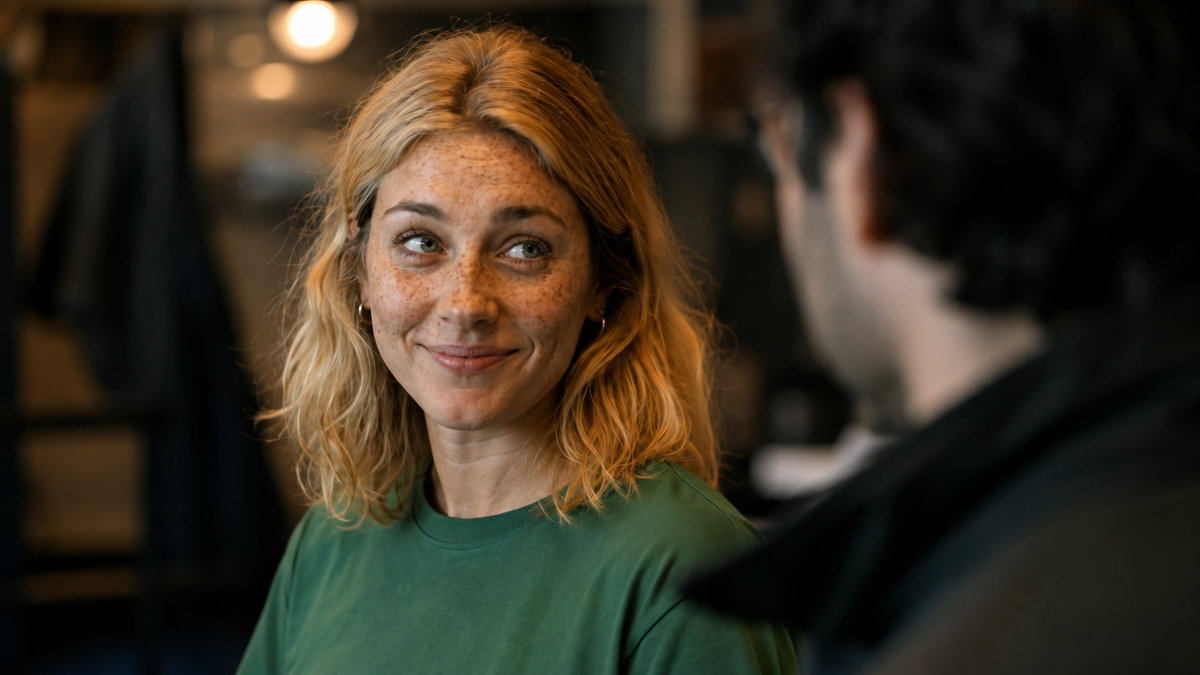
Gen’s own experience with Icebreaker explains why she sees potential in AI for independent creators. She writes the characters and dialogue, directs every scene and completes the editing herself, while AI is used to generate the visual material.
For Gen, the alternative was not producing exactly the same series conventionally with a cast and crew. She says that was not financially possible for her.
“I’m not choosing AI instead of hiring a cast and crew for a production I could otherwise afford. Without this technology, Icebreaker wouldn’t become a traditionally produced television series. It simply wouldn’t exist on screen.”
That makes Icebreaker an example of the opportunity Gen believes AI can provide. The technology has given her a way to bring Ana Malik and Noémie Morin’s story to viewers when she says traditional production was not financially available to her.
A new form of storytelling rather than direct competition?
Gen takes a similarly measured position when considering whether AI-created series could eventually compete with traditional television.
“At this stage, I don’t see AI-created series as direct competition for traditional television. I see it as a new way for independent creators to bring stories to life that might otherwise never be produced.”
That is exactly what she believes happened with Icebreaker.
“That’s exactly what happened with Icebreaker. I had a story, but not the resources to produce it traditionally. AI gave me another way to express it.”
Gen does not rule out the possibility that projects made using these tools could eventually compete for audience attention, but she sees the current opportunity differently.
“If one day projects like this become strong enough to compete for audience attention with traditional television, that would be incredible. But for now, I see it more as opening a new door than replacing an existing one.”
The technology is still developing
Gen is cautious about predicting exactly where AI entertainment will lead because the technology itself continues to develop quickly. She is interested in greater creative control, but also believes protections surrounding its use need to develop alongside it.
“Of course, this technology is evolving incredibly quickly, so none of us really knows exactly what the industry will look like in the future. I think that’s precisely why conversations about consent, regulation and protecting human creators need to evolve just as quickly.”
Gen’s position is clear: AI has made Icebreaker possible for her, but that does not remove the need for consent, regulation and protection for human creators as the technology develops.
Where to follow Icebreaker
Follow Icebreaker Series WLW on Instagram, TikTok, Facebook and YouTube for episodes, clips and updates from the series.
Keep checking SoaplandTV for more Icebreaker interviews, features and AI & Entertainment coverage. Image credits: Used with permission of Icebreaker Series WLW.