Generative Sensei Lets Kids Teach AI Robots Humanity
Tokyo’s Generative Sensei puts children in a classroom with AI robots that learn from their answers before beginning to teach the humans back.

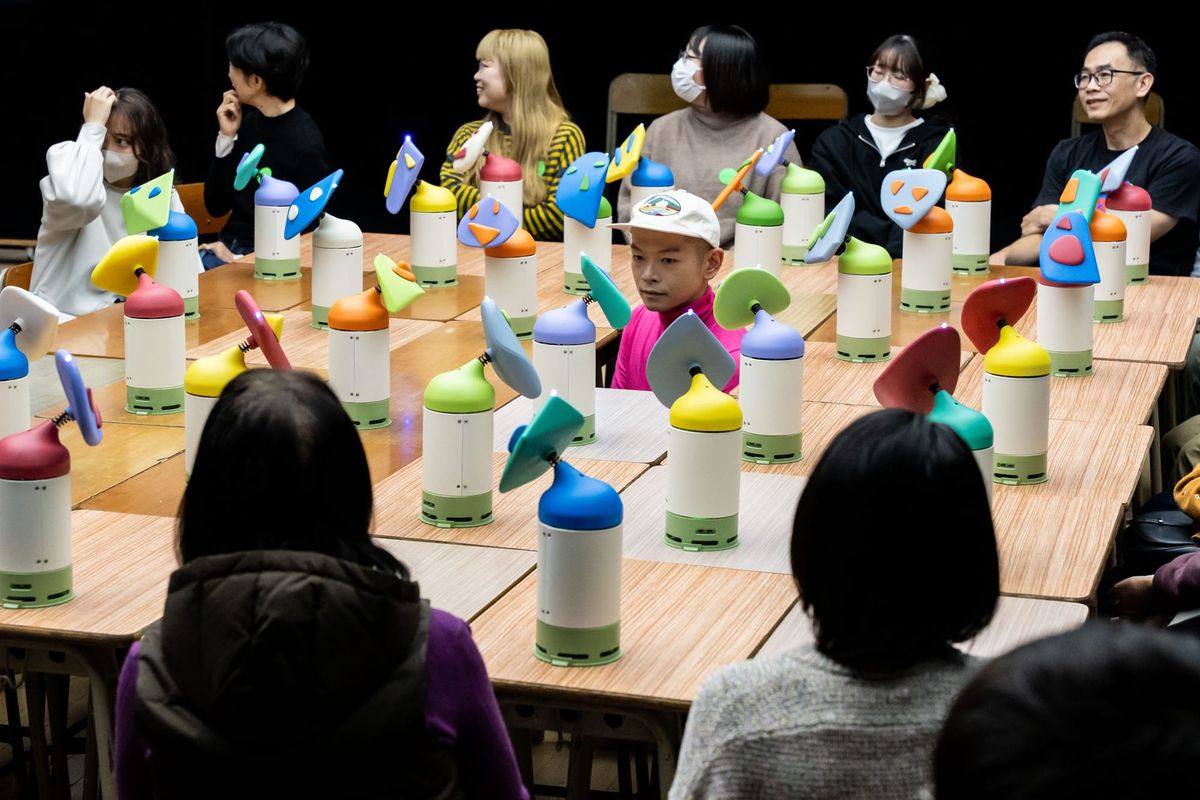
A Japanese theater production is putting children and adults inside a classroom with AI-powered robots and asking them to explain something machines cannot experience for themselves: what being human actually feels like.
Generative Sensei runs at Tokyo Metropolitan Theatre from October 9 to 12 as part of the Autumn Meteorite 2026 performing arts festival. It lasts around 65 minutes and combines live performance, robots and generative AI with direct participation from the audience.
So what actually happens in the show?
The stage is arranged like a classroom, with robot pupils sitting at desks and a larger robot called Sensei acting as the teacher. “Sensei” simply means teacher in Japanese.
The audience does not sit back and watch a conventional play. They become part of the lesson and are asked questions by the robots about experiences that make sense to humans but are difficult for a machine to understand.
Examples include what seawater tastes like and what it feels like when your heart is pounding. Audience members answer those questions in their own words, giving the AI material about physical sensations and emotions that it cannot personally experience.
The AI turns the answers into new dialogue
This is the important part of the concept. The robots are not independently becoming conscious or literally learning to feel what a human feels.
Instead, the production’s AI system takes responses supplied by the audience and uses them to generate lines for the smaller robots. What people say therefore becomes part of the dialogue heard later in the performance.
As more answers are collected, the relationship between teacher and pupil begins to change. The robots start presenting ideas back to the class, meaning the humans eventually hear their own descriptions of humanity transformed and returned to them through AI-generated language. That feedback loop is the central theatrical experiment.
It asks what AI can really understand
The production explores the difference between possessing information about an experience and actually living through it.
An AI system can process millions of descriptions of fear, excitement or pain, but it does not have a heartbeat, taste seawater or experience those emotions through a human body. Generative Sensei turns that difference into something the audience has to think about rather than simply explaining it in a lecture.
Children are particularly important to the project because they will grow up with conversational AI as a normal part of everyday life. The production asks them to interact with it critically while still treating the experience as playful theater.
The project started before the Tokyo run
Generative Sensei was originally developed by choreographer and dancer Pijin Neji with the Yamaguchi Center for Arts and Media as part of a program exploring what happens when children, technology and performing arts come together.
It premiered in Yamaguchi in December 2025 before moving to Tokyo for the 2026 festival. The production was created with writers, programmers, robot designers, sound artists and other technical specialists rather than being generated entirely by an AI system.
That distinction matters because the AI operates inside a carefully designed human performance. The creators decide the structure, environment and questions, while generative technology allows individual performances to respond to what that particular audience says.
The Tokyo run includes English support
Performances take place at Theatre West in Tokyo Metropolitan Theatre from October 9 through October 12 and are open to people aged nine and above. The main performance language is Japanese.
Japanese-to-English whispering interpretation is available for the October 11 performances with advance booking, while selected October 10 shows offer real-time Japanese subtitles for deaf and hard-of-hearing visitors.
Each performance is also followed by an optional 60-minute philosophy discussion. That gives audiences the chance to talk through what they have just experienced rather than simply leaving after the robots stop speaking.
What makes Generative Sensei unusual is that AI is not being used to imitate a human actor or create spectacular synthetic scenery. The technology becomes part of the conversation itself, asking humans to explain who they are and then showing them what happens when a machine begins repeating those ideas back.