Emmerdale viewers spot worrying Gabby Thomas signs before major health storyline unfolds
Emmerdale viewers have spotted early clues in Gabby Thomas’ upcoming health storyline. Here’s what orthorexia is and why fans are talking about it.



Emmerdale viewers believe the early warning signs surrounding Gabby Thomas have already appeared on screen as the character moves towards a major storyline exploring obsessive healthy eating.
Rosie Bentham is set to take centre stage as Gabby’s attempts to improve her health become increasingly restrictive. What begins as a seemingly positive focus will develop into a troubling fixation, with food giving Gabby a sense of control at a point when other parts of her life feel uncertain.
The storyline will explore behaviours associated with orthorexia, a term used to describe an unhealthy obsession with eating food considered healthy or pure. Orthorexia is not currently recognised clinically as a separate eating disorder, but the thoughts and behaviours associated with it can still cause serious physical, psychological and social harm.
Recent scenes suggest Emmerdale has already begun quietly building the story, with some viewers noticing that Gabby’s attitude towards food has started to become more rigid.
Gabby’s concern about fruit juice raises questions
One particularly revealing moment came when Dawn Fletcher offered Thomas an ice pop made from 100 per cent fruit juice.

Gabby immediately objected, asking: “Do you know how much sugar is in fruit juice?”
Billy Fletcher attempted to reassure her that it would not hurt the child, but Gabby remained opposed to the idea.
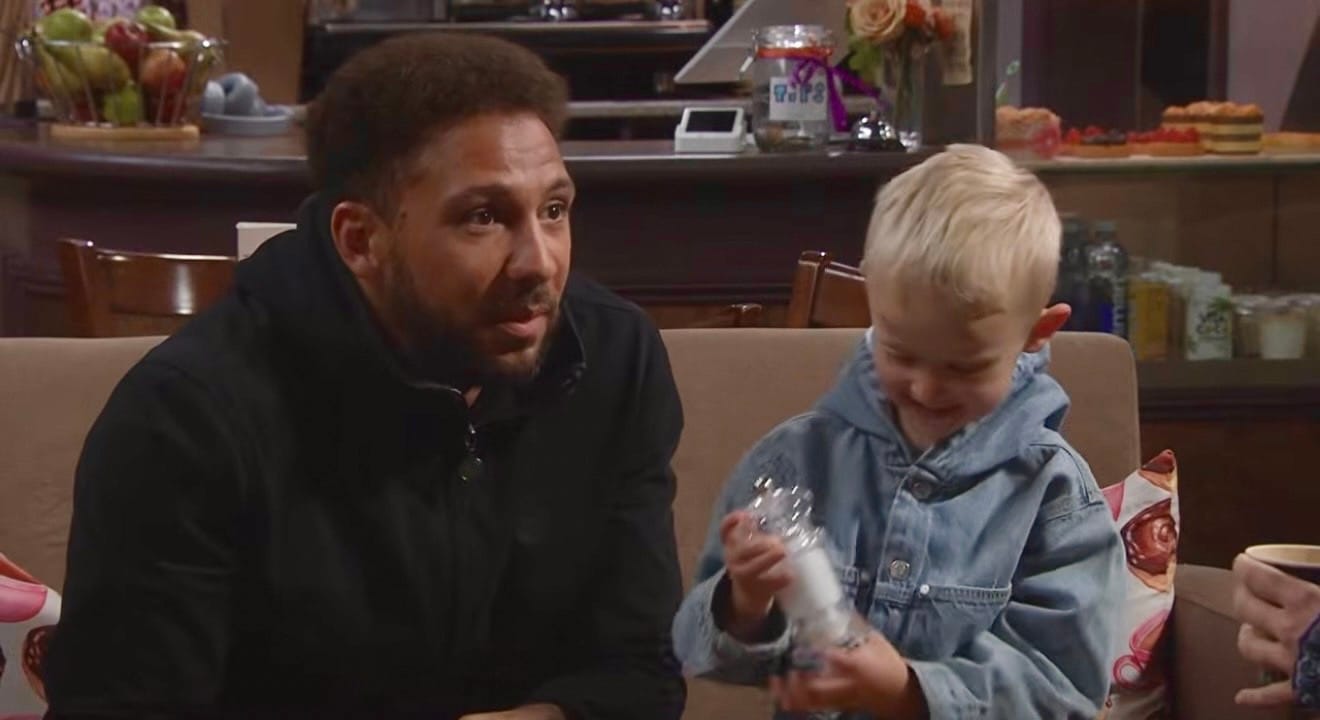
At first, the exchange could have appeared to be a brief difference of opinion between adults about what the children should be allowed to eat. With the direction of Gabby’s storyline now confirmed, however, the moment carries greater significance.
The scene showed Gabby applying an increasingly strict view of food to those around her. Billy offered a more measured response, but Gabby appeared unable to accept that one ice pop was unlikely to cause harm.
One comment about sugar cannot prove that someone has an eating disorder. Within the context of this confirmed storyline, however, the exchange appears to form part of the gradual pattern that Emmerdale intends to develop.
It also reflects one of the possible behavioural signs identified by eating disorder charity Beat, which includes judging other people’s eating habits as well as becoming increasingly preoccupied with supposedly healthy food.
Why Gabby becomes focused on healthy eating
Emmerdale producer Laura Shaw has said the storyline will explore the darker side of obsessive healthy eating and the potentially serious consequences of Gabby’s fixation.
Gabby has experienced several painful setbacks, including the end of her marriage to Vinny Dingle. More recently, she misread Ross Barton’s flirtatious behaviour and believed there could be something more between them.
Ross had not realised how seriously Gabby was taking their exchanges. When she made her feelings clear, he gently rejected her, leaving her confidence badly damaged.
Rosie Bentham has explained that Gabby has always felt a need to prove herself. Following another rejection, she begins searching for something else on which to focus.
Taking greater control of her health initially provides a sense of purpose. The concern develops when that focus becomes increasingly obsessive and starts affecting her decisions, relationships and daily life.
Social media will also play a part in Gabby’s story. As a young woman regularly exposed to online content about wellness, nutrition and self improvement, Gabby is surrounded by messages that can make strict food rules appear positive or responsible.
The storyline is not suggesting that eating nutritious food or taking an interest in health is itself dangerous. The distinction comes when someone’s rules become rigid, cause anxiety or guilt, or begin interfering with ordinary life.
What is orthorexia?
Beat describes orthorexia as an unhealthy obsession with eating food regarded as pure. What someone considers pure or impure can differ considerably, meaning the term is not connected to one particular food plan or diet.
The charity makes clear that following a healthy eating plan does not automatically mean someone has orthorexia. The concern arises when clean or healthy eating is used to cope with negative thoughts and feelings or to create a sense of control.
Someone experiencing these behaviours may feel intense anxiety or guilt after eating something they believe is unhealthy. Increasingly strict rules can also result in essential nutrients or whole food groups being removed from their diet.
Possible warning signs listed by Beat include an obsessive focus on supposedly healthy food, cutting out increasing numbers of foods, being unable to put aside personal eating rules and allowing food concerns to interfere with relationships or work. Physical consequences can include weakness, tiredness, low energy and malnutrition.
Orthorexia is not currently recognised clinically as a separate eating disorder, so a person would not receive an official diagnosis of orthorexia. Depending on their symptoms, they could instead be diagnosed with another eating disorder, including anorexia or other specified feeding or eating disorder, commonly known as OSFED.
There are also no official treatment guidelines developed specifically for orthorexia. Anyone concerned about their relationship with food should therefore seek professional advice rather than attempting to diagnose themselves from individual symptoms.
What NHS guidance says about eating disorders
The NHS does not publish dedicated guidance for orthorexia. Its general eating disorder guidance describes an eating disorder as a mental health condition in which control of food is used to cope with feelings or other situations.
It also lists very strict habits or routines around food among the possible symptoms of an eating disorder.
The NHS stresses that anyone can develop an eating disorder, although teenagers and young adults are most commonly affected. It advises anyone who believes they may have an unhealthy relationship with food to contact their GP as soon as possible.
Treatment depends on the symptoms and diagnosis involved, but usually includes talking therapy. The NHS also makes clear that recovery can take time and will be different for every person.
New figures reveal the wider scale of eating disorder concerns
The latest Adult Psychiatric Morbidity Survey for England offers important context for the storyline.
In 2023 and 2024, 9.1 per cent of adults screened positive on the SCOFF questionnaire, a short screening tool used to identify features that may indicate a possible eating disorder. That was an increase from 6.4 per cent when the same screening measure was used in 2007.
The proportion was highest among people aged between 16 and 24, with 20.1 per cent screening positive. This is particularly relevant to Gabby’s story because she is 24 and the storyline will examine the influence of social media alongside her emotional need for control.
A positive screening result is not the same as receiving a diagnosis. The survey estimated that 1.3 per cent of adults in England met the criteria for an eating disorder during the previous year, equivalent to approximately 600,000 adults.
NHS England warned that there were wide confidence intervals around that estimate because only a relatively small number of participants were identified through both the screening and clinical assessment stages. It also said the figure may underestimate prevalence because some people identified during clinical assessment had not initially screened positive.
Orthorexia was not assessed as a separate diagnosis, so these figures must not be interpreted as an estimate of how many people experience it. They do, however, underline how widely food related difficulties and eating disorders can affect the population.
Emmerdale viewers recognise the early warning signs
Some viewers had already begun questioning Gabby’s changing relationship with food before further details about the storyline emerged.
Online discussions have highlighted her concern about sugar, her strict attitude towards food and her willingness to challenge what other members of the family are eating.
Many fans have welcomed Emmerdale’s decision to explore a lesser known problem. Others, particularly those with personal experience of eating disorders, have stressed that recovery should not be presented as immediate or straightforward.
Those concerns are understandable. NHS guidance states that recovery can take time and that every person’s experience will be different.
Rosie Bentham has indicated that Gabby’s storyline will continue for a substantial period, describing what viewers have seen so far as only the beginning of what her character will experience.
That gives Emmerdale the opportunity to examine not only how Gabby’s restrictive thinking develops, but also how it affects her health, her family and her relationships.
The disagreement about the fruit juice ice pop may have seemed small when it first aired. It now appears to have been an early indication of the rigid thinking that Gabby will find increasingly difficult to manage.
As her story develops, viewers will be hoping Emmerdale continues to distinguish between ordinary healthy choices and a damaging fixation that begins to dominate someone’s life.
Anyone concerned about their relationship with food should contact their GP. Confidential information and support are also available through Beat, the UK’s eating disorder charity.
Sources: This article was researched through ITV, NHS, Beat, NHS England