Could Police AI Find Your Stolen Tools Being Sold Online?
UK police are exploring AI to track stolen tools sold online. Discover the £1 million project, technical methods and police recovery figures.

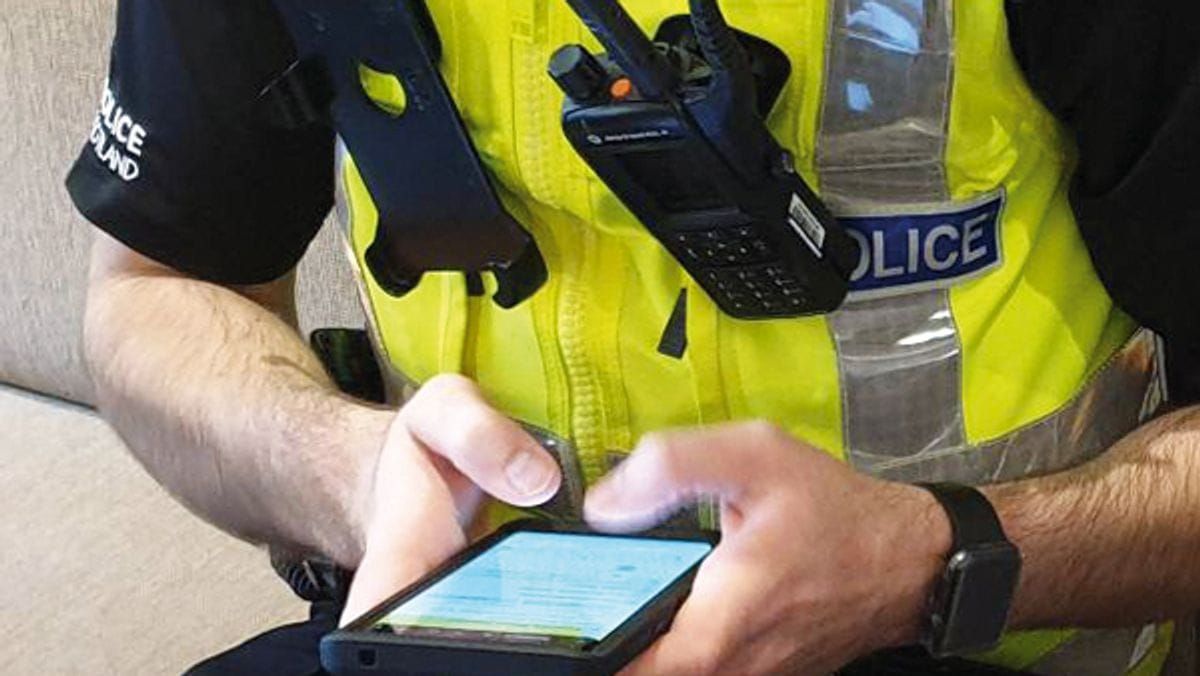
Police are developing artificial intelligence technology that could identify stolen power tools advertised for sale online, potentially helping thousands of tradespeople recover expensive equipment and return to work more quickly.
The Home Office confirmed the project in its artificial intelligence policing guidance, updated on 5 November 2026. The proposals are supported by £1 million of government funding intended to connect police information with property-marking databases, improve recovery rates and investigate the resale of stolen goods.
The scale of Britain's stolen tools problem
The figures from individual police forces illustrate how difficult recovering stolen equipment can be, even when officers know precisely what has disappeared.
A West Yorkshire Police Freedom of Information disclosure recorded 2,991 crimes involving stolen machinery or tools during 2024, covering 6,583 stolen property items with a combined recorded value of £2,844,703.69.
Of those items, just 157 were recorded as recovered, equivalent to approximately 2.4% of the stolen items recorded that year. This is a force-specific property recovery measure rather than a national detection rate, and the figures can be amended as investigations progress.
For electricians, plumbers, carpenters and other tradespeople, the financial impact extends beyond the replacement cost. Without essential equipment, jobs can be cancelled while insurance claims are processed, with self-employed workers particularly exposed to losing income.
How would AI track a stolen drill?
The proposed technology involves computer vision, which allows software to analyse the visual characteristics of objects in photographs and video recordings.
Modern image-recognition models can convert a photograph into a numerical representation called an embedding. These embeddings allow a search engine to compare visual similarities even when photographs have different lighting, backgrounds, resolutions or camera angles.
An officer investigating the theft of a specialist power tool could potentially compare its photograph against thousands of publicly accessible online listings. The software might identify a likely match despite the seller providing an incomplete product description or advertising it without its original case.
The government is also exploring work with Google on computer-vision search capabilities, alongside the use of large language models to analyse information held within existing police records.
However, image similarity and ownership identification are separate technical problems. Two legitimate customers might own visually identical drills, while serial numbers can be obscured, removed or damaged.
A credible match would need further investigation involving serial-number records, purchase receipts, property marking and other evidence establishing whether the advertised item was actually stolen.
Police have already demonstrated the recovery problem
Thames Valley Police recovered more than 2,000 power tools during Operation Appleton, including drills, routers and impact drivers. Investigators subsequently worked to identify owners across the Thames Valley and 16 other police-force areas.
Detective Sergeant Shay Harper, who led the operation, said: "I am pleased to be in a position to reunite these tools with their rightful owners."
The operation relied on traditional investigation and property identification rather than the proposed AI matching system. Nevertheless, it illustrates why automatically searching records could help officers faced with large quantities of recovered equipment.
The Metropolitan Police also reported a major retail-crime operation in October 2026 involving 42 arrests and visits to around 400 shops suspected of buying or reselling stolen goods.
Officers seized suspected stolen property worth tens of thousands of pounds, with forensic marking technology helping link recovered products to their original retailers. The operation provides another example of existing recovery methods that more advanced search systems could potentially complement.
Could criminals fool the technology?
Computer-vision systems are vulnerable to false positives, particularly when products share similar designs or manufacturers use the same external casing across several models.
A determined seller might attempt to avoid detection by cropping images, changing backgrounds, removing labels or photographing equipment from unusual angles. These techniques would not necessarily defeat a modern recognition system, but they could reduce matching performance.
A further concern involves the accuracy of police records. If an original theft report contains an incorrect model number or photograph, even technically reliable software could produce misleading matches.
Police must also have a lawful basis for processing personal information, including information associated with suspected sellers. An algorithm identifying a possible match would not independently establish grounds for arrest or prove that a seller knowingly handled stolen property.
What could happen next?
PoliceAI has identified tool theft and the resale of stolen goods as development priorities, with potential applications to wider retail crime. The Home Office has not published a nationwide launch date, an independent matching-accuracy assessment or an operational recovery rate for the proposed system.
For now, the most useful protection remains accurate ownership records. Photographs, serial numbers, receipts and recognised property marking could all help investigators establish ownership if stolen equipment is subsequently recovered.
The technology offers a potentially valuable investigative shortcut, particularly where thousands of items are involved. Its success will ultimately depend on whether police can turn an algorithmic similarity into reliable evidence and return property to the right person.