Why LGBTQ+ Fans Analyse Soap Characters Like Literature Students Online

Modern soap fandoms do not simply watch episodes anymore.
They dissect them. And its brilliant!
Across TikTok, Instagram, Reddit, Discord, L chat and X threads, LGBTQ+ lots of soap fans now analyse character behaviour, dialogue and symbolism with a level of detail that often resembles university media studies discussions more than traditional television fandom.
Single looks between characters get slowed down frame by frame. Background dialogue is dissected for hidden meaning. Costume choices, lighting and even music cues now regularly become part of online analysis.
The rise of “media literacy culture” online has transformed how many younger audiences interact with television generally, but soap fandoms have taken that behaviour to another level entirely.
WLW soap fandoms in particular have become heavily associated with deep emotional and psychological analysis online.
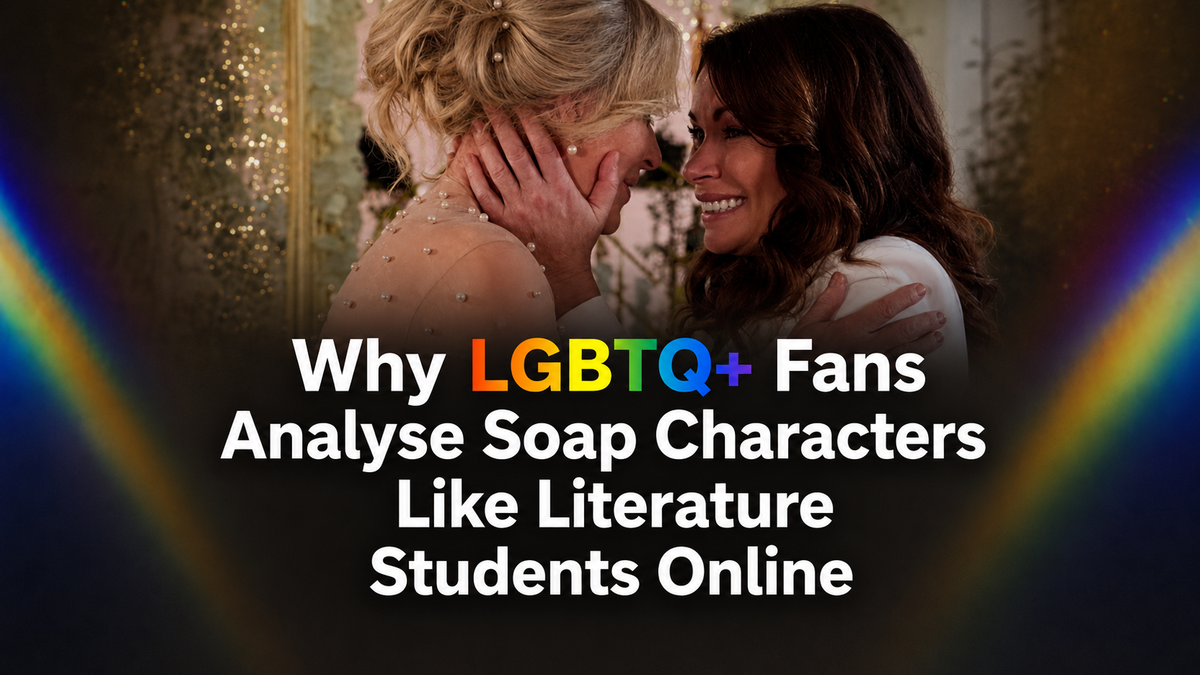
Fans discussing Carla and Lisa Connor-Swain or Suki and Eve regularly debate emotional repression, trauma responses, communication styles and character motivations across discussion threads, chat groups and TikTok breakdowns.
Some videos now resemble full video essays rather than ordinary fan reactions.
Importantly, soaps actually encourage this type of analysis naturally.
Because characters exist across decades rather than single seasons, audiences can track emotional patterns and behaviour over extremely long periods of time.
Fans remember conversations from years earlier and compare them directly to present storylines, creating unusually detailed emotional continuity within fandom discussion.
AO3 culture has also influenced this heavily.
Fanfiction writers often expand internal character emotions and motivations in far greater detail than television episodes themselves can realistically show onscreen.
That writing culture then feeds back into how audiences interpret future scenes.
Some fans now actively discuss soap relationships using terms originally associated more with literature or psychology than television.
Words like “subtext”, “projection”, “yearning”, “avoidant attachment” and “emotional repression” now appear constantly across soap fandom analysis online.
TikTok has accelerated this style of discussion massively.
One creator breaking down a two minute scene emotionally can now attract hundreds of thousands of views within days, particularly if audiences feel the analysis “understands” the characters properly.
Interestingly, many fans openly say this depth of analysis is part of what makes soap fandom enjoyable.
The stories themselves become collaborative discussions rather than passive viewing experiences.
And in an internet culture increasingly dominated by short attention spans, soap fandom’s obsession with emotional detail may actually be one of the reasons it continues thriving online.