What Makes a Great Movie Fight Scene? New Research Reveals the Secrets Behind the Action
New research explores what makes movie fight scenes compelling, revealing how choreography, rapid editing and carefully placed pauses shape screen combat.

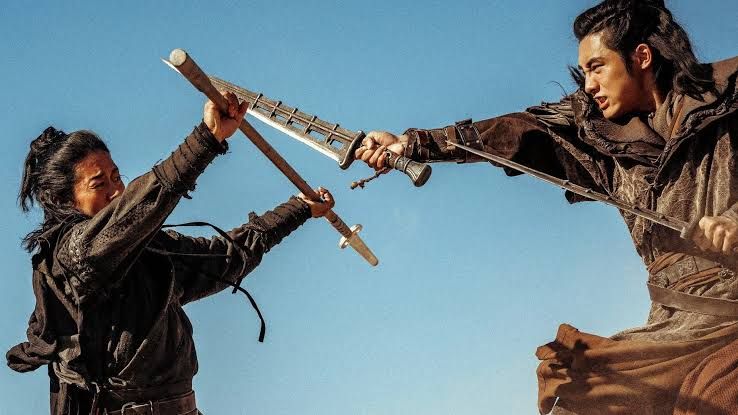
Think of a brilliant movie fight scene. The punches, flying kicks, dramatic music and spectacular stunts might be what first comes to mind, but new research suggests that some of the most important moments happen when the fighting stops.
Researchers studying martial arts cinema have examined how filmmakers use rapid editing, carefully choreographed movements and unexpected moments of stillness to give action scenes greater dramatic impact. Their findings offer a fascinating insight into why the quieter moments of a confrontation can be just as important as the action itself.
The study, published on 5 November 2026 in Frontiers in Communication, explores how familiar filmmaking techniques work together to create compelling screen combat.
Why Slowing Down Can Make a Fight More Dramatic
Researchers Xueyu Chen, Hasrul Hashim and Nurzihan Hassim from Universiti Kebangsaan Malaysia analysed a fight sequence from the 2026 Chinese martial arts film Blades of the Guardians: Wind Rises in the Desert.
They identified an impressive 157 camera shots in just four minutes and 25 seconds, with each shot lasting an average of 1.7 seconds.
For comparison, a sequence from the 2025 film Legends of the Condor Heroes: The Gallants averaged 3.53 seconds per shot, meaning the newer film switched between shots more than twice as frequently.
However, the researchers found that some of the most significant dramatic moments occurred when the rapid action gave way to stillness.
During one confrontation, the film holds a 6.63-second shot as Dao Ma and Double-headed Snake exchange dialogue. The pause interrupts the fighting and allows their intentions to become clearer before the violence resumes.
The researchers also observed that two of the longest stationary shots during combat appear alongside the sequence's fastest burst of movement. By placing moments of stillness against rapid action, the filmmakers create a striking contrast that gives individual moments greater emphasis.
Another extended shot focuses on a wounded character following his defeat, allowing the consequences of the confrontation to become part of the storytelling rather than immediately moving on to the next fight.
What Can John Wick, The Matrix and Mission Impossible Tell Us?
The findings offer an interesting way to consider some of cinema's most recognisable action franchises, each of which approaches screen combat differently.
John Wick is known for carefully staged physical choreography, allowing viewers to follow the movements of characters through elaborate confrontations. The Matrix helped popularise stylised slow-motion action, while the Mission: Impossible films have built much of their identity around ambitious practical stunts.
Although these films were not included in the study, they demonstrate how different approaches to movement, editing and visual presentation can create distinctive action sequences.
The researchers also examined how the surroundings become part of the fighting itself. In Blades of the Guardians, stairways, scaffolding, carts and walls are incorporated into the choreography, while lanterns and moonlight help establish the atmosphere.
Slow motion draws attention to individual impacts, while rapid camera movements increase the intensity of the confrontation. Carefully placed pauses then give viewers an opportunity to understand the characters and the consequences of their actions.
Interestingly, the researchers concluded that the techniques themselves were not particularly unusual. What distinguished the sequence was the way familiar filmmaking methods were combined to create a coherent piece of visual storytelling.
Is There a Secret Formula for the Perfect Fight Scene?
The research offers valuable insight into filmmaking, but it does not establish a universal formula for creating the perfect action sequence.
The researchers examined selected sequences from just two Chinese martial arts films and did not measure audience reactions. Their findings therefore explain how particular filmmaking techniques are used rather than proving which methods viewers find most exciting.
Nevertheless, the study highlights an important aspect of cinematic action that can sometimes be overlooked.
A memorable fight is not necessarily defined by how many punches are thrown, how quickly the camera moves or how spectacular the stunts become. The emotions behind a confrontation and the consequences for the characters can be equally important.
The research suggests that the impact of cinematic combat is not simply about how quickly the punches arrive or how elaborate the action becomes. Sometimes the most powerful part of a fight is the moment a filmmaker allows viewers to understand what those blows have cost.