Three People Make Two-Hour AI Anime in Three Months
A Japanese team of just three people has created a 117-minute AI anime film using more than 10,000 generations. The finished movie is free to watch.

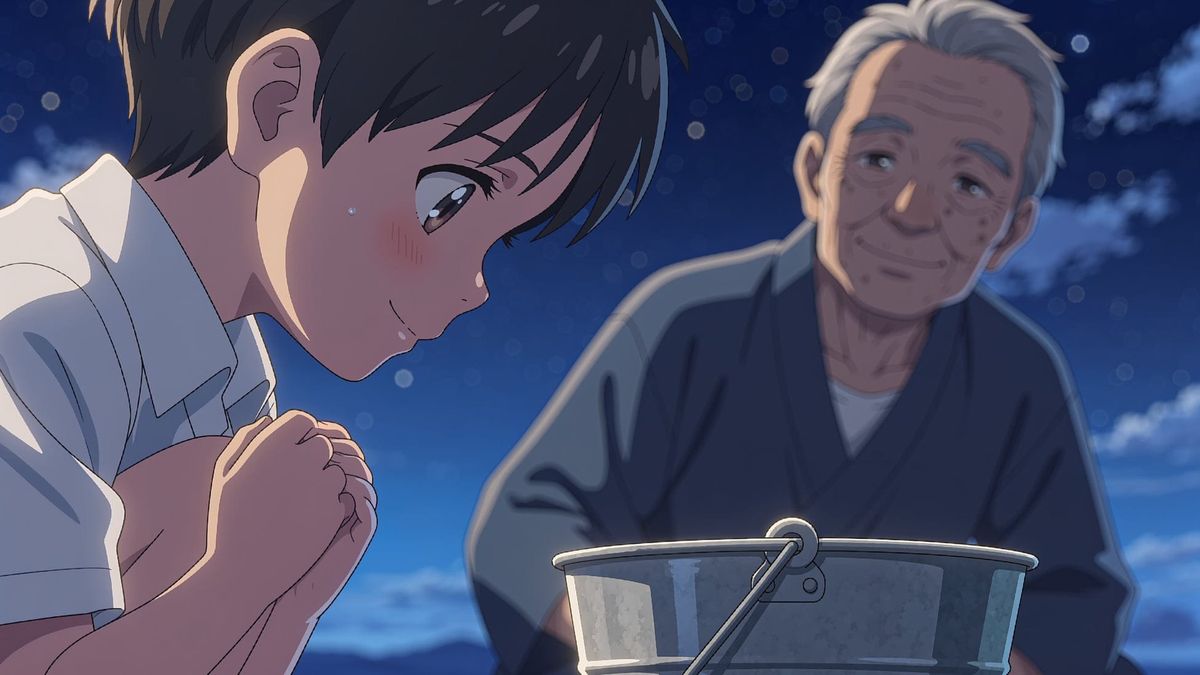
A team of just three people in Japan has created a feature-length animated film using artificial intelligence, completing approximately three months of active production work on a movie that runs for almost two hours.
Hoshi no Uta ga Kikoeru, which translates as I Can Hear the Song of the Stars, was released free on YouTube on 22 October 2026.
The 117-minute production contains approximately 1,500 shots, with its creators reporting more than 10,000 attempts at generating AI material before completing the film.
Created under the DELINE PRIME label operated by Tokyo-based SPEED EFFECT, the project demonstrates how a small production team has approached the kind of lengthy animated feature normally associated with substantially larger crews.
What is the film about?
The story follows an entrepreneur whose career in social media marketing has become closely connected to his sense of personal worth.
Having spent years measuring himself through professional achievements, he begins confronting questions about his identity and what makes life meaningful beyond business success.
The film uses science fiction and emotional storytelling to explore his journey, combining imagined environments with locations inspired by real places in Japan, including Oshitoishi hill in Kumamoto.
Rather than presenting itself simply as a demonstration of AI technology, the production attempts to tell a complete feature-length story with developed characters and an emotional narrative.
Watch the film on YouTube:
How did three people create the animation?
Director Hirotaka Yuino worked with Shogo Horikawa and Hideto Tsunei, using generative AI tools to produce the film's animated sequences.
These included Seedance and MiniMax for video generation, alongside image-generation technology used to develop the appearance of characters and environments.
The production also incorporated AI-generated music, while human performers provided the main character voices.
Yuino developed the original story, screenplay, storyboards and character designs, retaining human creative control over the direction of the film.
Although development began in April 2026, production was temporarily suspended before resuming in August. The three-month figure refers to the team's active production period rather than the entire time between the project's beginning and release.
Creating consistent characters across approximately 1,500 shots presented a considerable challenge, particularly because AI-generated sequences can produce unexpected differences in clothing, facial features and backgrounds.
The filmmakers carried out thousands of generations to obtain material suitable for the finished production.
Its creators have described the film as a pioneering achievement in feature-length generative AI animation, although claims that it is the first of its kind have not been independently established.