Niu Lai: How China’s ‘Bad’ Animated Film Became an Unexpected Anti-AI Phenomenon
Niu Lai went from an almost empty opening to a viral Chinese box-office hit, with its rough human-made animation becoming part of a wider anti-AI debate.

Published: 19 August 2026
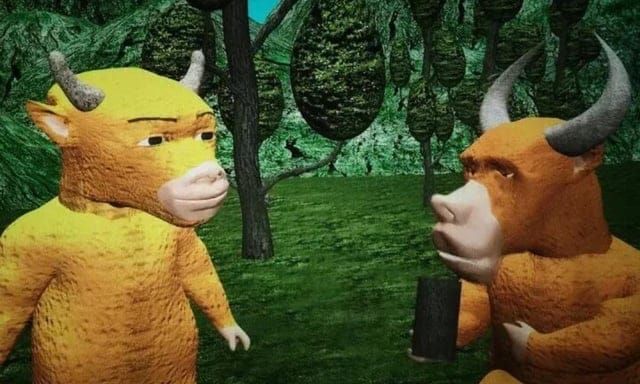
Niu Lai has become one of the strangest animation stories of 2026, and the numbers are changing so quickly that any box-office total is effectively a snapshot rather than a final figure. Released in China on 5 August, the film was mocked for its crude visuals and unusual storytelling before that ridicule turned into free publicity and sent curious audiences into cinemas.
By 19 August, the film had already passed 23 million yuan at the Chinese box office, continuing a remarkable turnaround from an opening period in which almost nobody was watching. The sudden success has also pushed Niu Lai into a much wider conversation about human-made animation, particularly at a time when studios around the world are investing heavily in generative AI.
Niu Lai started as a major box-office failure
The 86-minute film follows a young calf through a surreal story involving family, courage and a skylark. Reports identify Xin Yumeng and his mother, Sun Lifan, as the two people behind the production, with the project reportedly taking around five years to complete.
Its early box-office performance was disastrous. According to figures linked to Chinese ticketing platform Maoyan, Niu Lai made only around 10,000 yuan during its first ten days in cinemas, with some individual days bringing in as little as 200 yuan.
Then people started sharing clips and images online. The stiff movement, basic character models and unusual visual style became the source of jokes, but instead of killing interest, the mockery encouraged more people to buy tickets so they could see the film for themselves.
By 17 August, the film was reportedly taking around 8.2 million yuan in a single day and attracting close to 300,000 admissions. By 19 August, its cumulative total had moved beyond 23 million yuan, showing just how quickly the story was still developing.
A two-person production became part of the attraction
One of the details that helped fuel interest was the size of the team behind the film. Xin and Sun are reported to have handled a remarkable amount of the work themselves, including directing, writing, animation, production and voice work, without the kind of large specialist crew normally associated with a theatrical animated feature.
That background changed the way some audiences interpreted its obvious technical limitations. What initially looked simply amateurish began to be seen by some viewers as evidence of the amount of personal effort involved in making a feature-length animated film with such limited resources.
The film’s promotion also became part of the story. Some cinemas reportedly created their own hand-drawn posters because conventional marketing material was limited, adding to the sense that Niu Lai was unlike anything else currently playing.
Why has Niu Lai become linked with anti-AI feeling?
Calling Niu Lai an anti-AI film would go too far because there is no evidence that it was created as a protest against artificial intelligence. Its sudden success appears to have been driven primarily by memes, mockery, curiosity and audiences wanting to take part in an online phenomenon.
However, the reaction around the film has developed another layer. Some viewers have praised its rough, visibly human-made appearance at a time when generative AI can produce increasingly polished images, with the film becoming an unexpected example of how imperfection itself can carry value.
That does not mean everyone buying a ticket is making a statement about AI. It does suggest that the film has accidentally landed in the middle of a growing conversation about whether technical perfection is always what audiences actually want.
The backlash is more complicated than it first appeared
There has also been criticism of the attention Niu Lai is receiving, but the reporting around this needs to be separated carefully. State-owned Beijing News criticised cinemas for continuing to give the film substantial screen time, arguing that theatres should act as gatekeepers rather than simply following a viral trend.
That is different from claims that the film was being widely suppressed or removed. Separate reports suggested that screenings were withdrawn in Dalian, where the production company is based, but there is not enough consistent evidence to describe this as a nationwide removal.
More serious claims have also circulated online about possible subsidies and the motivations behind the production. Those allegations remain speculative and have not been established strongly enough to present as fact.
Imperfection may be part of the appeal
Niu Lai has become successful for reasons its creators almost certainly could not have planned. What began as an almost invisible release became a viral curiosity because people were fascinated by just how different it looked from the polished animation normally shown in cinemas.
The AI connection makes that story even more interesting. As entertainment companies invest heavily in technology designed to make generated images smoother and more convincing, Niu Lai has found an audience partly because its flaws are so visible that nobody could mistake it for something produced by a highly automated studio.
That does not suddenly make the film a masterpiece, and its success should not be rewritten as a mass rebellion against artificial intelligence. What it does show is that audiences can still respond to personality, effort and imperfection, even when the finished result falls far outside conventional ideas of professional animation.
Sources: Associated Press, Maoyan-linked reporting and current Chinese and international coverage of Niu Lai.
For more on how artificial intelligence is changing animation and filmmaking, explore SoapLandTV’s AI & Entertainment coverage, including our latest AI Animation, AI Films and Industry & Debate articles.