Manchester Travel Guide: Coronation Street, Music, Football, Canal Street And The City That Does Things Differently
Discover Manchester beyond Coronation Street, from the famous cobbles and MediaCity to music, football, Canal Street, nightlife and the Northern Quarter.

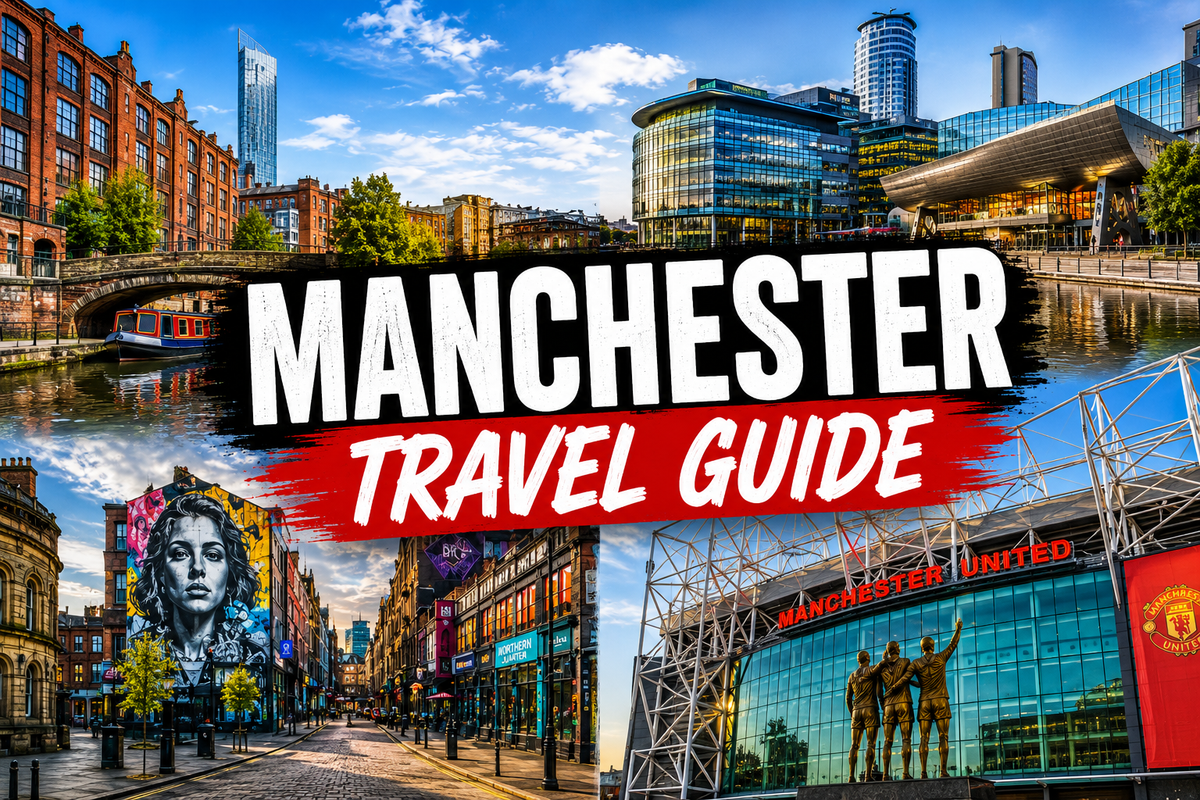
Manchester is one of the UK’s most famous cities, known for industry, music, football, television, politics, nightlife, universities, shopping and attitude. It is not a soft city or a quiet one. Manchester has built much of its modern identity on reinvention, confidence and cultural impact
For SoaplandTV readers, Manchester is essential because it is the home of Coronation Street. The Coronation Street Experience at ITV Studios, Trafford Wharf Road, gives fans the chance to walk the famous cobbles and see one of British television’s most iconic sets. But Manchester is more than Corrie. It is also Oasis, The Smiths, Joy Division, New Order, The Stone Roses, Canal Street, Old Trafford, the Etihad, the Northern Quarter, MediaCity and Salford Quays.
The City At A Glance
Manchester had a population of around 552,000 at the 2021 Census, while Greater Manchester is a much larger city region made up of ten boroughs. That matters for visitors because many key places linked with Manchester sit outside the city council boundary. Old Trafford is in Trafford. The Lowry is in Salford. The Coronation Street Experience is at Trafford Wharf Road, close to Salford Quays and MediaCity. The Etihad Stadium sits east of the city centre.
Manchester is a city where the wider urban area matters. Visitors often move between Piccadilly, Deansgate, Castlefield, the Northern Quarter, Canal Street, Ancoats, Salford Quays, MediaCity, Old Trafford and Trafford Park. The tram network helps connect those areas and is one of the reasons Manchester works well for a short break.
A Short History Of Manchester
Manchester’s history is rooted in the Industrial Revolution. It became one of the world’s great textile cities, known for cotton, mills, warehouses, canals and railways. The city was built through work, trade, invention and movement. You can still see that history around Castlefield, Ancoats, the Rochdale Canal, the Bridgewater Canal and the old warehouse districts.
Manchester was also politically significant. It was connected to trade union history, suffrage, reform, radical politics and working class organisation. The city’s industrial wealth came with overcrowding, poverty and inequality, but it also created a place where new ideas, movements and identities developed.
Modern Manchester has turned much of that industrial past into culture. Former mills have become flats, offices, bars and restaurants. Warehouses have become hotels and venues. Canal areas have become photo spots. The city has not hidden its industrial past. It has reused it.
What Manchester Is Famous For
Manchester is famous for music. Oasis, The Smiths, Joy Division, New Order, The Stone Roses and many others have made the city one of Britain’s most important music places. The Hacienda, Factory Records and the 'Madchester' era helped turn Manchester into a cultural myth as much as a city.
Football is just as important. Manchester United and Manchester City are two of the biggest football clubs in the world, and visitors travel internationally for stadium tours, club shops and match days. Old Trafford and the Etihad are major landmarks in their own right.
Manchester is also famous for television. Granada Television helped define British broadcasting, and Coronation Street remains one of the most important shows in UK TV history. Add Canal Street, the Northern Quarter, shopping, universities, theatres and the airport, and Manchester becomes one of the strongest city break destinations outside London.
The SoaplandTV Connection
The soap connection is Coronation Street. First broadcast in 1960, Corrie is the longest running television soap opera in the world and one of the most recognisable British TV exports. Weatherfield is fictional, but its roots are firmly Greater Manchester: terraces, pubs, ginnels, humour, gossip, hardship and working class community.
The Coronation Street Experience is located at ITV Studios, Trafford Wharf Road, Trafford Park, Manchester, M17 1FZ. It is next to Imperial War Museum North and close to Salford Quays and MediaCity. Visitors can reach it by tram using the Imperial War Museum stop, which makes it practical from the city centre.
For soap fans, this is the strongest public soap attraction in Manchester. Walking the cobbles, seeing the Rovers Return, Roy’s Rolls, the Kabin, the garage and the street itself gives viewers a direct link to decades of television history.
Notable People Connected To Manchester
Manchester’s famous people have shaped how the city is seen around the world. Liam and Noel Gallagher took Oasis from Burnage to global fame, giving the 1990s one of its defining British bands. Their music and attitude are still closely tied to Manchester identity.
The Smiths gave Manchester another kind of mythology. Morrissey and Johnny Marr created songs full of longing, wit, northern streets and emotional detail. Joy Division and New Order took the city into post punk and electronic music history, while The Stone Roses gave Manchester colour, swagger and one of its most quoted frontmen in Ian Brown.
Caroline Aherne, raised in Wythenshawe, became one of the great voices of British television comedy through The Royle Family and Mrs Merton. Victoria Wood, from nearby Bury, turned northern speech, women’s lives and ordinary details into comedy with real warmth and precision. Emmeline Pankhurst, born in Manchester, gives the city a powerful link to the suffragette movement and political change.
Quotes That Capture Manchester
One of the most repeated Manchester lines is “This is Manchester, we do things differently here.” It is widely associated with Tony Wilson and the film 24 Hour Party People, although the exact attribution is debated. Whether quote, myth or marketing line, it has stuck because it fits the city’s self image.
Ian Brown’s famous line, “Manchester’s got everything except a beach,” captures the city in a different way. It is funny, bold and a little ridiculous, which is exactly why it works. Manchester does not have sea views, but it has built a visitor identity from music, football, television, nightlife and confidence.
How To Get To Manchester From The UK
Manchester Piccadilly is the main rail station, with direct services from London, Birmingham, Sheffield, Leeds, Liverpool, Newcastle, Edinburgh and Glasgow. Manchester Victoria is useful for northern routes, while Oxford Road and Deansgate are handy for the university corridor, theatres, nightlife and parts of the city centre.
By road, Manchester is connected through the M60, M62, M56 and wider motorway network. Coaches serve the city from across the UK. From Leeds or Liverpool, Manchester is especially easy by train, which makes it a natural part of a northern soap travel route.
How To Get To Manchester From Abroad
Manchester Airport is one of the UK’s major international airports and the strongest northern gateway for many overseas visitors. It has train, tram, coach, bus, taxi and road connections. Trams run from the airport into the city, while trains connect the airport with Manchester Piccadilly and other regional destinations.
For international SoaplandTV readers, Manchester is one of the easiest places to start. Visitors can fly into Manchester, visit Coronation Street, then travel to Liverpool for Hollyoaks related screen heritage or Leeds for Emmerdale.
Major Transport Links In Manchester
Manchester Piccadilly is the main national rail station. Manchester Victoria, Oxford Road and Deansgate also matter depending on where visitors are staying. The Metrolink tram network is one of the city’s biggest strengths, connecting the city centre with MediaCity, Salford Quays, Old Trafford, Etihad Campus, Altrincham, Bury, Rochdale, East Didsbury, the Trafford Centre and the airport.
For the Coronation Street Experience, the Imperial War Museum tram stop is the key stop. The attraction is also close to Imperial War Museum North, The Lowry and MediaCity, which makes it easy to build a full day around the area.
Best Area To Stay In Manchester
For a Coronation Street focused trip, Salford Quays or MediaCity are the most practical places to stay. They put visitors close to the tour, the waterfront, The Lowry and Imperial War Museum North. This area is especially good if the main purpose of the trip is Corrie.
For a fuller Manchester city break, the city centre may be better. Piccadilly is practical for trains. Deansgate and Castlefield are good for restaurants, canals and atmosphere. The Northern Quarter is best for independent bars, street art, vintage shops and nightlife. Canal Street is the key area for LGBTQ plus nightlife.
Best Hotels For Coronation Street Tour Trips
Visitors booking around the Coronation Street Experience should look at hotels around Salford Quays, MediaCity, Trafford Wharf, Deansgate or Castlefield. Salford Quays is closest and gives the easiest access to the set. Deansgate and Castlefield give a stronger city break feel while still being tram friendly.
If arriving by train and staying only one night, Piccadilly is practical. If staying for nightlife, the Northern Quarter, Canal Street or Deansgate may work better. The main thing is to stay close to a tram stop if the Corrie tour is part of the plan.
Best Places To Visit In Manchester
The Coronation Street Experience is the key soap attraction. Imperial War Museum North is nearby and gives the area another major visitor stop. The Lowry is important for theatre, exhibitions and waterfront culture. MediaCity is worth walking around for screen and broadcast atmosphere.
In the city centre, John Rylands Library is one of Manchester’s most beautiful interiors. Manchester Art Gallery, Manchester Cathedral, Central Library, St Peter’s Square, Castlefield and the Northern Quarter are all strong stops. Football visitors will want Old Trafford or the Etihad Stadium, depending on club loyalty or tour plans.
Free Things To Do In Manchester
Manchester has plenty of free options. Walking around Castlefield’s canals gives a strong sense of industrial history. The Northern Quarter is free to explore and full of street art. John Rylands Library is one of the best free interiors in the city. Manchester Art Gallery and Manchester Cathedral are also strong free stops.
Salford Quays and MediaCity are good for a free waterfront walk, especially if combined with exterior views of The Lowry and Imperial War Museum North - visit when it gets dark for some fantastic photos. Canal Street is worth seeing as part of Manchester’s LGBTQ plus history and nightlife identity.
Best Photo Spots In Manchester
The Coronation Street Experience gives soap fans the most meaningful photo opportunities. Salford Quays is excellent for bridges, reflections and sunset shots. MediaCity works well for modern waterfront images, while Imperial War Museum North gives striking architecture.
In the city centre, John Rylands Library is one of the most atmospheric places to photograph. Castlefield offers canals, brick, bridges and railway arches. The Northern Quarter is best for murals and street photography. Canal Street is best at night, when the lights and reflections give it a stronger sense of place. Salford Lads Club is a major photo stop for fans of The Smiths.
Shopping Areas To Know In Manchester
Manchester Arndale is the main city centre shopping centre. Market Street gives big high street energy, while King Street is more upmarket. The Northern Quarter is better for independent shops, vintage clothing, records and alternative style.
Afflecks remains one of the most distinctive shopping places in Manchester, especially for visitors who want something less generic. The Trafford Centre is outside the city centre but is one of the biggest shopping destinations in the region and works well for visitors who want a full retail day.
Bars, Nightlife And Food Areas In Manchester
Manchester nightlife is one of the city’s biggest strengths. Canal Street is central to LGBTQ plus nightlife and remains one of the most famous queer districts in the UK. The Northern Quarter is full of independent bars, music venues, restaurants and late night spots. Spinningfields is glossier, with cocktail bars and restaurants.
Deansgate and Castlefield are good for canal side drinks and bigger venues. Ancoats has become one of the city’s strongest food areas, with restaurants, bakeries, bars and converted industrial spaces. For music fans, Manchester’s venue history is a major part of the trip, even though some legendary places, including The Hacienda, no longer exist in their original form.
Significant Places Nearby
Salford Quays and MediaCity are essential nearby areas for screen tourism. Old Trafford is nearby for Manchester United fans, while the Etihad is easy to reach by tram. The Trafford Centre is useful for shopping. Heaton Park gives one of the region’s biggest green spaces.
Further out, visitors can reach the Peak District, Stockport, Bolton, Bury, Rochdale and other Greater Manchester towns. Liverpool and Leeds are both easy by train, which makes Manchester a strong base for a wider northern soap trip.
Overall Vibe
Manchester feels bold, restless and self confident. It has a habit of turning history into attitude. Rain, red brick, football, music, canals, nightlife and television all feed into the city’s personality.
It is not pretty in a simple postcard way, but it is bold & powerful. Manchester gives visitors energy, sound, stories and a sense that the city is always building its next version.
SoaplandTV Verdict
Manchester is essential for Coronation Street fans. The official tour gives viewers a direct connection to one of the most famous streets in television history, while MediaCity, Salford Quays and the wider city add music, football, shopping, nightlife and culture. For a SoaplandTV travel guide, Manchester is one of the strongest destinations in the UK because the soap link is public, accessible and genuinely iconic.