Manchester City Landmarks Help Shape Coronation Street’s Wider Screen Identity

Coronation Street is set in the fictional town of Weatherfield, but its screen identity has always been tied to Greater Manchester. The programme’s main exterior set provides the familiar cobbles, houses and businesses, yet the wider city gives the soap an extra layer of realism. Manchester landmarks and nearby areas such as the Northern Quarter, Salford Quays and The Lowry help place Weatherfield within a recognisable northern world.
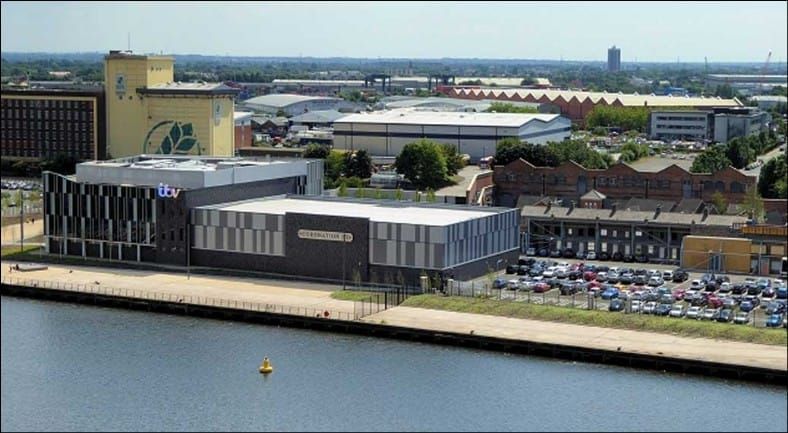
The move to the MediaCityUK area strengthened that connection. Coronation Street’s current production home sits close to Salford Quays, one of the most recognisable modern waterside areas in Greater Manchester. The official Coronation Street Experience invites visitors to step onto the real filming location, while MediaCityUK describes the tour as a guided experience around a major television production set.
Salford Quays offers a strong contrast to the traditional cobbles. It is open, modern and highly recognisable, with bridges, water, glass buildings and cultural venues. When Coronation Street stories move into spaces like this, the show can briefly widen its world. Weatherfield may be built around terraced streets and small businesses, but the surrounding city reminds viewers that the characters live near a much bigger place.
The Lowry is one of the best known landmarks in the area. Its theatre, gallery and waterside setting are closely associated with Salford Quays and the modern MediaCity landscape. For Coronation Street visitors, it helps make the trip feel like part of a bigger television and culture day out. The set tour may be the main reason for going, but the surrounding landmarks add context.
Manchester’s Northern Quarter also carries strong screen potential. Its red brick streets, independent shop fronts, alleys and older warehouse buildings have made it a popular filming area for many productions. Location specialists often point to the Northern Quarter as one of Manchester’s most useful filming areas because of its distinctive exteriors and flexible urban look.
For Coronation Street, areas like this help maintain the idea that Weatherfield belongs to a real city region. The show does not need to name every street or landmark on screen for the connection to work. The visual language is enough. Brick, stone, rain dark pavements, old industrial buildings and modern developments all belong to the same Greater Manchester atmosphere.
Manchester landmarks also matter because Coronation Street has never existed as a fantasy village cut off from reality. Its power comes from everyday life. The pub, cafe, factory and corner shop are central, but the characters also move through hospitals, courts, hotels, restaurants, offices and public spaces. Real city locations can give those scenes more weight.
The use of wider Manchester and Salford settings also helps Coronation Street stay visually current. The show began in 1960, but Greater Manchester has changed dramatically since then. MediaCityUK, Salford Quays and modern city centre locations show that the soap can keep its roots while still reflecting a changing urban landscape.
For visitors, these landmarks offer another reason to explore beyond the set gates. A Coronation Street trip can include the cobbles, the exhibition, Salford Quays, The Lowry and Manchester city centre. That gives the experience a stronger sense of place. It is not just about seeing a television set. It is about understanding how Coronation Street fits into the wider story of Manchester on screen.
That is why Manchester city landmarks deserve their own focus. They help frame Coronation Street as more than a studio production. They place Weatherfield inside a real cultural landscape, shaped by Manchester, Salford and the city region that has supported the soap for more than six decades.