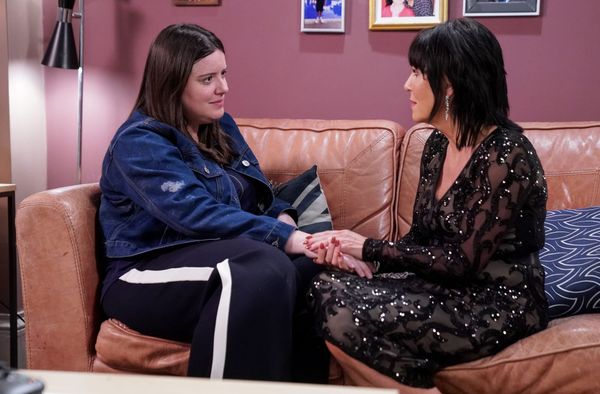
Lisa Swain: The Woman Behind The Badge


Lisa Connor-Swain did not arrive in Coronation Street as someone viewers were supposed to know inside out. For a long time, she was DS Swain, the sharp detective who appeared when Weatherfield was facing another serious crime. She asked difficult questions, followed evidence and kept her professional distance. Then, slowly, Coronation Street began to reveal the woman behind the job.
That is what made Lisa’s journey so compelling. She was not introduced as a love interest. She was not created simply to orbit another character. She arrived as a capable detective with authority, intelligence and a directness that made her stand out. Over time, her life opened up. Viewers learned about her grief, her daughter Betsy, her past with Becky, the pressure of police work and, most importantly, the unexpected connection that would change everything for both her and Carla Connor.
Lisa first appeared in 2021 during the investigation into the attack on Nina Lucas and Seb Franklin. It was one of Coronation Street’s most serious modern storylines, and Lisa’s role placed her firmly in the world of Weatherfield CID. At that stage, she was controlled, professional and focused on the case in front of her. Even then, there was something memorable about the way Vicky Myers played her. Lisa felt calm, watchful and serious. She did not need to dominate a scene to make an impression.
Across the following years, Lisa became the detective Weatherfield residents kept encountering during major investigations. She was involved in cases linked to Imran Habeeb’s death, Max Turner’s far right storyline, Justin Rutherford’s acid attack on Daisy Midgeley and Ryan Connor, Amy Barlow’s rape report, Stephen Reid’s crimes and later Lauren Bolton’s disappearance. Lisa became part of the fabric of the Street because she was repeatedly present when people were at their lowest.
That could have made her feel like a purely functional police character, but Coronation Street gradually allowed viewers to see more. Lisa was serious because she had to be. She was controlled because her job demanded it. But beneath that professional exterior was a woman carrying grief, loneliness and the constant pressure of raising her daughter alone.
Lisa’s family life became central once Betsy Swain was introduced more fully. Lisa had been raising Betsy as a single mother after believing her wife Becky had died in the line of duty. That history gave Lisa immediate emotional depth. Becky had been a police colleague, and her supposed death left Lisa trying to parent, work and grieve all at once. She was not just a detective asking questions in an interview room. She was a widow, a mother and a woman who had learned how to survive by keeping herself guarded.
Betsy brought out a different side of Lisa. Their relationship was not perfect, and that made it feel real. Betsy could be difficult, impulsive and hurtful, while Lisa often struggled to balance discipline with the fear of losing control of the one family relationship she had left. Lisa loved Betsy deeply, but she did not always know how to reach her. That tension gave Lisa a home life viewers could invest in, especially as Betsy’s own choices began pulling her closer to Carla’s world at Underworld.
Carla and Lisa’s connection did not begin with romance. That is part of what made it work. Their early dynamic had tension, suspicion and sharp edges. Carla was fiercely protective of Roy Cropper, and Lisa’s involvement in the Lauren Bolton investigation placed her directly in conflict with Carla’s loyalty. Lisa arrested Roy after Lauren’s disappearance, and Roy later went to prison for a crime he did not commit. For Carla, that was deeply personal. Roy is one of the safest and most important people in her life, so Lisa’s professional role became an emotional barrier between them.
That tension gave Swarla weight from the beginning. This was not an instant love story with no complications. Carla had reason to distrust Lisa, and Lisa had reason to hold her ground. Both women were stubborn. Both were protective. Both were used to being in control. The friction between them mattered because it meant their later closeness had to be earned.
The turning point came when Lisa’s private struggles began to show. During a difficult day, Carla overheard Lisa arguing with Betsy on the phone and invited her to open up about her domestic worries. It was a small moment, but an important one. Lisa briefly dropped the frosty professional front, and Carla recognised something in her. Both women knew what it was like to carry pain behind a polished exterior. Both understood loneliness, responsibility and the exhausting habit of pretending to be fine.
Carla offering Betsy work experience at Underworld brought their lives closer together. It was not just a practical gesture. It was Carla noticing Lisa’s pressure and stepping in with help. From there, the connection grew through small moments rather than grand declarations. That slow burn is one of the reasons Swarla became so loved. It felt natural. It was built through glances, conversations, arguments, trust and vulnerability.
Lisa’s loneliness was another important part of the story. She had spent years believing Becky was dead. She had raised Betsy alone. She had carried the trauma of Becky’s supposed death, the pressure of police work and the fear of failing her daughter. When Carla came into her life properly, Lisa was not looking for an easy romance. She was trying to keep everything together.
That made her feelings for Carla even more powerful. Carla did not fit neatly into Lisa’s controlled life. She challenged her. She unsettled her. She made her feel things Lisa had spent years trying not to feel. When Lisa panicked after Carla stroked her hair, it was not rejection. It was fear. It was the reaction of someone who had been surviving for so long that softness suddenly felt dangerous.
Their first kiss and the start of their relationship marked a huge shift for both characters. For Carla, Lisa became her first girlfriend and a new kind of love after years of painful relationships with men who had hurt, betrayed or failed her. For Lisa, Carla became someone who saw beyond the detective, beyond the widow and beyond the struggling mother. Carla saw Lisa as a woman.
That is why Swarla works so well. Lisa and Carla are equals. Neither woman is weak. Neither needs rescuing. They both have history, grief, pride and sharp edges. They can clash, but they can also understand each other in a way few others can. Lisa does not try to control Carla, and Carla does not ask Lisa to stop being strong. Instead, they create a partnership where both women can be powerful and vulnerable at the same time.
For Lisa, loving Carla meant allowing herself to imagine a future again. That matters. After Becky’s supposed death, Lisa’s life had become about duty, Betsy and survival. Carla did not erase that grief, and she did not replace Becky. What she did was offer Lisa something new, something honest, adult and emotionally alive. Carla gave Lisa a reason to open the door again.
Lisa’s relationship with Carla also changed the emotional shape of her family life. Betsy’s place in the Connor-Swain story has become deeply important. Lisa and Betsy had been through years of grief and confusion after Becky’s supposed death, and Carla entering their lives gave them something new. It created a family unit that felt chosen, modern and emotionally rich.
For Carla, Betsy carries extra meaning because of Carla’s own history. Carla once lost a baby girl after beginning to imagine motherhood, and that loss remains one of the most painful parts of her story. Betsy is not a replacement for that daughter, but her presence in Carla’s life has allowed a new bond to form. For Lisa, seeing Carla care about Betsy showed that their relationship was not just romance. It was family.
The move to number 6 Coronation Street helped make that family feel real. Lisa, Carla, Betsy and Ryan living together created a household built from love, loyalty and second chances. It was not perfect, because Coronation Street families rarely are, but it mattered because everyone in that house had chosen to be there. Lisa was no longer carrying everything alone. Carla was no longer building a future around someone who could not meet her properly. Betsy had a wider family around her. Ryan became part of that home too.
Of course, Lisa’s journey with Carla has not been without drama. Her past with Becky returned in the most explosive way when Becky was revealed to be alive. That discovery shook Lisa’s entire world. She had grieved Becky, raised Betsy without her and built a new life while believing she had died. For Becky to return after years of deception reopened old wounds and tested everything Lisa had built with Carla.
The Becky storyline pushed Lisa into one of her most painful emotional conflicts. She was forced to face her past, her guilt, her grief and the powerful hold Becky still had over parts of her life. That did not weaken Lisa as a character. It made her more human. She had been manipulated through love, memory and unfinished grief, and Vicky Myers played that devastation with real emotional force.
What matters is where Lisa’s heart ultimately belonged. The Becky storyline brought pain, confusion and conflict, but it also proved the strength of Swarla. Lisa had to face the past, understand the manipulation around her and choose the future that was real. Carla was not a substitute for Becky. She was not a second choice. She was the woman Lisa had built something honest with.
Lisa arresting Becky after discovering the truth was a powerful full circle moment. It showed Lisa choosing justice, choosing truth and choosing the life she had built with Carla and Betsy. That is one of Lisa’s defining qualities. She may struggle. She may make mistakes. She may be pulled between duty, grief and family. But when it matters, Lisa Connor-Swain is capable of immense strength.
Her marriage to Carla gave the character one of her most beautiful chapters. After years of grief, secrets, pressure and pain, Lisa finally had a moment of love that felt earned. In typical Coronation Street drama style, even happiness came with serious trouble around it, but that only made the emotional centre clearer. Lisa and Carla came through it together.
Both women taking the Connor-Swain surname made the marriage even more meaningful. It was not just about a wedding. It was about two women choosing each other fully. Lisa Connor-Swain and Carla Connor-Swain became a family in name as well as in love. For Lisa, that matters. After years of being defined by loss, work and single motherhood, she now has a future built on partnership.
Lisa Connor-Swain has become one of Coronation Street’s most important modern characters because she has been allowed to grow. She began as a detective with a sharp eye and a guarded manner, but she has become so much more. She is a mother, a survivor, a widow, a wife, a woman with flaws, a woman with strength, and a woman who found love when she least expected it.
Vicky Myers has turned Lisa into far more than a recurring police presence. She has given her restraint, humour, vulnerability and steel. Lisa can walk into an interview room and take control, but she can also fall apart when the past catches up with her. She can be firm with Betsy, terrified for her daughter, defensive with Carla and completely undone by love. That range is what makes her feel real.
Her story with Carla is not just important because it is a same sex relationship on a major ITV soap. It is important because it is written with emotional history, maturity and depth. Swarla gives both women something they had been missing. Carla gets a love that does not diminish her. Lisa gets a love that allows her to be more than the job, more than the grief and more than the past.
Lisa Connor-Swain is not just the detective who arrived to investigate Weatherfield’s crimes.
She is the woman who found her way through grief, opened her heart again and built one of Coronation Street’s most powerful modern love stories.