John McEnroe: Wimbledon Champion, BBC Voice And Tennis Icon
From Wimbledon glory and Grand Slam success to becoming one of the most recognisable voices in sports broadcasting, discover the story of tennis legend John McEnroe.


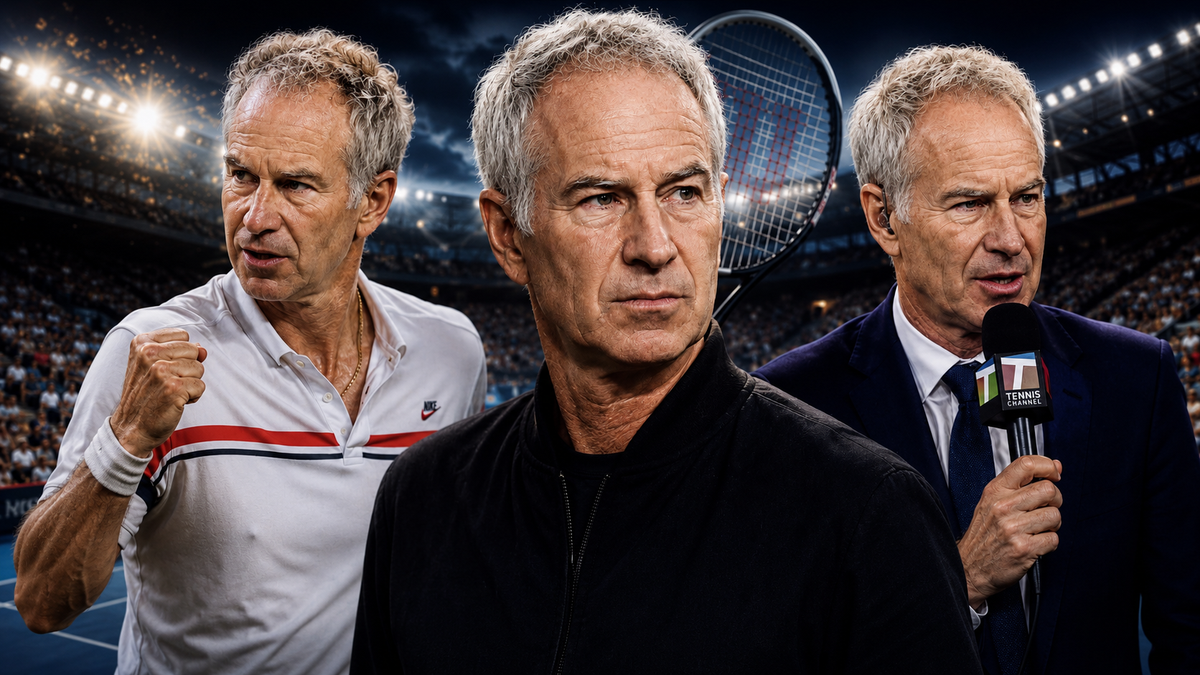
Even among tennis’s greatest champions, John McEnroe stands apart.
A seven time Grand Slam singles winner, former world number one and one of the most recognisable voices in sports broadcasting, McEnroe has remained at the centre of the tennis conversation for almost five decades.
While many former champions step away from the spotlight after retirement, McEnroe has successfully reinvented himself as one of the sport’s leading commentators. Every Wimbledon, his analysis, opinions and occasional controversies generate headlines, introducing him to a new generation of viewers who never saw him play.
That enduring popularity was highlighted once again during this year’s Championships when social media buzzed with speculation after viewers mistakenly believed he had left BBC commentary. The confusion was quickly cleared up, but it served as a reminder of something remarkable. Decades after winning his last Grand Slam title, John McEnroe remains one of the most talked about figures in tennis.
From unforgettable rivalries and Wimbledon triumphs to the famous outburst that became sporting folklore, McEnroe’s influence extends far beyond the trophies he lifted.
Born To Stand Out
Born in Wiesbaden, West Germany, on 16 February 1959 while his father was stationed overseas with the US military, McEnroe grew up in New York, where his extraordinary sporting talent quickly became clear.
His breakthrough arrived at Wimbledon in 1977 when, as an 18 year old amateur, he stunned the tennis world by reaching the semi finals.
At a time when power was becoming increasingly important in the men’s game, McEnroe built his success on something different. His touch, anticipation, creativity and volleying ability made him one of the most naturally gifted players the sport had ever seen.
His unique style quickly won admirers and frustrated opponents in equal measure.
Within a few years, he had become one of the biggest stars in world sport.
Grand Slam Glory
McEnroe’s achievements place him among the greatest players of the Open Era.
His career includes:
- 7 Grand Slam singles titles
- 3 Wimbledon singles titles
- 4 US Open singles titles
- 9 Grand Slam men’s doubles titles
- 1 Grand Slam mixed doubles title
- 77 ATP singles titles
- 77 ATP doubles titles
- 170 weeks ranked world number one
- 875 career singles victories
His most dominant year came in 1984.
McEnroe won an astonishing 82 matches while losing just three, producing one of the greatest seasons ever recorded in professional tennis.
Many experts still rank it among the finest individual campaigns in Open Era history.
His success in doubles was equally impressive, helping the United States secure multiple Davis Cup victories and proving his versatility across every aspect of the game.
Rivalries That Defined An Era
Some of the greatest moments of McEnroe’s career came against fellow tennis legends.
His rivalry with Björn Borg remains one of the most famous in sporting history.
Borg’s calm and composed personality contrasted perfectly with McEnroe’s fiery temperament, creating a battle often described as Ice versus Fire.
Their 1980 Wimbledon final is widely regarded as one of the greatest matches ever played, featuring a fourth set tie break that still stands among the most iconic moments in tennis history.
McEnroe also enjoyed fierce rivalries with Jimmy Connors, Ivan Lendl and Boris Becker.
Each contest helped elevate men’s tennis during a golden period for the sport and ensured McEnroe remained at the centre of some of its most memorable matches.
The Four Words That Changed Sporting History
No discussion of John McEnroe would be complete without revisiting the moment that transformed him from champion into global sporting icon.
During a Wimbledon match in 1981, McEnroe disputed a line call and unleashed the words that would define his public image.
“You cannot be serious!”
The outburst instantly entered sporting folklore.
More than forty years later, the phrase remains one of the most famous quotes in tennis history and continues to appear in headlines, documentaries and television programmes around the world.
Interestingly, debate still exists over whether McEnroe may actually have been correct about the disputed call.
Either way, the phrase became bigger than the incident itself.
It became part of popular culture.
More Than Just The Outbursts
While McEnroe’s confrontations with officials often attracted headlines, focusing solely on those moments overlooks what made him such a special player.
His court awareness was exceptional.
His ability to read opponents and anticipate shots often allowed him to dominate matches without relying on raw power.
Many former players and coaches continue to describe him as one of the most naturally talented competitors the sport has ever produced.
The passion that sometimes boiled over during matches was also part of what made him such a compelling figure.
Fans never doubted how much winning meant to him.
A Second Career Behind The Microphone
Retirement marked the beginning of another successful chapter.
McEnroe became one of the most respected and recognisable commentators in tennis, working with broadcasters including the BBC and ESPN.
His analysis combines technical expertise with the confidence to express strong opinions, something that has helped him remain relevant in an increasingly crowded media landscape.
For many viewers, Wimbledon coverage simply feels different when McEnroe is involved.
His insights, stories and understanding of pressure at the highest level continue to make him one of the most valuable voices in the sport.
Why He Still Divides Opinion
Part of McEnroe’s enduring appeal is that he continues to spark debate.
Supporters praise his honesty, humour and refusal to offer predictable opinions.
They appreciate his ability to explain tactics and strategy in a way that casual viewers can understand.
Critics, meanwhile, argue that he can sometimes dominate conversations or revisit familiar stories from his playing days.
Yet even many of those critics acknowledge one important point.
McEnroe always makes tennis coverage more interesting. Very few broadcasters can claim the same influence.
Five Things You Might Not Know About John McEnroe
1. He won more than 150 professional titles across singles and doubles.
2. He captured nine Grand Slam men’s doubles titles and one mixed doubles major.
3. He has appeared in numerous television shows and films.
4. Music is one of his passions away from tennis.
5. His brother Patrick McEnroe also enjoyed a successful career in tennis and broadcasting.
FAQ
1.How many Wimbledon titles did John McEnroe win?
John McEnroe won three Wimbledon singles titles during his professional career.
2.How many Grand Slam titles did John McEnroe win?
He won seven Grand Slam singles titles, nine Grand Slam men’s doubles titles and one Grand Slam mixed doubles title.
3.How old is John McEnroe?
John McEnroe was born on 16 February 1959.
4.Why is John McEnroe famous?
Alongside his achievements on court, he is famous for his fiery personality and his iconic “You cannot be serious!” outburst at Wimbledon.
5.Does John McEnroe still work for the BBC?
Yes. McEnroe continues to appear as part of major tennis broadcasts, including Wimbledon coverage.
Legacy
Few athletes have shaped their sport quite like John McEnroe.
He won Grand Slam titles, reached world number one, helped create some of tennis’s greatest rivalries and became one of the game’s most recognisable ambassadors.
Perhaps most impressively, he has remained relevant long after his playing days ended.
Whether viewers know him as a Wimbledon champion, a television commentator or the man behind one of sport’s most famous quotes, McEnroe continues to occupy a unique place in tennis history.
More than forty years after his most famous moment, audiences are still listening whenever John McEnroe has something to say.
Sources: ATP Tour statistics, Wimbledon records, International Tennis Hall of Fame archives, BBC Wimbledon coverage and publicly available biographical records.