Is AI Behind Big Ben’s Poppy Display? How the Spectacular Projections Really Work
Is AI behind Big Ben’s poppies? Discover how projection mapping works and meet the artists transforming famous buildings with artificial intelligence.

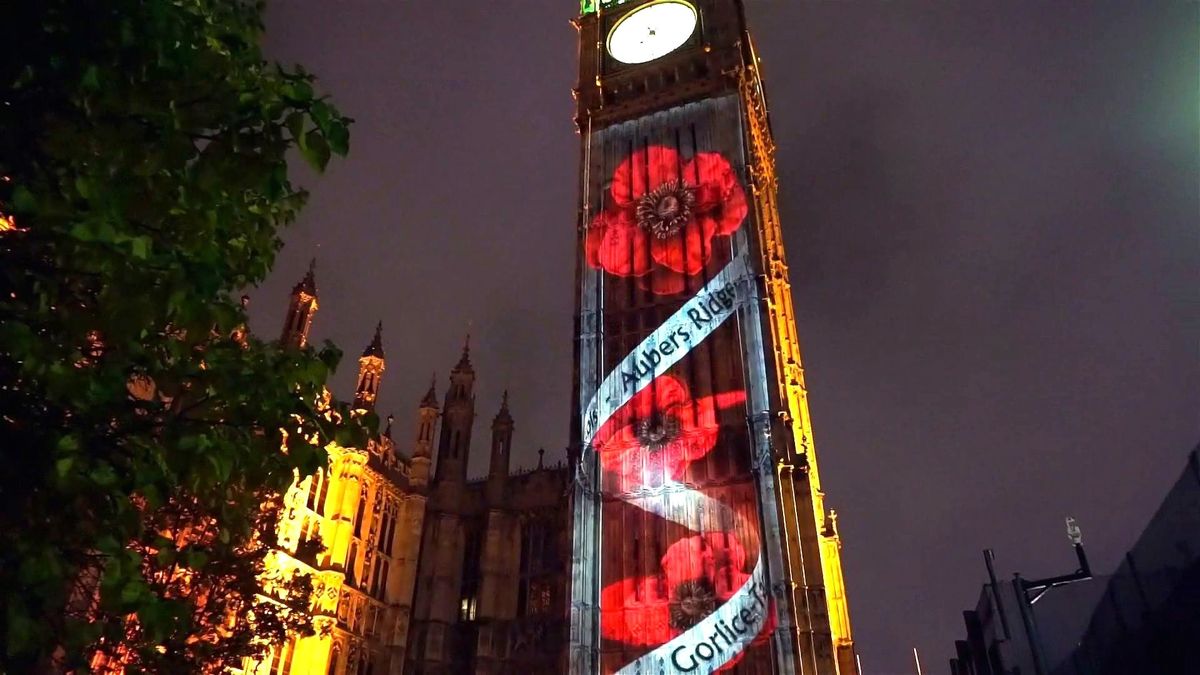
No, artificial intelligence isn’t needed to create the spectacular poppy projections on Big Ben. The displays use projection mapping, which combines digital animation, specialist software and powerful laser projectors to transform London’s Elizabeth Tower into an enormous illuminated canvas.
But while these traditional projections don’t require generative AI, artists around the world are now using artificial intelligence to create extraordinary moving artwork from historical archives, scientific information and even human brainwaves.
Who creates the projections on Big Ben?
Chester-based Crucial FX has worked on Elizabeth Tower’s Remembrance projections, a tradition that began in 2014. Its previous installations have covered more than 70 metres of the tower using stacked high-brightness laser projectors.
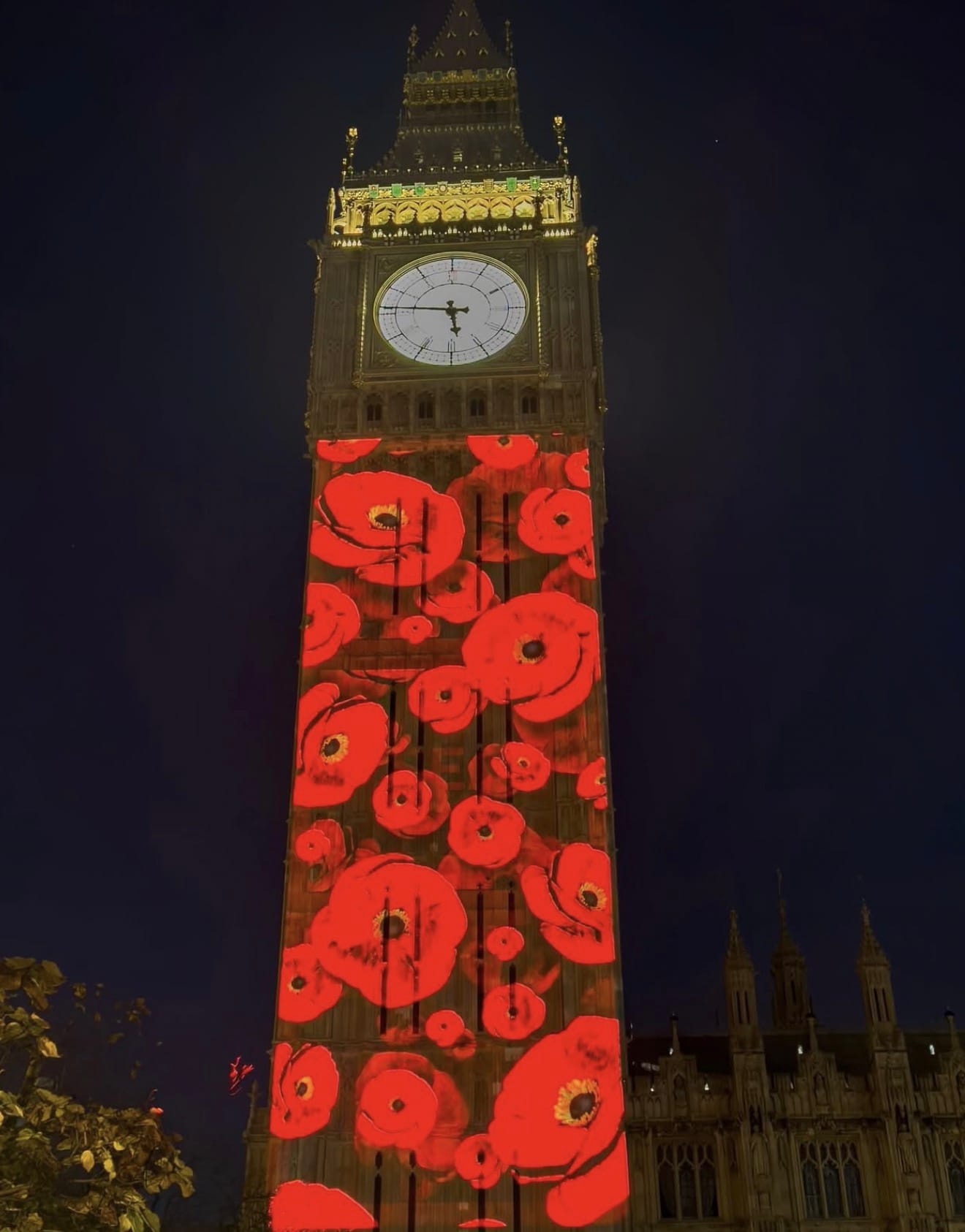
The company’s brilliant 3D graphics team develops the artwork, which is carefully adjusted to fit the architecture. For King Charles III’s coronation in 2023, Crucial FX and production company Identity used three separate projection positions to illuminate three sides of Elizabeth Tower simultaneously.
The 2026 Remembrance illumination commemorated the 110th anniversary of the Battle of the Somme. The production company responsible for this particular display has not been independently confirmed.
Take a look at Crucial FXs previous work:
How does projection mapping actually work?
Designers begin with architectural measurements, photographs or 3D scans. Specialist mapping software then reshapes the artwork to compensate for the building’s surfaces and the angle of the projectors.
Techniques called image warping and edge blending prevent distorted images and visible joins. Multiple projectors can also be stacked to increase brightness, allowing artwork to appear clearly across enormous buildings.
How AI turned brainwaves into art at London’s V&A
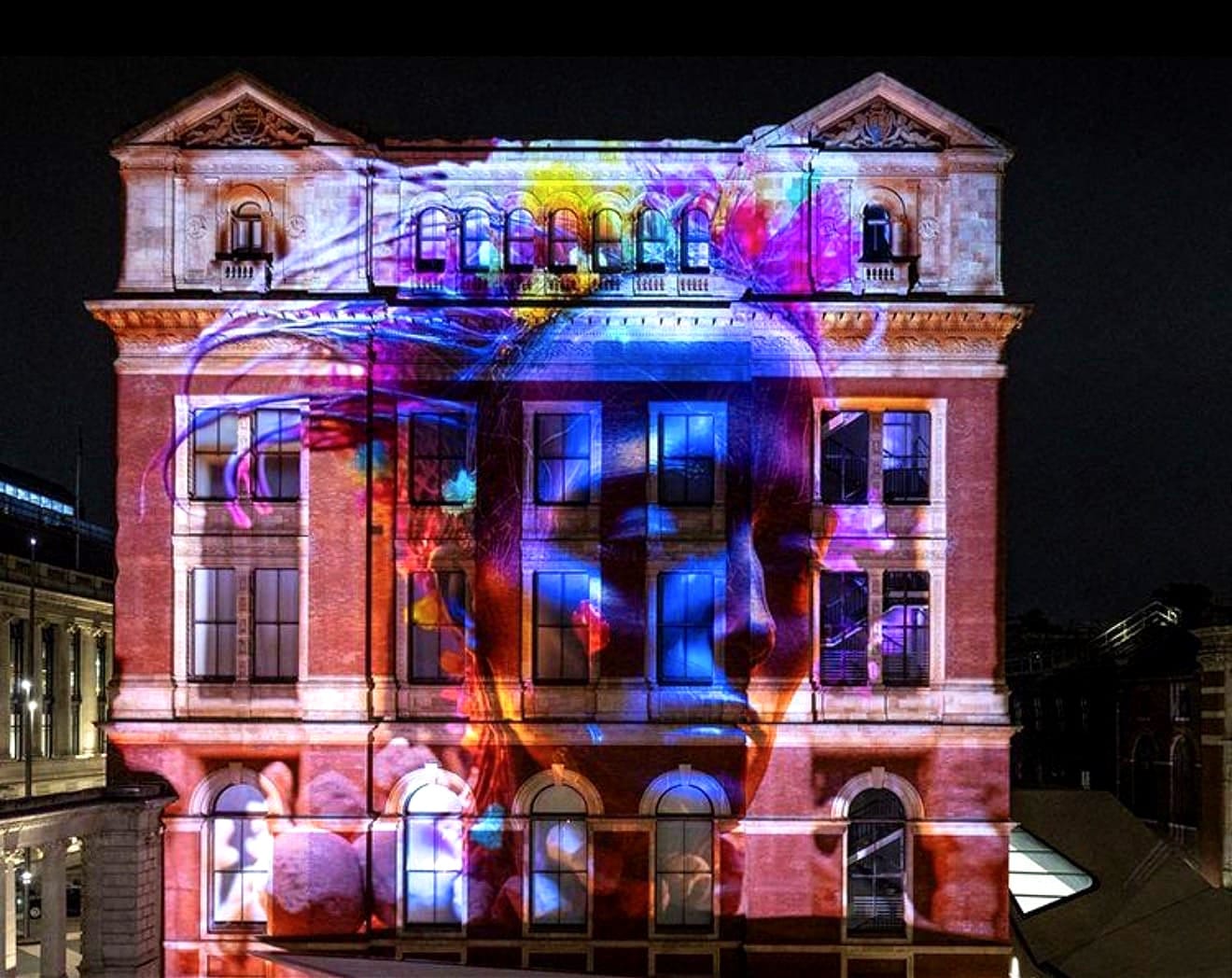
In November 2024, Istanbul-based Ouchhh Studio created Symphony of the Game Changers for the National Lottery’s 30th anniversary.
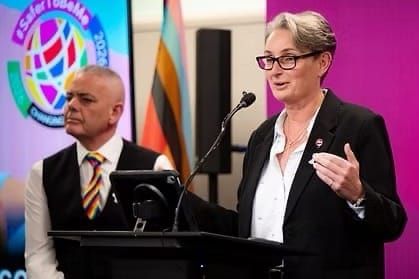
Artists Ferdi Alici and Eylul Duranagac Alici did use AI to transform brainwave recordings from prominent figures in the arts into evolving digital artwork.
Participants included Bend It Like Beckham director Gurinder Chadha and Berwyn Rowlands, founder of Cardiff’s Iris Prize LGBTQ+ Film Festival.
London-based Event Concept delivered the physical installation, projecting the artwork across the Victoria and Albert Museum using six laser projections.
The concert hall that used 45 terabytes of history
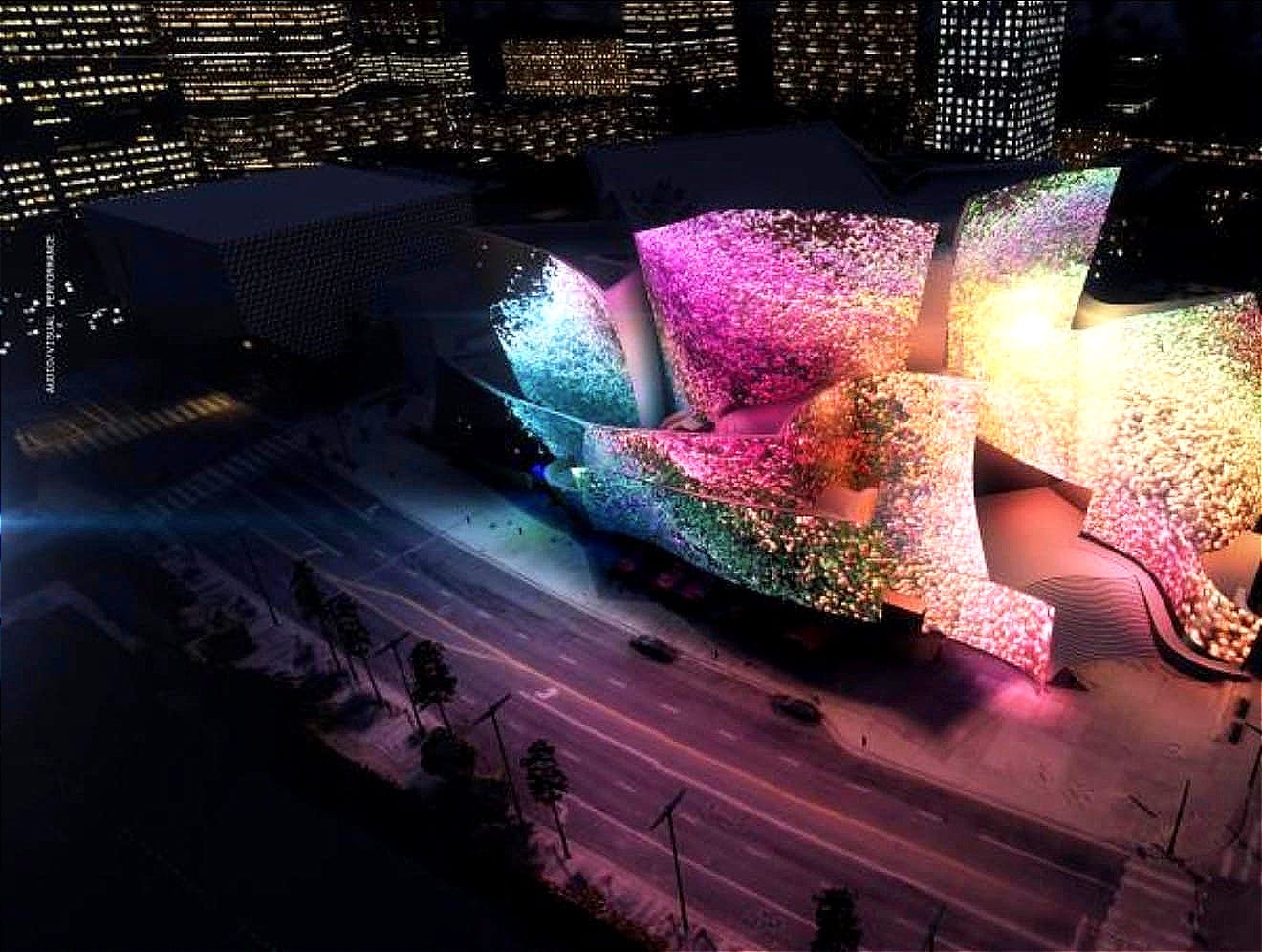
In 2018, Turkish-American artist Refik Anadol transformed Los Angeles’s Walt Disney Concert Hall with an AI installation called WDCH Dreams.
His team worked with Google’s Artists and Machine Intelligence programme to analyse nearly 45 terabytes of historical material from the Los Angeles Philharmonic.
The collection included 587,763 images, 1,880 videos and 17,773 audio files. Machine-learning algorithms identified relationships within the archive, helping generate new visual patterns.
The resulting artwork was projected onto the concert hall’s curved steel exterior using 42 projectors, achieving a combined visual resolution described by the studio as 50K.
How AI brought Barcelona’s Casa Batlló to life
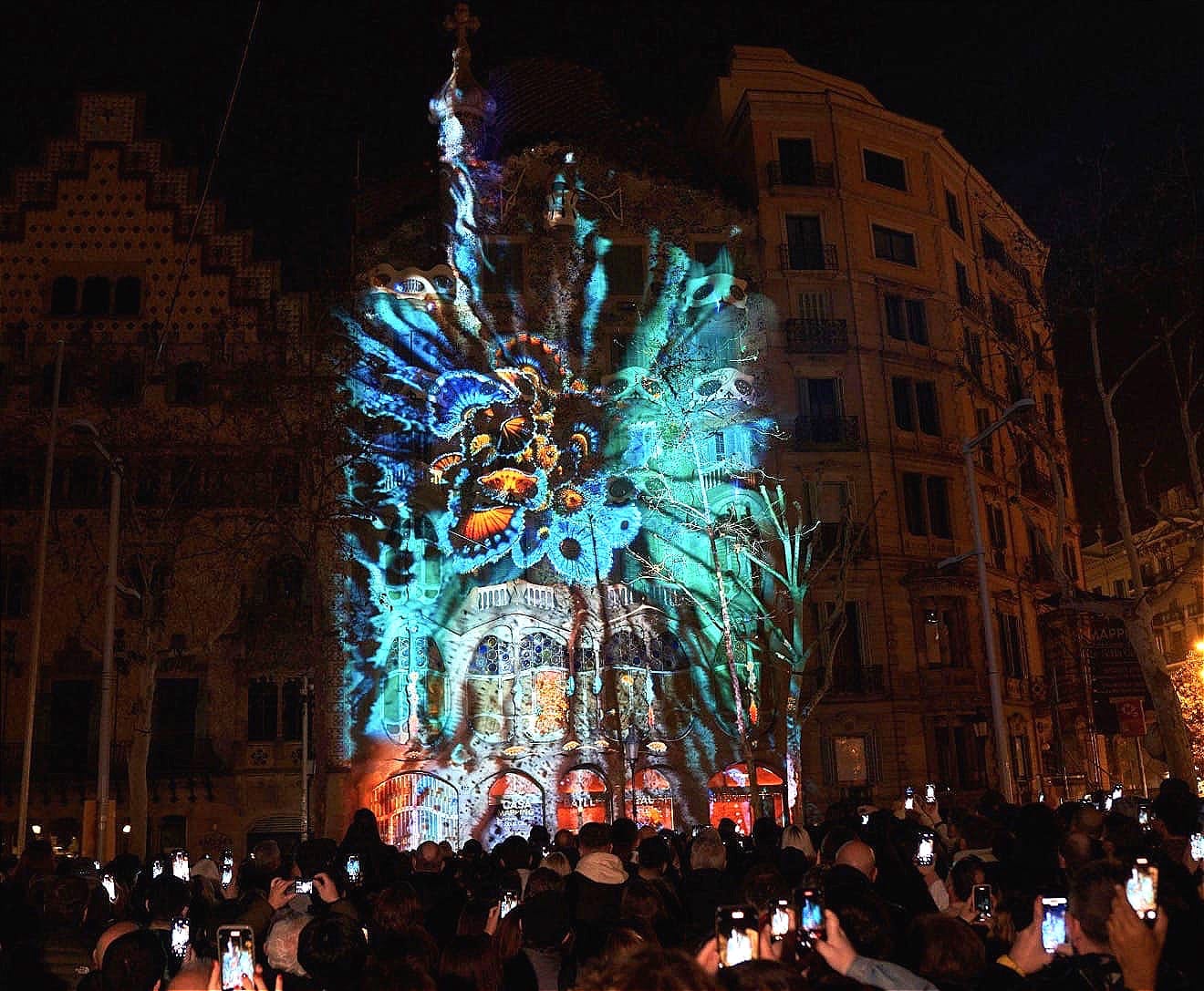
Barcelona’s famous Casa Batlló has hosted several AI-assisted installations, including Refik Anadol’s Living Architecture in 2022.
In January 2024, Argentine artist Sofia Crespo created Structures of Being, using neural networks, procedural animation and a detailed 3D scan of the building to produce imagery inspired by natural forms.
The project incorporated ocean-current data from the Barcelona Supercomputing Center and music by Robert M. Thomas. More than 95,000 people watched the projections across 12 performances.
Could AI transform future commemorations?
AI offers artists new ways to explore historical photographs, archival records and scientific information, potentially helping museums and heritage organisations tell stories through public art.
However, historical accuracy, copyright and respect for real people’s experiences remain important considerations, particularly for commemorations involving war and remembrance.
Crucial FXs Big Ben’s poppies demonstrate how fantastic and effective traditional projection mapping can be, while the installations in London, Los Angeles and Barcelona show how AI is expanding the possibilities of public art.