Iconic British Artist David Hockney Dies At 88 As His LGBTQ+ Legacy Is Remembered

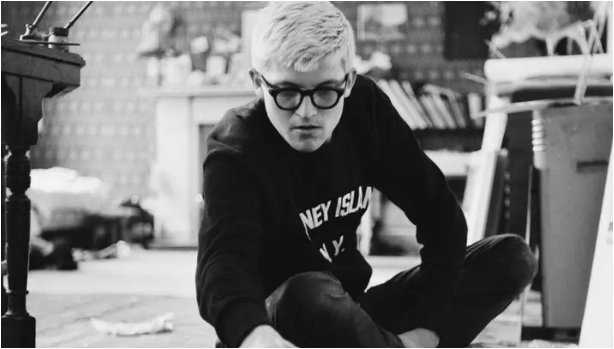
David Hockney, one of Britain’s most celebrated and influential artists, has died at the age of 88.
The Bradford born painter, printmaker, photographer, stage designer and digital art pioneer died peacefully at home on 11 June 2026, according to a statement from his publicist. Born on 9 July 1937, Hockney died just under a month before what would have been his 89th birthday.
His publicist, Erica Bolton, described him as “one of the most important figures in contemporary art in both the 20th and 21st centuries,” adding that his legacy reflected his “enthusiasm for life,” “outstanding sense of humour,” “immense generosity” and “investigative curiosity” captured by his signature phrase, “Love Life.”
No cause of death was immediately disclosed.
Hockney was widely regarded as one of the defining British artists of the modern era. Across a career spanning more than six decades, he became known for his bold use of colour, his California swimming pool paintings, his portraits, his Yorkshire landscapes, his iPad drawings and his lifelong refusal to be confined by one medium, one style or one expectation.
He was perhaps best known to many for A Bigger Splash, painted in 1967, which captured the bright light, architecture and swimming pool culture of California. Another of his major pool works, Portrait of an Artist (Pool with Two Figures), sold at Christie’s in 2018 for $90.3 million, setting a record at the time for a work by a living artist.
Yet Hockney’s importance was never only about auction records.
For LGBTQ+ history, his work holds a deeper cultural significance. Hockney was openly gay at a time when homosexuality was still illegal in Britain. Long before LGBTQ+ visibility became part of mainstream cultural conversation, he placed male desire, gay intimacy and queer domestic life into serious art.
That mattered.
Early works such as We Two Boys Together Clinging and Domestic Scene, Los Angeles were created in a world where gay men could still face criminalisation, public shame and social exclusion. Hockney’s decision to make same sex love visible was not just personal expression. It was part of a wider cultural challenge to silence.
We Two Boys Together Clinging, completed in 1961 while Hockney was at the Royal College of Art, took its title from a Walt Whitman poem and was created several years before the partial decriminalisation of homosexuality in England and Wales in 1967. At the time, openly portraying gay affection was a radical act.
Hockney did not wait for permission. He made queer life part of the visual record.
That is why his LGBTQ+ legacy remains so important. He helped show that gay love did not have to be hidden, coded beyond recognition or treated as shameful. It could be painted, framed, exhibited and discussed as art.
His gay identity was not a footnote to his career. It was part of the way he looked at the world and part of the way his work challenged what could be shown. His paintings asked whose relationships deserved attention, whose lives could be represented and whose intimacy belonged inside a gallery.
For LGBTQ+ viewers, that legacy still carries weight. Hockney’s early gay themed work is a reminder that representation did not begin with television storylines, Pride campaigns or social media. It was fought for across culture, including on canvas, years before legal and social attitudes began to shift.
Hockney was born in Bradford in 1937 and grew up in wartime Yorkshire. After studying at Bradford College of Art, he went on to the Royal College of Art in London, where he quickly became one of the most distinctive young artists of his generation.
He emerged during the 1960s Pop Art movement, but his work was never limited to one label. His paintings moved between intimacy and scale, humour and longing, domestic life and landscape, realism and experiment. He painted people, places, rooms, water, trees, roads, flowers and changing light with a visual confidence that made ordinary scenes feel newly alive.
One of the ideas most closely associated with Hockney was simple but powerful. He believed artists should paint what they loved. That approach gave his work its warmth, whether he was painting a swimming pool, a friend, a lover, a dog, a tree or a view from a window.
Hockney also spoke often about work as a source of energy. In 2017, he said: “It’s my work that keeps me young.” He added: “I’ve been a professional painter for 60 years. Sixty years of getting up every day and doing exactly what I want to do.”
Those words now feel central to the way he will be remembered. Hockney’s career was not built around nostalgia or stillness. It was built around constant looking, constant working and constant curiosity.
After moving to Los Angeles in the 1960s, Hockney became fascinated by California sunlight, modern architecture and swimming pools. The sharp shadows, blue water and open spaces of LA became central to some of his most recognisable paintings.
He also became known for his portraits of friends, lovers, family members and creative figures. His double portraits, including Mr and Mrs Clark and Percy, captured relationships with a quiet psychological precision. They were stylish, but never empty. Hockney understood that how people sit, look, pause and occupy a room can reveal as much as a dramatic gesture.
Later in life, he returned again and again to landscape. Yorkshire became a major subject, especially around Bridlington and the Wolds. Normandy also inspired a large body of work, with trees, seasons, flowers and changing light becoming central themes.
That love of landscape also connected Hockney to Vincent van Gogh.
In 2019, the Van Gogh Museum in Amsterdam staged Hockney Van Gogh: The Joy of Nature, an exhibition that explored the relationship between the two artists. The show placed Hockney’s landscapes alongside Van Gogh’s work and focused on their shared love of nature, brilliant colour and fresh ways of seeing the world.
The exhibition ran at the Van Gogh Museum from 1 March to 26 May 2019 and became one of the museum’s standout successes of that year. The museum later said it attracted nearly 360,000 visitors, including 137,000 Dutch visitors, and sold out more than two weeks before it ended.
The Amsterdam exhibition helped underline something important about Hockney’s place in art history. He was modern, restless and technologically curious, but he was also in conversation with artists who came long before him. Like Van Gogh, he found drama in trees, fields, skies, roads and seasonal change. Like Van Gogh, he used colour not simply to describe the world, but to make it feel alive.
Pace Gallery described Van Gogh as a major source of inspiration for Hockney throughout his career, noting the similarities between their bright colours, their experiments with perspective and their deep attention to nature.
That link with Van Gogh gives Hockney’s later work an added emotional weight. Van Gogh painted the natural world as something urgent, vivid and full of feeling. Hockney, more than a century later, carried that same sense of wonder into Yorkshire lanes, Normandy trees, iPad drawings and vast painted landscapes.
The Amsterdam exhibition was not just a meeting of two famous names. It was a reminder that Hockney belonged to a long line of artists who believed looking closely at the world could change how people felt about being alive.
Hockney remained restless and experimental into old age. He embraced photography, photocopiers, fax machines, computer drawing, iPhones and iPads, treating new technology not as a threat to art but as another way of seeing. His iPad works introduced his art to new audiences and proved that his curiosity never faded.
That sense of reinvention shaped tributes to him. Norman Rosenthal, who helped curate a major Paris exhibition of Hockney’s work, described him as “the Picasso of our times.” He said Hockney was “an incredibly popular artist whose work changes how we see things.”
Historian Simon Schama also reflected on the enduring appeal of Hockney’s work, writing that people loved it because it carried “an expectation of pleasure.” That phrase captures something important about Hockney. His art could be clever, experimental and formally daring, but it was rarely cold. It invited people in.
London Mayor Sadiq Khan described Hockney as a “true icon” and a “revolutionary of British art.” Tate Britain director Alex Farquharson called him an “immensely important figure” and one of the most successful and recognisable artists of his time.
His honours included appointment to the Order of the Companions of Honour in 1997 and the Order of Merit in 2012. He also designed a stained glass window for Westminster Abbey to celebrate the reign of Queen Elizabeth II. Completed in 2018, the window showed blossoming hawthorn trees in vivid colour, reflecting his lifelong interest in nature, light and renewal.
For many, his power came from something simple. Hockney’s art encouraged people to notice life. Swimming pools, friends, lovers, dogs, trees, roads, bedrooms, flowers, windows and changing skies all became part of his visual language.
His art was intelligent without being cold. It was experimental without losing warmth. It was personal without becoming small.
For LGBTQ+ culture, his legacy is especially important because he made gay life visible before it was safe, popular or widely accepted to do so. He did not only paint identity as protest. He painted it as life. He painted affection, desire, domesticity and love as things worthy of serious attention.
That visibility helped open space for other artists, writers and performers to tell queer stories without apology.
David Hockney leaves behind one of the most recognisable bodies of work in modern British art. He also leaves behind something harder to measure, but just as powerful. A way of seeing.
He taught people to look again at the colour of water, the shape of a tree, the light through a window, the quiet intimacy of two people sharing a room. From Bradford to Los Angeles, from Yorkshire to Normandy, from Amsterdam’s Van Gogh Museum to galleries across the world, his work carried the same message. Life is there to be looked at, loved and painted.
For LGBTQ+ viewers, his work remains a reminder that love does not become less beautiful because the world refuses to understand it. Sometimes, placing that love on canvas is its own act of courage.
His publicist’s chosen phrase, “Love Life,” now feels like the simplest summary of his work.
Hockney looked at the world and kept finding reasons to paint it.
Now the artist is gone, but the colour remains.