Home and Away's Eden starts chelation therapy but what is it and can it help?
Home and Away's Eden begins chelation therapy after a serious transfusion reaction. NHS guidance explains what the treatment does and whether it can help.


Eden's battle with aplastic anaemia takes another frightening turn in Home and Away when doctors recommend a treatment called chelation therapy following serious complications with her latest blood transfusion.
Doctor Pope warns that her treatment options are becoming increasingly limited, leaving Eden and Cash terrified about what the future might hold. But what exactly is chelation therapy, why is it used, and could it help someone living with aplastic anaemia?
Why does Eden need another treatment?
Eden has been receiving blood transfusions to help manage her aplastic anaemia, a rare condition in which the bone marrow fails to produce enough healthy blood cells.
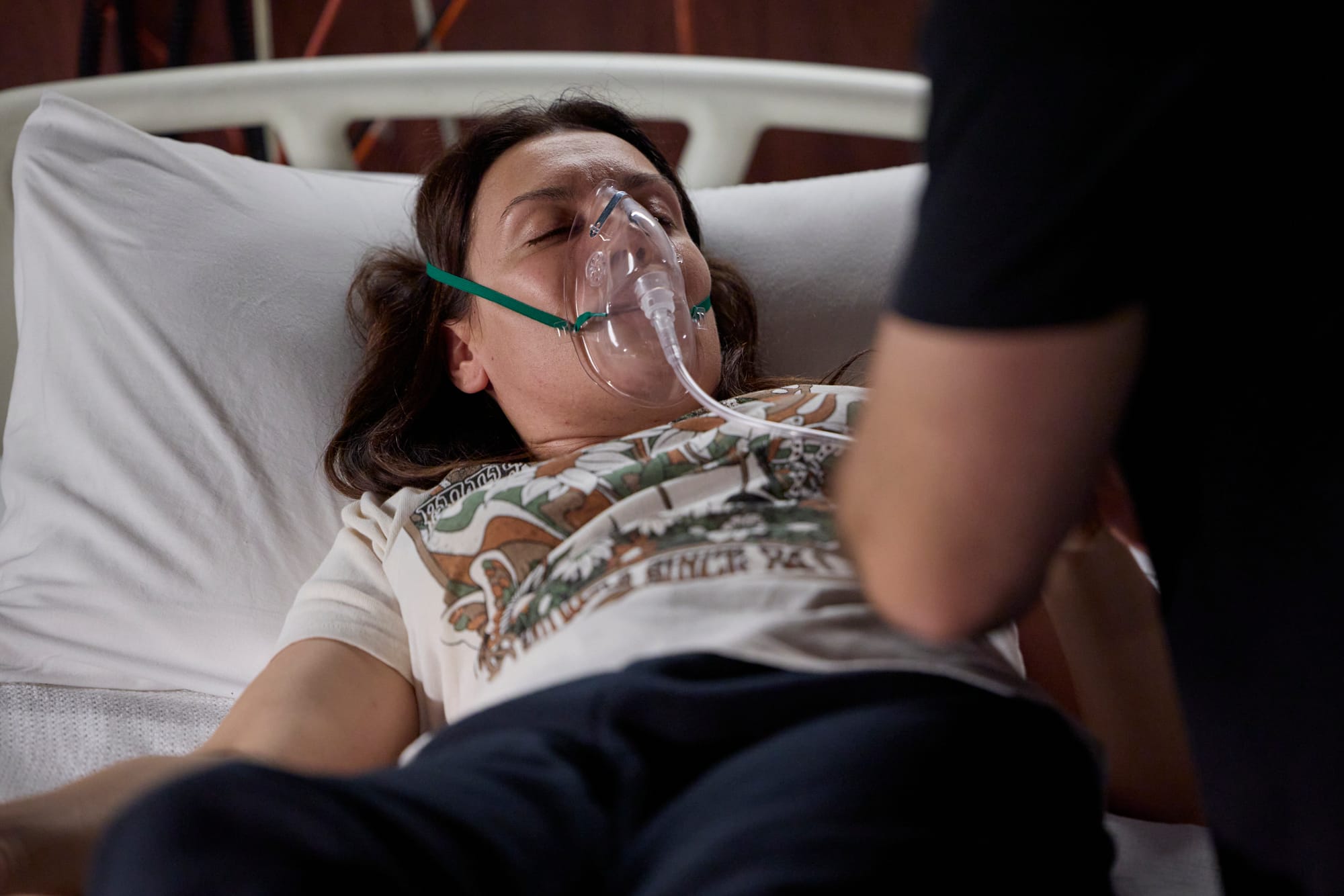
Her condition suddenly deteriorates when she begins shivering and struggles to pour herself a glass of water. Cash rushes her to hospital, where Doctor Pope orders further tests to establish what has happened.
The results reveal that Eden has suffered a serious reaction to her transfusion. Although doctors find no infection, they are increasingly concerned about the limited treatment options available.
Doctor Pope recommends chelation therapy, warning that the treatment carries risks and should begin as soon as possible if Eden agrees.
Eden initially wants Cash beside her before making a decision, but her husband has become overwhelmed by the situation and left the hospital. She eventually agrees to begin treatment, although she remains frightened about her chances of recovery.

What is chelation therapy and how does the NHS use it?
Chelation therapy is an established medical treatment used to remove excess metals, particularly iron, from the body.
According to the NHS, people who require repeated blood transfusions can develop iron overload because each transfusion introduces additional iron into their bloodstream. The body has no effective natural way to remove large quantities of excess iron, meaning it can gradually build up.
The NHS explains in its guidance on thalassaemia, another blood disorder that can require regular transfusions, that chelation therapy is used to remove this excess iron.
Without appropriate treatment, iron overload can damage important organs, including the heart and liver.
Chelation therapy works by using medicines that bind to excess iron, allowing the body to remove it through urine or stools.
The NHS identifies three commonly used medicines: desferrioxamine, deferiprone and deferasirox. Depending on the medication and individual circumstances, treatment may involve tablets or an infusion.
NHS England also emphasises the importance of monitoring patients throughout treatment, including checking iron levels and watching for possible complications.

Why might Eden need chelation therapy?
Eden has required repeated blood transfusions because of her aplastic anaemia. Although transfusions help replace blood cells that her bone marrow cannot produce adequately, regular treatment can lead to complications.
One recognised problem is iron overload, which chelation therapy is designed to manage. However, there is an important distinction between Eden's storyline and how the treatment is normally used in medical practice.
Doctor Pope recommends chelation therapy after Eden experiences a serious transfusion reaction, but chelation is not normally used to reverse an acute transfusion reaction itself.
Instead, it is generally prescribed to manage excess iron that has accumulated through repeated transfusions, helping reduce the risk of longer-term damage to organs.
Eden's doctors have not explained whether she has developed iron overload. Her history of repeated transfusions makes it a relevant treatment to discuss, but the precise medical reason for recommending it has not been established.
Is chelation therapy dangerous?
Although chelation therapy is an established treatment, it carries risks and requires careful medical supervision.
Depending on the medicine prescribed, possible side effects include nausea, digestive problems and changes in kidney or liver function. Some treatments can also affect blood cell counts.
The NHS explains that different chelating medicines have different benefits and potential side effects, meaning doctors must consider each patient's circumstances before choosing the most appropriate option.
For someone already living with a serious blood disorder, regular monitoring is particularly important to make sure treatment is both effective and safe.
In Eden's case, Doctor Pope makes it clear that the proposed treatment carries risks, leaving her facing another difficult decision during an already frightening time.

Could chelation therapy cure Eden's aplastic anaemia?
Chelation therapy cannot cure aplastic anaemia because it does not address the underlying problem with the bone marrow.
The British Society for Haematology explains in its guidelines that treatment for aplastic anaemia can involve blood and platelet transfusions, immunosuppressive medicines and stem cell transplantation.
Immunosuppressive treatment can help the bone marrow recover in some patients, while a stem cell transplant may offer the possibility of a cure for suitable patients.
Chelation therapy serves a different purpose. It removes excess iron, helping to prevent or manage complications associated with repeated blood transfusions.
It does not make the bone marrow start producing healthy blood cells again, meaning patients may still require further treatment for their underlying illness.
For Eden, even if chelation therapy successfully manages any excess iron, her need for effective long-term treatment remains.

What happens next for Eden and Cash?
Eden's medical emergency also leaves Cash struggling to cope, particularly when he discovers that Melanie, a woman he met through an online support group, has died.
Melanie had been living with the same illness as Eden, and Cash had hoped her experiences could provide some reassurance. Discovering her death leaves him terrified about his wife's future.
Overwhelmed, Cash begins drinking and pushes Remi away before eventually contacting Gary for help. Meanwhile, Eden becomes increasingly distressed by her husband's absence and attempts to discharge herself from hospital.
Cash eventually returns with Gary and promises that he will not leave her again. When Eden admits she fears she has little time left, he asks what she wants to do with the rest of her life and promises to help make it happen.
Chelation therapy offers a way of managing complications associated with excess iron, but it is not a cure for Eden's underlying illness. Her treatment and the search for longer-term answers remain central to her future.
Where to watch Home and Away
Home and Away airs on 5STAR in the UK, with episodes available to stream on 5. Eden's chelation therapy storyline features in the UK episodes airing during the week beginning 2 November 2026, while Australian broadcasts are further ahead.
Image credit: Channel 5 / Seven Network